

Eye drops
See better and look better with small drops
What are eye drops used for?
Eye drops are liquid preparations used for ophthalmic diagnosis and for the treatment of eye conditions. Depending on their composition, they act against dry eyes, infections, inflammations, allergies and glaucoma and can moisturise, relieve eye irritation, disinfect or have local anaesthetic and immunosuppressive properties.
These preparations are sterile aqueous or oily solutions, emulsions or suspensions made up of one or more active ingredients and excipients. Active ingredients relieve symptoms. Excipients restore physiological pH, osmolarity (solute concentration) and the viscosity of the drops or serve as solvents and preservatives.
Which active ingredients help with dry eyes?
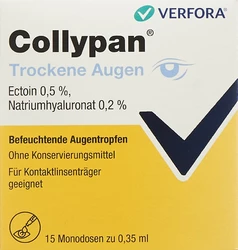
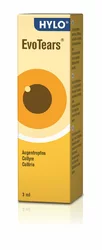
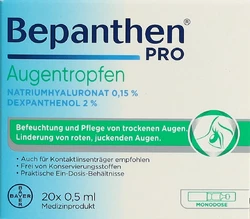
Eye drops are most commonly used to treat dry eyes. They moisten the eye's natural tear film, keep the ocular surface supple and relieve redness, itching and burning.
Depending on symptom severity, there are eye drops with varying degrees of moisturising effect: some refresh tired eyes while others help compensate for a deficient lipid layer of the tear film.
Active ingredients include polyacrylic acid, cellulose derivatives, hypromellose and hyaluronic acid. Moisturising and regenerating additives include dexpanthenol and ectoine. Hyaluronic acid is a natural component of the eye and helps form a uniform, long‑lasting moisture film on the eye surface. This ingredient has proven particularly effective in treating dry eye.
How do eye drops treat allergies and inflammation?
With an allergy, the ocular mucous membranes can react strongly to pollen and other allergens, causing swelling, itching, redness and heavy tearing. Acute irritation can be eased by specific agents such as azelastine and cromoglicic acid found in anti‑allergic and anti‑inflammatory eye drops.
Azelastine blocks the action of histamine, the messenger responsible for the allergic reaction. Cromoglicic acid can, if used in time, reduce histamine release before symptoms appear. For other eye diseases, such as viral or bacterial infections, the ophthalmologist may prescribe specific eye drops depending on the cause.
What are blue eye drops and how safe are they?
A recent beauty trend is special drops that make the eyes appear whiter through colour theory — blue eye drops. They contain pharmaceutical hyaluronic acid and the dye Patent Blue V.
Blue eye drops are intended for the care of irritated eyes and a gentle intensification of eye whiteness. Prof. Horst Helbig, director of the Eye Clinic at Regensburg University Hospital, emphasises that these drops are essentially make‑up and offer no advantage over other hyaluronic acid eye drops. The blue dye Patent Blue V, which penetrates the tissue, stains it slightly blue and — according to colour theory — makes reddish or yellowish eyes appear whiter, has long been used in medicine and the food industry.
Prof. Helbig nevertheless advises caution: “We still know nothing about the long‑term use and effects of the blue dye used in the eye.” In principle, blue drops are preferable to products that constrict the blood vessels in the eye to make them appear whiter. As a rule, people with chronic or acutely pronounced eye redness should consult an ophthalmologist to determine whether an eye disease requiring treatment is present.
How do you apply eye drops correctly?
Eye drops must be applied correctly. This ensures adequate effect while reducing unwanted side effects.
If the drops leave the eye, only part of the medicine can take effect and the treatment is then less effective. The drops can reach the nasopharynx if the eye is not properly closed after application. If absorbed there through the mucous membranes, this may lead to more harmful effects than application limited to the eye.
Clear sight and well cared for: tips for proper use of eye drops
- Depending on the product, the drops should be instilled once to several times daily into the conjunctival sac. Ideally, eye drops should be warmed to body temperature before use, e.g. in a trouser pocket or in the palm of your hand.
- Some eye drops are suspensions and must be shaken well immediately before use.
- For hygiene reasons, the tip of the bottle or ampoule must not touch the eye, eyelid or other surfaces. Wash your hands thoroughly before use. To avoid contaminating the eye drops, it is recommended that only one person use the contents of a bottle.
- How to do it correctly: gently pull the lower eyelid down with your index finger so that a small space forms between the lid and the eye. Tilt your head back slightly and look up. The drop is applied by pressing the container lightly. To spread the medicine over the eye, release the lid and close the eye. The eye can only take in one to two drops per administration! Press lightly with your finger on the inner corner of the eye for one minute to reduce drainage and increase the local effect. Excess liquid is removed with a tissue or swab.
- You can also try whether instilling drops is easier for you while sitting or lying down. Lie on your back (without a pillow) and close your eyes. Hold the bottle with two fingers. Place one drop between the lid and the nose on the closed eye. Then open your eyes very slowly. Hold this position for at least 5 minutes so the drops can distribute across the eye.
- More drops are not better than a single one. On the contrary: a quantity greater than prescribed can cause overdose with associated side effects. Excess fluid is drained faster through the tear ducts, reducing the effect of the medicine in the eye.
- If different eye drops are used, wait about ten minutes between applications. The ophthalmologist will advise you on the best order of drop application.
- Shelf life after opening is also important. For many products, a usage period of four weeks after opening the bottle is recommended. Label each newly opened bottle with the current date and discard it after this period. Single‑dose units are intended for immediate use.
- For mild, occasional symptoms, low‑viscosity hyaluronic acid eye drops used as needed are sufficient. Eye drops with higher hyaluronic acid concentrations are suitable for moderate to severe or chronic symptoms of dry eye.
- Wearing contact lenses should be avoided in case of eye disease. If necessary, remove contact lenses before application and only reinsert them 15 minutes after applying eye drops.
- Eye drops should be free of preservatives and phosphate buffers so as not to further irritate the eye. Some people react very sensitively or even allergically to these ingredients.
- Depending on the type of eye drops, there may be special application instructions to observe. Information is available from the doctor's office, the pharmacy or the package leaflet.
- The most common adverse effects of eye drops are local reactions in the eye. These include redness, irritation, pain, itching, visual disturbances, burning and foreign body sensation. Despite local application, systemic side effects can also occur because active ingredients may be absorbed into the bloodstream. In certain conditions, such as glaucoma, improper use can even cause heart or respiratory problems.
Follow these tips, consult a doctor if necessary and bring back the sparkle to your eyes!


