Plums
This fruit makes you happy
What are plums?
Plums are juicy fruits from the stone-fruit family. They have a round or oval shape and a smooth skin that can vary in colour depending on the variety, for example blue, purple or yellow. The flesh is sweet and juicy, surrounds a hard stone and ripens mainly in summer. Plums are often eaten fresh but can also be dried, made into jam, juice or other treats.
Plums belong to the subspecies of the cultivated plum (Prunus domestica), of which there are about 2000 different varieties. Varieties include the damson, mirabelle, greengage and the common plum.
Plums are characterised by their blue-violet colour and a distinct seam along the belly. The flesh is firm and adheres well to the stone.
Damsons are deep blue and have an elongated, pointed shape. Compared with plums, their flesh is sweeter and separates more easily from the stone.
Greengages are round, considered a fine variety of plum, and can be red, green or yellow.
Mirabelles are cherry-sized, have a smooth yellow skin and a sweet flesh. Their small, round form is characteristic of this variety.
Each of these plum types has its own distinctive features, from colour and shape to flavour, and is suited to different culinary uses.

What nutrients do plums contain?
Like many other fruits, plums consist mostly of water. Beyond their refreshing effect, these blue fruits provide an impressive range of nutrients. Per 100 grams they contain about 10.2 percent carbohydrates, 0.6 percent protein, 0.2 percent fat and 1.6 percent fibre. In addition, plums are rich in minerals such as iron, magnesium, potassium, calcium, copper and zinc, which are important for health.
The vitamin profile of the plum is also notable. In addition to provitamin A, vitamin C and vitamin E, it contains various B-group vitamins, which are particularly important for the nervous system. Although the plum does not set records for individual vitamins, it offers a healthy overall package.
Plums have a high natural sugar content and therefore provide energy quickly. Damsons have the highest sugar content among plum types. The calorie content of fresh plums is around 47 kilocalories per 100 grams, slightly above average. Dried plums contain about 225 kilocalories per 100 grams.
How do plums affect digestion and what other health benefits do they offer?
Plums are not only tasty but also offer numerous health benefits: they are a well-known home remedy for digestive problems such as constipation. This is due to four components: pectins and cellulose, which swell in the gut and stimulate bowel movement, sorbitol as a natural laxative, and the high fibre content that promotes digestion. A daily portion of 100 grams of dried plums can help with constipation.
With a water content of around 80 percent, plums are particularly satiating, while remaining low in calories – an ideal snack for those aiming to lose weight. Plums contain the amino acid tryptophan, which supports the production of the feel-good hormone serotonin. The B vitamins they contain also support a healthy nervous system, making plums a true "Happyfood". If energy is lacking, a few plums can quickly provide energy thanks to their natural sugars, which enter the bloodstream fast and are distributed through the body.
Plums contain anthocyanins, secondary plant compounds that not only give them their colour but also protect against harmful free radicals. The anthocyanins in plums strengthen the body's defences, help with high blood pressure and lower cholesterol, which has a positive effect on heart health. The boron in plums reduces the excretion of calcium, magnesium and minerals, while potassium and vitamin K help to strengthen bones.
Additionally, the B‑vitamin complex in plums contributes to normal nervous system function, their high potassium content helps maintain fluid balance in the body, vitamin A benefits the skin and their carotenoid content has a positive effect on vision.
There is also some evidence that the malic acid in plums may contribute to pain relief in conditions such as fibromyalgia, although further research is needed.
Are there any precautions when eating plums?
Despite these positive properties, people with a fructose intolerance should be cautious, since the high fructose content of plums can cause problems. The laxative effect can also be unpleasant if consumed in large amounts. It is important to eat plums in a balanced quantity.
How can I best use the culinary and health benefits of plums?
- Recognise ripe plums by their deep blue colour and the fact that they yield slightly to gentle pressure. This indicates optimal sweetness and juiciness.
- Store plums preferably in the vegetable drawer of the refrigerator. There they stay fresh for up to a week. Place them separately in a bag to avoid transfer of aromas.
- Wash plums before storing and remove stems and stones to reduce bitterness. Place washed, halved plums individually on a plate before putting them in the fridge.
- Take advantage of freezing plums. Halve and pit the fruits before freezing to keep them up to twelve months.
- Limit daily plum intake to a maximum of 150 grams to avoid bloating and diarrhoea.
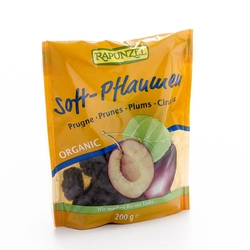
- Treat your palate with plums. Dried plums are a nutritious on-the-go snack. They are rich in fibre and support digestion.
- Experiment with plums in smoothies. Add fresh or dried plums to your smoothies for a natural sweetener and a nutrient boost.
- Because plums are high in fibre, it is important to increase water intake to support digestion and prevent constipation.
- Combine fresh or dried plums with a selection of cheeses for an exquisite cheese board that balances sweetness, acidity and creamy textures.
- Replace part of the fat in baking recipes with plum purée to reduce saturated fat while adding moisture and sweetness.
Plums offer a wealth of culinary possibilities and health benefits, making them a valuable component of a balanced diet. From promoting digestion to enriching dishes with their sweet-and-sour aroma, they contribute in many ways to a healthy and enjoyable diet.