
Urine test strips
The little doctor for home
What are urine test strips?
Urine test strips are thin strips, usually made of plastic, that contain several test pads. These pads are coated with different chemicals that react to specific substances in the urine.
Urine test strips serve as a diagnostic aid for analysing urine samples. They indicate, by a change of colour, which components are present in the urine and thus allow conclusions to be drawn about the patient’s health status.

How do urine test strips work?
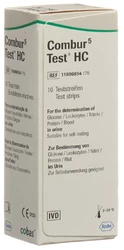
The strips are packaged in a special plastic container that includes a desiccant to protect them from moisture. The strips are ready for use immediately after removal from the container. To perform the test, the strip is briefly dipped into a fresh urine sample and then removed immediately.
After dipping, excess liquid is either shaken off or gently blotted with a tissue. The test pads on the strip change colour according to the substances present in the urine. To read the result, the colours of the test pads are compared with a reference colour chart, usually provided as a sticker on the packaging.
After evaluation, the strip can be discarded. For more precise and faster readings, semi‑ or fully automatic devices can be used to capture and analyse the colour changes digitally.
When is testing with urine strips useful?
Testing with urine strips is useful whenever the physician needs a detailed analysis of urine composition. The detection of substances that do not normally appear in urine, or urine values outside the normal range, can indicate various health conditions.
Specifically, a urine test is carried out when there is a suspected urinary tract infection, for example with symptoms of cystitis or other urinary tract or kidney disorders. It is also useful for monitoring the course of known urinary or kidney diseases.
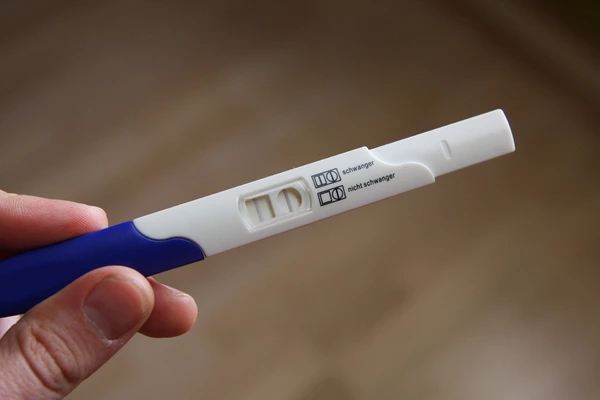
The detection of blood in the urine can point to various health issues, and the detection of protein or sugar (glucose) is particularly important for diagnosing and monitoring diabetes mellitus. Certain hormones in the urine can also indicate pregnancy.
Testing with urine strips is especially helpful for conditions such as bladder cancer for early detection and monitoring, and for the metabolic syndrome to assess metabolic disorders that increase the risk of cardiovascular disease.
How much urine is needed for the sample?
For a urine sample, it is sufficient to fill the urine cup to about one third, which corresponds to approximately 20 to 30 millilitres (ml). It is not necessary to fill the cup completely, as this amount is sufficient for most tests.
Which parameters can be tested with urine strips?
Rapid urine tests can assess a wide range of parameters in the urine that can provide important information about health. A commonly tested parameter is glucose in the urine, which at elevated levels can indicate diabetes mellitus. Another important parameter is protein, whose presence can indicate kidney disease.
Ketones in the urine indicate increased fat breakdown, which can be caused by fasting or poorly controlled diabetes. In addition, red blood cells (erythrocytes) can be examined to detect possible inflammation, infection or, rarely, tumours. The detection of white blood cells (leukocytes) can point to inflammation or infection in the urinary tract.
The nitrite test indicates the presence of bacteria and is a marker for a urinary tract infection. The hormone hCG (human chorionic gonadotropin) is also important and can be detected in a pregnancy test using urine.
What does urine pH tell you?
The urine pH provides information about the body’s acid‑base balance and can be determined with a simple urine strip test. A normal pH is between 5 and 7, with values below 5 indicating overly acidic urine and values above 7 indicating overly alkaline urine.
A low urine pH, indicating excess acidity, can be caused by various factors. If urine excretion is more acidic than normal, this suggests an acidosis that may be caused by high fever, gout or a metabolic or respiratory acidosis. A meat‑rich diet or certain medications can also lower urine pH.
Conversely, a high pH indicates alkaline urine. This can be a sign of a urinary tract infection, especially when certain pathogens such as Proteus mirabilis are involved. An alkaline urine value can also be influenced by a diet high in vegetables or by a urine sample that has stood for some time before pH measurement.
How to use urine test strips correctly: helpful tips
- Store the test strips in a dry, clean place. Avoid moisture to prevent distorted results.
- Keep the strips cool. Protect them from direct sunlight and high temperatures.
- Use only fresh urine for the test. Old or contaminated collected urine can lead to inaccurate results.
- Dip the strip only briefly into the urine. Ensure that all test pads are fully wetted.
- It is recommended to read the result only after the indicated waiting time. Reading too early or too late can skew the result.
- Consider the reference values on the manufacturer’s packaging. These state which colours correspond to normal and abnormal results. This information is necessary to interpret the results correctly.
- Compare the colours on the strip with the manufacturer’s colour chart. Other colour charts can lead to misinterpretation.
- Check the expiry date of the strips. Do not use expired strips, as they can give inaccurate results.
- Rapid tests enable quick urine diagnostics, with samples analysed within minutes. To reliably detect proteinuria and other urine parameters, you must consent to the procedure.
- Urine test strips are only an aid to diagnosis. If results are unclear, consult a physician.
Urine test strips are a practical and cost‑effective means for quick diagnosis and monitoring of various health parameters. Their ease of use and the ability to read results quickly make them an essential tool for collecting relevant health information and monitoring health status.