Green‑lipped mussel
The Maoris' secret for healthy mobility
editorial.overview
What are green‑lipped mussels?
Green‑lipped mussels (or green‑shelled mussels) belong to the mussel family and are native to the waters of New Zealand. They are named after the green lip found on the inside of their shell.
Green‑lipped mussel extract is produced from a freeze‑dried portion of the green‑shelled mussel that is processed into a powder. Composition can vary, but these mussels generally contain glycosaminoglycans, carbohydrates, fats, omega‑3 fatty acids, minerals, vitamins and amino acids.
How do glycosaminoglycans in green‑lipped mussels affect cartilage?
Glycosaminoglycans are amino‑sugar compounds that occur naturally in joint fluid. With age, the concentration of glycosaminoglycans decreases, which leads to drying out of the cartilage. Joint mobility is reduced and pain may occur. Maintaining moisture in the cartilage is therefore particularly important for relieving these complaints.
Glycosaminoglycans act as lubricants and pain relievers and can halt joint destruction. They have the special ability to bind up to 6000 times their own weight in water. The gel‑like, slippery glycosaminoglycans MPS (mucopolysaccharides) are part of the intercellular lubricants and act as a flexible filler.
These properties of glycosaminoglycans promote the production of joint fluid for a cushioning effect and contribute to the gliding ability of the joints as well as to the elasticity of connective tissue. All of this ensures the preservation and regeneration of cartilage tissue.
Various studies have shown that glycosaminoglycans support the function and structure of connective tissue and can reduce pain and stiffness in the joints. Therefore people with osteoarthritis and other joint problems, as well as athletes who put heavy strain on hips, knees and fingers, can benefit from the glycosaminoglycans found in green‑lipped mussels.
What role do omega‑3 fatty acids play in green‑lipped mussels?
Green‑lipped mussels also contain around 90 different marine fatty acids, including the omega‑3 fatty acids eicosapentaenoic acid (EPA) and docosahexaenoic acid (DHA), as well as octadecatetraenoic acids and furan fatty acids.
These healthy fats are important for our bodies: they have an anti‑inflammatory effect and stimulate the metabolism. Certain specific omega‑3 fatty acids – the Lyprinol fatty acids – have a particularly strong anti‑inflammatory effect. They enhance the effect of glycosaminoglycans, have a positive influence on inflammatory‑rheumatic joint diseases and alleviate associated complaints such as swelling, stiffness or pain. People with spinal disorders can also benefit from taking green‑lipped mussel extract.
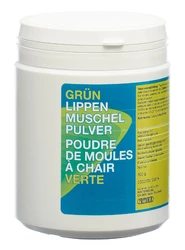
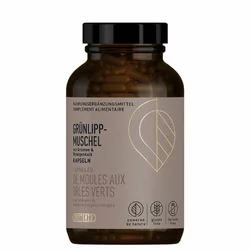
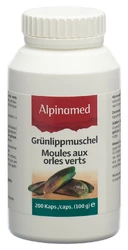
Which minerals and trace elements do green‑lipped mussels provide?
Other health‑promoting constituents of green‑lipped mussels include magnesium, silicon, potassium, zinc, calcium and sodium.
These nutrients are involved in many important processes in our bodies, promote better fluid distribution, stronger bones and healthier connective tissue. Green‑lipped mussels help supply our bodies with essential nutrients, maintain the function and stability of cartilage and protect joints from natural wear caused by daily stress.
Green‑lipped mussel in everyday life – smart combinations for maximum effect
- A regular intake of 1 to 1.5 g of green‑lipped mussel concentrate per day is recommended. Products are available in capsules, tablets or powder. For increased needs, about 2.5 g per day is taken. Note that all green‑lipped mussel products naturally smell of mussels.
- After capsules dissolve in the stomach, belching may occur. In this case the product should be taken before or at the start of a meal.
- As green‑lipped mussels are not a medicine, it can take several months for their effects to develop. However, initial results are usually noticeable after 2–4 weeks.
- You can prepare your joints for an active holiday or sporting event by starting green‑lipped mussel extract about 4–6 weeks beforehand. Regular, continuous intake of this product ensures that the joint‑friendly components of the mussel are available to your body during periods of strain.
- When joint disorders are already present, it is important to follow a plant‑focused, low‑meat diet with an increased omega‑3 content to complement the effect of the green‑lipped mussel extract on the joints.
- For nutrients to reach the joints and for joint fluid to renew, joints should be well perfused. Sufficient exercise is an important prerequisite. Joints should not be exposed to heavy loads. Walking, cycling and swimming in warm water are particularly suitable.
- For an effective metabolism, joints need adequate fluid intake. Drink low‑mineral water so that glycosaminoglycans always have enough fluid available for binding.
- When purchasing a green‑lipped mussel product, pay attention to its origin and quality: it should be free from heavy metals, algal toxins and shellfish poisons.
- In general, green‑lipped mussels are well tolerated. Rarely, intolerance may occur, manifesting as nausea and bloating. Swelling, tingling and itching of the skin after intake are signs of an allergic reaction.
- If you are allergic to shellfish proteins, you should avoid consuming green‑lipped mussels. If you suffer from a fish or seafood allergy, consult your doctor before taking them.
Try this nutritious product for yourself so its important nutrients can benefit your body and improve your mobility!