Nasal spray
Take care when your nose is blocked
editorial.overview
How does the nasal mucosa work?
10'000 Liter Atemluft mit unzähligen Keimen, Staub und Schmutz strömen täglich durch unsere Nase. The nasal mucosa with millions of cilia filters and clears all of this.
If the nose remains persistently blocked, more mucus is produced. The nasal mucosa swells and quality of life is greatly reduced. In this situation people often reach for a nasal spray to breathe more freely again through the nose.
Nasal sprays or rhinological medications deliver a fine spray mist of tiny droplets into the nasal cavity. The active ingredients in the spray form a thin film on the nasal mucosa and relieve symptoms directly at the site.
What types of nasal sprays are there and how do they work?
We distinguish between locally acting and systemically acting nasal sprays. Locally acting nasal sprays stimulate the sympathetic nervous system, causing the blood vessels in the nasal mucosa to constrict. This leads to decongestion and makes nasal breathing easier. Such sprays are used for colds with a blocked nose, sinus infections and allergies.
Locally acting nasal sprays include decongestant, saline, steroid-containing, cromoglicic acid-containing and antihistamine nasal sprays.
Systemically acting nasal sprays are used when the active ingredient is to be absorbed through the nasal mucosa into the bloodstream and distributed quickly throughout the body. This is the case with chronic and allergic rhinitis.
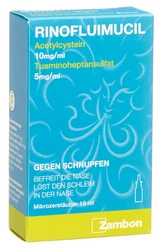
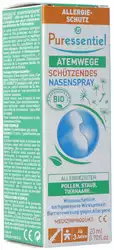
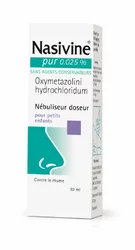
Why should decongestant nasal sprays not be used for more than a week?
Decongestant nasal sprays should be used for no longer than a week because otherwise the nasal mucosa may no longer be able to decongest without these sprays.
Sympathomimetics such as Xylometazolin, Oxymetazolin und Tramazolin, which are contained in decongestant nasal sprays, stimulate alpha-adrenergic receptors in the nose, leading to a strong narrowing of the vessels in the nasal mucosa, thereby reducing blood supply and causing the tissue to shrink. These active substances also reduce the secretion of the nasal mucosa and free the nose again. Decongestant nasal sprays are mainly used for middle ear infection, common cold, sinusitis, nosebleeds, allergic rhinitis and failure to equalise pressure in the ears.
Saline nasal sprays ("Meerwassersprays") moisturise the nasal mucosa and reduce inflammation. They contain a mildly antibacterial sea salt solution for particularly gentle care of the mucous membranes and to support the cilia in removing mucus and pathogens. Eucalyptus, aloe vera or chamomile are often used as anti-inflammatory additives.
When are steroid-containing nasal sprays used?
Steroid-containing nasal sprays contain immunosuppressive glucocorticoids such as triamcinolone, mometasone, dexamethasone or beclometasone. They act as decongestants and anti-inflammatories and have fewer unwanted side effects compared with oral steroids, since their action is limited to the local area.
Steroid nasal sprays are used for allergic rhinitis and chronic sinusitis and relieve symptoms such as itching, sneezing, a runny or blocked nose and burning eyes within a few hours of application.
How do antihistamines and cromoglicic acid relieve allergic rhinitis?
Cromoglicic acid-containing nasal sprays promote the formation of mast cells in the nasal mucosa and stabilise them to prevent the release of histamine from mast cells. This relieves hay fever symptoms.
Antihistamine nasal sprays relieve hay fever by blocking H receptors. Histamine binds to exactly these receptors and triggers the typical allergic reactions such as sneezing and swelling of the nasal mucosa.
Gentle help for the nose – Tips for effective use of nasal sprays
- Most nasal sprays can be used for up to seven days three to four times a day. Afterwards you can switch to a seawater spray. One spray per nostril is sufficient and the effect usually occurs within a few minutes. If the nasal spray reaches the throat, it should not be swallowed but, if possible, spat out.
- For steroid nasal sprays, the active ingredients are poorly soluble and present as a suspension, so the bottle must be shaken well before use.
- The nose should be cleared before use. Then lean the head slightly forward and give one to two sprays in each nostril. Avoid tilting the head back during application. To prevent cross‑contamination, do not share your nasal spray with others.
- When choosing a preparation, ensure a rapid onset of action. This also reduces the risk of habituation and the associated damage to the mucous membranes. In case of doubt, consult your doctor.
- If the nasal spray dries out the nasal mucosa, switch to a moisturising and caring spray containing seawater, dexpanthenol or hyaluronic acid.
- There are special nasal sprays for children that contain a much lower concentration of active substance and are less burdensome for the mucosa. Nasal sprays should only be used for short periods in children because their noses are more sensitive than those of adults.
- During pregnancy, decongestant nasal sprays should only be used for a short period and in consultation with the obstetrician. The vasoconstrictive effect can affect not only the nasal mucosa but also the uterus or placenta. Narrowing of vessels in these areas can impair the supply of oxygen and other nutrients to the unborn child.
- Pay close attention to the expiry date. Many nasal sprays, once opened, are only stable for six weeks to a few months. It is advisable to note the date of first use on the container to keep track.
- To wean off dependency, it is advisable to spray less frequently or to use children's nasal sprays.
- If you have a blocked nose for more than a week, see a doctor. Increased mucus production can also have other causes, such as an allergy or enlargement of the nasal turbinates.
A cold can be quite persistent. But with these tips it will go away quickly!