Olive oil
The liquid gold for your health
How is olive oil produced?
Olive oil is produced from whole or pitted olives either in traditional stone mills or in modern mechanical mills. The resulting paste is traditionally layered onto mats and pressed, or in modern processes mechanically kneaded to free the oil microparticles. A centrifuge then separates the paste into liquid components such as oil and water and solid components such as pit and pulp.
The extracted olive oil is decanted for at least 24 hours to allow suspended particles to settle and is ideally filtered immediately afterwards. It is then stored in stainless steel tanks under oxygen exclusion and with nitrogen added, at controlled temperature.
Which ingredients make olive oil particularly healthy?
Olive oil has a complex composition of constituents that give it its characteristic taste and aroma and also several health‑promoting properties. Polyphenols, also known as secondary plant compounds, are active substances produced by plants to protect against pests or sunlight and to attract beneficial organisms. In olive oil, polyphenols are responsible for the pungent and bitter taste.
Laboratory studies have shown that polyphenols can have anti‑inflammatory, antioxidant and blood‑pressure regulating effects. A higher polyphenol content, measured in milligrams per kilogram (mg/kg), indicates higher quality olive oil; top oils can show values between 500 and 800 mg/kg.
Another important constituent is oleocanthal, first identified in olive oil in 1995. This compound contributes to bitterness and is valued for its potentially beneficial properties, somewhat similar to ibuprofen. The natural plant pigment chlorophyll gives olive oil its green colour. Waxes from the protective layer of the olive skin can appear in chilled olive oil as small white flakes or crystals. The fatty acid composition varies according to olive variety, growing region and production method, while the content of free fatty acids must, under EU regulation, be ≤ 0.8 %.
Vitamin E (tocopherol) is another significant component of olive oil with antioxidant properties that protect the oil from oxidation and rancidity. The vitamin E content varies depending on olive variety, growing area and climatic conditions. Esters and alcohols from the olive fruit contribute to the oil's individual note; their composition depends on growing area, microclimate, olive variety and ripeness. Overall, the complex composition of olive oil reflects not only its taste but also its nutritional and health benefits.
What quality categories exist?
The classification of olive oils in the European Community is based on three main criteria: the method of extraction, the composition (in particular the free fatty acid content) and sensory analysis. Virgin olive oil is obtained solely by mechanical pressing of the olives. This means the oil is only washed, decanted, centrifuged and filtered and is not subjected to any further treatment. The classification is subdivided according to free acidity: the lower it is, the higher the quality.
Extra virgin olive oil is sensorily flawless, free of defects, with a free fatty acid content under 0.8 g per 100 g (≤ 0.8%). Virgin olive oil is sensorily acceptable with a free fatty acid content of less than 2 g per 100 g (≤ 2 %). Lampante oil has sensory defects and is unfit for marketing, with a free fatty acid content greater than 2 g per 100 g (> 2.0 %).
Refined olive oil is obtained by refining virgin olive oil, reducing acidity and oxidised substances. The free fatty acid content is under 0.3 g per 100 g. After refining the oil has a neutral taste and must be blended with extra virgin or virgin olive oil before consumption to restore flavour and colour.
Olive oil denotes a blend of refined and virgin olive oil. The free fatty acid content is at most 1 g per 100 g. There is no legally required minimum amount of extra virgin or virgin olive oil that must be added to refined oil, but reputable producers often use up to 30% extra virgin olive oil to improve taste and nutritional value.
Crude olive‑pomace oil differs from olive oil because it is obtained from the solid residues after pressing virgin olive oil, in particular skins, pulp and pits. These residues still contain a certain amount of oil, which varies depending on the extraction method. The crude olive‑pomace oil is extracted using a solvent, typically hexane, and the solvent is separated from the oil by distillation.
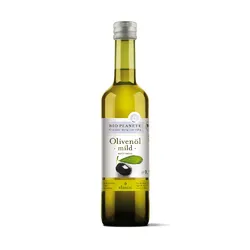
What health benefits does olive oil offer?
Olive oil is a key component of the Mediterranean diet, widely regarded as very healthy. It offers a range of health benefits. Olive oil acts as an antioxidant, notably because it is rich in secondary plant compounds. These antioxidants can capture and neutralise free radicals in the body, helping to protect cells and blood lipids, especially LDL cholesterol, from oxidative stress. In addition, olive oil improves blood flow in the vessels, which lowers blood pressure and reduces the risk of cardiovascular disease.
Studies show that olive oil as part of a Mediterranean diet helps stabilise blood sugar. The presence of polyphenols in high‑quality olive oil helps prevent or counteract insulin resistance associated with obesity and type 2 diabetes. Research also suggests that olive oil consumption may positively influence bone density, possibly due to its high polyphenol content. This effect could protect against osteoporosis by promoting the deposition of bone minerals.
Olive oil can be used both internally and externally. It moisturises the skin and is used in many cosmetic products for its nourishing properties. In hair care, olive oil reduces split ends and makes hair smooth and manageable.
From kitchen to skincare: tips for optimal use of olive oil
- To preserve the healthy properties of olive oil, enjoy it ideally raw. Avoid heating it above 130 to 175 degrees.
- Feel free to add olive oil to warm dishes after cooking to benefit from its full aroma and valuable components.
- For a nourishing full bath, add about 0.25 l of olive oil to water warmed to 37 degrees. Enjoy the comforting warmth and reapply the oil‑water to your skin from time to time.
- Use olive oil as an effective make‑up remover. Apply a small amount to a cotton pad and gently cleanse your face. The oil not only dissolves make‑up but also moisturises.
- For dry hair with brittle ends, a hair treatment with olive oil helps. Massage drops of pure olive oil into the ends and leave them to work for up to an hour before washing out with shampoo.
- For a nail bath, warm pure olive oil slightly and soak the fingertips for about 10 minutes. Then remove oil residues with soap.
- A lip scrub made from olive oil with a little salt and honey is nourishing. Apply the mixture to the lips, massage and rinse with clear water.
- In cases of head lice, olive oil is an effective home remedy. Spread warmed oil generously through the hair, leave it for several hours or overnight, comb thoroughly and then wash out with shampoo.
- If you suffer from constipation, you can take a teaspoon of olive oil on an empty stomach to gently stimulate bowel activity and aid digestion.
- Store olive oil in a dark, cool place, tightly closed, to preserve its shelf life.
- Taste is a decisive indicator of olive oil quality. Look for an aromatic, fruity and fresh flavour with a slight pungency or bitterness.
Olive oil is not only a culinary enhancement but, due to its health‑promoting properties and wide range of uses, can be considered a highly valuable natural product. From the kitchen to skin care and time‑tested home remedies, the versatility and positive effects of this oil are evident.