
Phytoestrogens
How to regulate your female health
editorial.overview
What are phytoestrogens?
The term phytoestrogens is formed from the Greek word “phyto” meaning “plant” and “estrogen”. Estrogen is an important hormone that in the female body regulates the menstrual cycle and controls fertility. It is also produced in small amounts in the male body, where it plays a role in bone and fat metabolism, prostate and vascular health, and fertility. Phytoestrogens are a diverse group of plant compounds whose chemical structure resembles the sex hormone 17‑beta‑estradiol, regarded as a particularly active representative of the body's own estrogens.
In plants, phytoestrogens serve many functions: they act as defence compounds against pathogens and are crucial for plant development. They are important signalling molecules for communication between plants and beneficial microorganisms and for information exchange between plants. The phytoestrogen content in plants rises under unfavourable conditions, for example due to adverse growth conditions such as severe drought or cold, pest infestation, or physical damage to the plant.
What are the main groups of phytoestrogens?
Phytoestrogens are classified into two main groups: flavonoids (such as isoflavones, coumestans, prenylflavonoids) and non‑flavonoids (such as lignans and resveratrol). Isoflavones, found mainly in soy and soy products, are particularly well researched. The phytoestrogen content in plants can be influenced by environmental factors such as drought, cold or pest infestation.
What affects the action of phytoestrogens in the body?
It is possible that two people consuming exactly the same amount of phytoestrogens will nevertheless have different amounts of active metabolic products of these compounds in their blood. The gut flora plays a decisive role here: it converts phytoestrogens into substances, called metabolites, that are more easily digested by humans. With regular consumption of isoflavone‑rich foods, bacteria capable of breaking down these compounds can proliferate in the gut—provided those bacterial species are present.
Phytoestrogens can bind to the body's estrogen receptors. These receptors are found, for example, in the reproductive organs, in bone tissue and in the cytoplasm of certain cells. The process follows the key‑lock principle: estrogens or phytoestrogens first cross the cell membrane and then bind to the estrogen receptor in the cytoplasm.
After binding, phytoestrogens can either inhibit (anti‑estrogenic effect) or activate (estrogenic effect) estrogen receptors. Through this mechanism, these plant substances influence biological signals in the body that are affected by estrogens. The effect depends, among other things, on the amount of endogenous estrogens produced by the body at that time. Endogenous estrogens bind much more strongly to estrogen receptors than phytoestrogens, resulting in a stronger estrogenic effect.
At high estrogen levels, phytoestrogens compete with endogenous estrogens for receptor binding sites. The estrogen effect is then present but markedly weaker than when endogenous estrogen binds to the cell. In this way, the effect of the body's own estrogens is reduced, leading to an anti‑estrogenic action. Conversely, phytoestrogens act like estrogens when the estrogen level is low, for example during the menopausal transition.
Can phytoestrogens influence cancer risk?
Whether phytoestrogens interfere with the hormonal system, increase breast cancer risk, or cause feminisation in men is controversial. Studies have identified various mechanisms by which, for example, isoflavones from soy can protect against cancer. Consumption of soy products can activate certain immune cells, so‑called cytotoxic T cells, which can recognise and destroy cancer cells. Phytoestrogens also support programmed cell death of cancer cells, reduce metastasis risk and alleviate side effects of radiation and chemotherapy.
There is evidence that soy may be effective not only for breast cancer but also for other cancers. Numerous studies related to prostate cancer show how consumption of soy can prevent the development of prostate cancer and slow its progression. Regular consumption of soy products such as tofu is generally safe for men and does not lead to feminisation. On the contrary, there is substantial evidence of beneficial effects on prostate health.
The cancer‑promoting or ‑inhibiting effect of isoflavones strongly depends on their form. In whole soy products such as tofu, soya milk or tempeh, isoflavones act together with other plant compounds to exert multiple anticancer effects. Even in estrogen‑dependent breast cancer, moderate consumption of such whole soy products shows protective effects. Isoflavones as supplements in high concentration, however, can activate cancer‑promoting genes and should therefore be used with caution.
How do phytoestrogens affect menopausal symptoms and the cardiovascular system?
Eating foods that contain phytoestrogens can also have a beneficial effect on menopausal symptoms such as hot flashes and vaginal dryness. Studies in women aged late 30s to mid‑60s have shown that taking soy isoflavones increases skin elasticity and reduces wrinkle depth.
Several studies have shown that daily consumption of soy protein lowers LDL cholesterol, considered harmful to the heart and vessels, while increasing HDL cholesterol, regarded as “healthy”.
How to benefit from phytoestrogens: the most effective tips
- Phytoestrogens occur in over 300 plants, including red clover, hops, Rhapontic rhubarb, sage and licorice root. These medicinal plants can be used as tea, tincture or extract.
- Soy and soy products contain high amounts of isoflavones, with levels in soybeans and soy products ranging from 47 to 142 mg per 100 g of fresh product. By comparison, isoflavone levels in various vegetables range between 0.002 and 0.575 mg per 100 g. There are therefore good reasons to include soy products in the diet. When buying soy products, choose organic quality to avoid glyphosate‑contaminated soy.
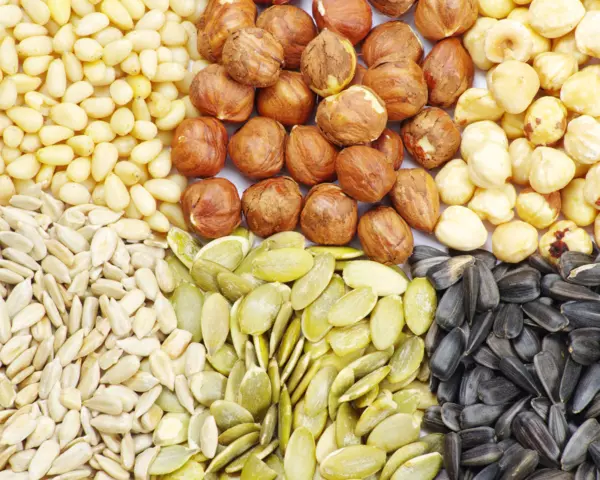
- Lignans are, after isoflavones, the second most important group of phytoestrogens in our diet. They occur in many plants but usually in small amounts. Sesame seeds are a rich source with levels of 405 to 1178 mg per 100 g fresh mass. Flaxseeds also have high levels (379.4 mg per 100 g) and pumpkin seeds 265 mg per 100 g. In nuts the levels vary up to 0.198 mg per 100 g, while in legumes, fruits, vegetables and cereals they are often even lower.
- Prenylflavonoids are rare in our diet. Hops are a rich source of these phytoestrogens, which are also present in various beers. Prenylflavonoid content in different beers ranges from 0 to 0.95 mg per 100 ml. Alcohol‑free beer contains only about 0.02 mg per 100 ml.
- Resveratrol is a phytoestrogen best known from red wine. An effective dosage of resveratrol is around 500 to 1500 mg per day. Such amounts are hardly achievable with normal food. Therefore, it is recommended to take resveratrol as a dietary supplement if one wishes to benefit from its potential health advantages.
- Cauliflower, broccoli, Brussels sprouts, kohlrabi and kale are rich in phytoestrogens. They also contain many other vitamins and minerals important for hormonal balance. Cruciferous vegetables should therefore be part of the daily menu.
- Dried fruits also contain phytoestrogens. The highest levels are found in dried apricots (445 μg / 100 g), dates (330 μg / 100 g), prunes (184 μg / 100 g) and raisins (30 μg / 100 g). Dried fruits should be eaten in moderation because they also contain a lot of fruit sugar.
- Berries are real powerhouses, rich in antioxidants, dietary fibre and phytoestrogens. This is especially true for red fruits such as strawberries, lingonberries, cranberries and raspberries. Even out of season, you can safely buy these fruits frozen and enjoy them.
- For healthy postmenopausal and perimenopausal women, the following supplement dosages are considered sufficiently safe: up to 100 mg/day of soy isoflavones for up to ten months, up to 43.5 mg/day of red clover isoflavones for up to three months. In general, it is advisable to obtain phytoestrogens from plant foods and to use isoflavone preparations only after consulting a physician.
In a whole food, phytoestrogens fully express their effects by interacting with numerous other plant compounds. This creates a powerful synergy that has proven very useful in various medical conditions.