Psoriasis
When your own skin rebels
What is psoriasis?
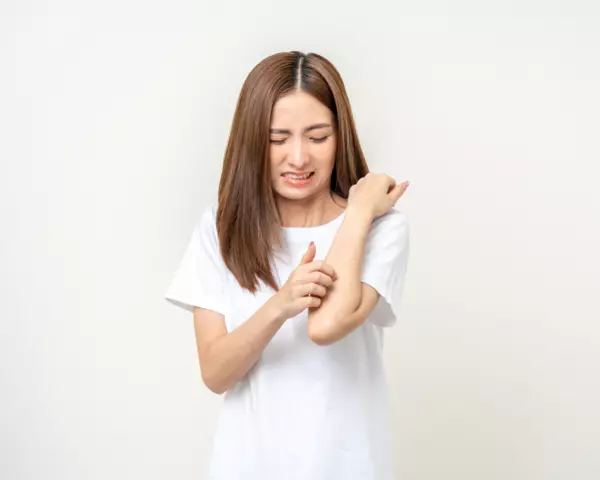
Psoriasis is a chronic, inflammatory skin condition in which the immune system reacts inappropriately against the skin. The term “psoriasis” comes from Greek and literally means “itch”, reflecting the frequent symptom of itching. Psoriasis appears as red, often extensive, itchy patches on the skin that are covered with silvery-white scales or pustules.
The skin changes seen in psoriasis result from greatly accelerated cell growth. In the normal skin renewal process, the epidermis renews itself in about four weeks. During this time, new cells are formed and the outer, cornified cell layer is shed. In psoriasis, however, new cells migrate much faster through the top layer of skin to the surface than usual. Because older cells are still present and cannot be shed quickly enough, the skin thickens and scaling increases.
The underlying cause is autoimmunity: an overactive immune system releases elevated levels of signalling substances. These trigger inflammatory reactions and stimulate skin cells to multiply faster than normal. Affected areas can vary in size. Initial psoriatic lesions may be small and pinpoint and are often accompanied by severe itching. Superficial scales are easy to scrape off. Deeper scales occur on younger, thinner skin. If this layer is scratched off, skin bleeding can occur.
Minor changes may occur, for example around the ear, the navel and the anus. Commonly affected are areas of skin that are frequently stretched, such as the elbows or knees. Places where clothing rubs (shins and calves, waistline, buttocks, neck) also often suffer from psoriasis. The scalp can be affected as well. No skin region is exempt; even the nails are often involved: small, easily overlooked depressions (pitting) or yellowish-brown discolorations (oil spots) can develop.
What forms of psoriasis are there?
Several forms of psoriasis are distinguished depending on the type of symptoms. The location on the body also plays a role in classifying the forms. Psoriasis vulgaris is the most common form. This form, also called plaque psoriasis, affects about 80% of all psoriasis patients. The name derives from the typical appearance: irregular, sharply demarcated, raised red plaques with silvery scales. Skin changes most commonly occur on the extensor sides of the arms and legs.
In inverse psoriasis, skin changes appear in relatively unusual locations, particularly in fold regions such as the groin, armpits, the backs of the knees, and the genital and buttock folds. Lesions in inverse psoriasis look different from those in psoriasis vulgaris, where scales form. Due to moisture in the skin folds, there are usually no scales but rather red, itchy and weeping areas. Pustular psoriasis is characterised by pus-filled yet sterile pustules. These pustules mainly appear on the soles of the feet and the palms of the hands.
What are the causes and triggers of psoriasis?
The causes of psoriasis are diverse and not yet fully understood. A hereditary predisposition appears to play a role. However, not everyone with a genetic predisposition develops the disease. External and internal factors, so-called triggers, are also decisive.
These triggers can vary from person to person: overweight, alcohol and tobacco consumption, skin damage from tattoos or sunburn, constant skin irritation from tight or abrasive clothing, past serious infections (such as streptococcal tonsillitis, pneumonia, urinary tract infections, measles, influenza), hormonal fluctuations, environmental toxins and certain medications. Climatic factors such as cold and dryness or psychological stress, whether occupational or personal, can also affect the skin and trigger a new flare-up.
How does psoriasis progress and what comorbidities can occur?
Psoriasis is a chronic condition that runs in phases. Acute flares alternate with largely symptom-free periods. A typical onset of the disease before the age of 40 is referred to as type 1 psoriasis. This early form is often associated with a more severe course and occurs more frequently in families. Between 60 and 70% of those affected have this form. The late form (type 2 psoriasis) occurs in the second half of life, between 40 and 60 years of age, and often has a somewhat milder course. Familial clustering is rare.
Patients with psoriasis often suffer from comorbidities that increase the disease burden. Of particular concern is the so-called “psoriatic march”, a systemic inflammation with potential vascular damage. This condition is frequently accompanied by insulin resistance, fatty liver, high blood pressure and arteriosclerosis. The life expectancy of those affected can be significantly reduced as a result.
The problem doesn't resolve by itself either: the best tips and tricks for dealing with the disease
- Regular skin care is just as important as brushing your teeth daily. During symptom-free phases, good skin care can help prevent new flares or mitigate the effects of flares. With proper care, the skin's appearance generally improves, symptom-free periods last longer, and heavy medications are only necessary in acute cases.
- In skin care for psoriasis, certain active ingredients should be used. These include moisturisers (hyaluronic acid or aloe vera), salicylic acid for heavily thickened areas, lipids to strengthen the skin barrier and reduce irritation, and urea.
- Cleaners should be soap-free, re-lipidising and pH-neutral. Affected areas can be washed daily with lukewarm chamomile tea.
- Lukewarm showers are better than hot baths because the skin does not dry out as quickly. Baths should be limited to a maximum of twice a week and no longer than 20 minutes. Good bath additives are oil baths or salt baths; avoid bubble baths. A four-week cure with Dead Sea healing clay has often proven helpful. After bathing, the skin should always be dried thoroughly. This is especially important for joint folds and the spaces between the toes.
- Heavy scales prevent moisturisers from penetrating and acting in the affected skin layers. Scales are best removed by gently rubbing them off with a washcloth after a lukewarm oil bath of about 10 minutes.
- Scratching is forbidden. Constant scratching can cause micro-injuries to the skin. That means even more stress for already irritated skin. Try relaxation methods such as autogenic training or yoga to relieve itching. Some skin care products contain polidocanol, a local anaesthetic — this can help relieve and calm severe itching.
- A conscious diet is a decisive factor for a positive course of the disease. What belongs on the menu with psoriasis: fruit and vegetables high in beta-carotene, low-fat dairy products, lean meats and whole-grain products.
- Fatty sea fish such as salmon, herring and mackerel can be eaten more often, as they contain omega-3 fatty acids with anti-inflammatory effects. Oils from these fish are also beneficial. These oils can be taken as supplements if the fishy smell is unpleasant. Other useful supplements include devil's claw and frankincense, especially when joints are involved.
- The skin reflects the gut. The simplest and cheapest way to support the gut is to drink three litres of water or alkaline herbal tea a day. This allows much of the accumulated toxins to be excreted via the kidneys instead of burdening the skin. Recommended alkaline herbs include nettle, horsetail, mullein, thyme, chamomile, dandelion, mint, lemon balm or ginger.
- Smokers experience more flares, require medication more often and have a markedly reduced quality of life. Quitting smoking is therefore something you can do to positively influence the course of the disease. Excessive alcohol also worsens psoriasis in most cases. It is therefore advisable to reduce alcohol consumption to a minimum.
- Maintain a healthy body weight, as overweight is one of the main risk factors for developing psoriasis. Exercise and sport promote a good body feeling. Find out which sport suits you and what you enjoy.
- Sun on the skin feels good. A stay by the sea relieves symptoms in many people with psoriasis. Many report positive experiences with regular stays at the Dead Sea. But be careful in strong sun; always apply a high sun protection factor, as sunburn can worsen psoriasis.
- Avoid psychological stress. The disease itself is a burden, but it should not become the centre of life. Psychological support can help activate positive coping strategies and learn to deal better with the condition.
- Talk about your condition. It is very helpful to talk about psoriasis and to explain to often uninformed people that the disease is not contagious. Lead your life actively and view psoriasis as part of it.
- Let other people affected help you! Talking with other sufferers and the experience that others have similar problems is often more helpful than creams and doctor visits.
- Avoid risk factors. Keep a diary if you do not know your triggers. For each new psoriasis flare, note what might have caused it. Keep these records over a long period. This way you will get a sense of which factors you should avoid.
Psoriasis is not curable, but balanced nutrition, careful skin care, avoiding risk factors and self-care can reduce flares and speed up healing.