Tape
The miracle against pain without medication
editorial.overview
What are tapes?
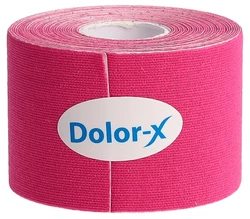
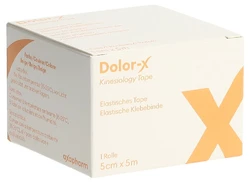
Tapes are special elastic adhesive strips, made from stretchable cotton fabric or nylon and able to stretch up to 140% in the longitudinal direction.
They are coated with a acrylic adhesive layer applied in a sinusoidal pattern so the tape can exert a gentle action on the tissue. Tapes have the same thickness and elasticity as our skin, which allows them to adapt well to our natural movements. They are used as an adjunct and supportive measure in physiotherapy, osteopathic treatment and physical therapy.
What does the term kinesitherapy mean?
The Japanese chiropractor Kenzo Kase invented the kinesiological tape therapy. The term tape comes from English, where the word means “band”, and “kinesis” stands for “movement”. It refers to the adhesive strip used to optimise mobility and freedom of movement of the affected area.
The function of a tape is based on stimulating the skin receptors with an effect similar to a massage. 85% of pain points are located on our skin. The kinesio tape exerts a pull on the top layer of the skin, stimulates nerve endings and thus activates the pain-relief system. In addition, the circulation of the smallest vessels and lymphatic flow are stimulated, improving nutrient supply and supporting the body's own healing process.
How does kinesio tape affect skin and pain receptors?
Because kinesio tape lifts the skin, spaces are created between the dermis and the epidermis where many receptors are located. This promotes pain relief. Depending on the taping technique, tape therapy can help with many conditions.
It helps prevent injuries during intensive sports training by unloading muscles, ligaments and tendons. It speeds up healing after sports injuries such as sprains or muscle tears and relaxes tense muscles of the shoulder girdle, cervical spine and back after many hours sitting at a desk.
For which complaints and in which therapies are tapes used?
Tapes – especially kinesio tapes – are widely used in modern pain and movement therapy and are growing in popularity among athletes, physiotherapists and in rehabilitation medicine. They offer a gentle, drug-free way to support the healing process.
Muscular complaints such as muscle tightness, hardening or strains are relieved by the elastic application of the tape, reducing pain and improving mobility.
In cases of osteoarthritis, instability or overload of the knee, shoulder or ankle joints, tapes provide stability without severely restricting freedom of movement.
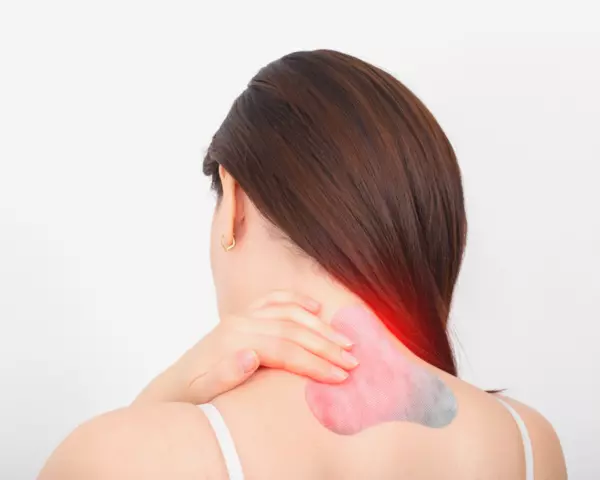
Tapes can positively influence posture in back and neck pain and resolve tensions through gentle, continuous stimuli.
Lymph tapes help stimulate lymphatic flow – ideal for swelling after surgery or injuries.
For tennis elbow, Achilles tendon irritation or after ligament sprains, tapes provide support and aid healing.
Even for headaches, targeted taping in the neck or shoulder area can help relaxation.
Tapes are often used alongside physiotherapy, manual therapy or rehab measures. In the sporting area they are also used for injury prevention and to support muscle function during training or competition.
How can taping help with headaches, menstrual pain and osteoarthritis?
Tape can provide relief for headaches and menstrual pain: a common cause of headaches and migraines are abnormal tensions in connective tissue and muscle tightness, and menstrual pain is often caused by spasms of the tissue.
Even for osteoarthritis pain, taping can unload the joint. Bruising after surgery resolves faster with kinesiotherapy.
How to apply kinesio tape correctly: best tips for optimal adhesion
- Keep in mind that an effective tape dressing should be applied correctly. This should be done by a physiotherapist. If you want to do it yourself, you should know how and where to apply it. Consult your physiotherapist and they will show you how to tape correctly. You can, however, only tape body parts that are easy to reach by yourself.
- To help the tape adhere better to the skin and to prevent fraying, use scissors and round off the corners of the tape.
- The tape should be applied to clean, dry skin. Oil, grease, sweat, powder and dirt impair adhesion. For this reason, you should also take care not to touch the adhesive with your fingers.
- Heavily hairy body regions should be shaved first. Alternatively, you can fix the hair to the skin with a spray adhesive.
- As a rule of thumb when taping: stick the start of the tape to the origin of the muscle that does not move the painful area, and the end of the tape to the muscle that moves it.
- Rub the tape several times with your hand after applying. This generates body heat and helps the tape adhere better.
- For swelling, apply the tape without tension; otherwise the tape is applied with a gentle stretch.
- If you are using the tape as a pain tape, apply it as a cross over the pain point. This helps to unload the musculature.
- To remove the tape more easily, you can use warm water, baby oil or disinfectant.
- Since most tapes are waterproof, you can wear them for a week even when bathing or showering.
- Note that the tape should not be used in cases of eczema, psoriasis, atopic dermatitis, thrombosis, varicose veins or open wounds.
- For sensitive skin, do a test before applying the tape: stick a small strip on the forearm and check tolerance. If redness occurs, do not apply the tape.
With these tips you will surely achieve a long-lasting therapeutic effect!