Thermometer
How to measure fever correctly
editorial.overview
What are normal body temperature values?
Mornings are considered healthy with a body temperature of 36.5 degrees Celsius in the rectum, 36.2 degrees under the tongue and 36.0 degrees in the armpit. It fluctuates during the day and reaches its maximum in the late afternoon.
Deviations from normal values can indicate various illnesses, inflammations, infections and disturbances of bodily functions. Our body temperature is like a heating system whose central regulator is located in the brain. If necessary, this regulator raises the temperature to kick-start the defence against infections.
What types of thermometers are there?
Since buying a thermometer is a long-term purchase, it's worth choosing the right thermometer — one that is easy to use and provides accurate readings.
The digital contact thermometer has a metal-tipped sensor and the temperature is determined by measuring electrical resistance. The thermometer requires batteries and is activated with a button press. When the body temperature stops rising, the fever measurement ends and an audible signal is heard. The temperature value is shown on a digital display. With correct use, results are very accurate and deviate from the actual temperature by only a tenth of a degree. Such contact thermometers can be used rectally, sublingually and axillary.
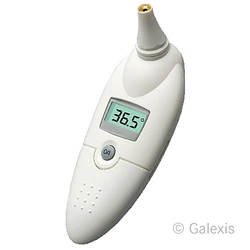
The digital ear thermometer measures infrared radiation at the eardrum without contact within a few seconds. Our body emits infrared radiation, and close to the carotid artery the temperature is as high as inside the body. This infrared radiation is captured by a special lens and converted into a temperature value. Proper handling is important here and the measurement can be noticeably less accurate than with contact thermometers. According to standards, the deviation from real body temperature can be up to three tenths of a degree. The advantage, however, is that this type of measurement is not perceived as unpleasant.
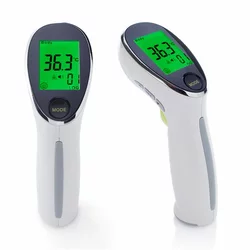
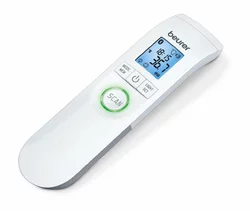
Another variant of the infrared thermometer is the forehead thermometer. In this case the measurement takes place within seconds on the surface of the forehead – directly on the skin or from a short distance depending on the model. Advantages of this method include its hygiene (contactless models minimise the risk of virus or bacteria transfer) and the ability to measure temperature even in sleeping children. However, false readings are common, as this type of thermometer is among the least accurate.
How accurate are digital contact thermometers compared with ear and forehead thermometers?
Digital contact thermometers are considered very accurate, especially when used under the tongue, rectally or under the armpit – rectal measurement being regarded as the gold standard for accuracy, particularly in babies and toddlers.
When it comes to reliability and precision — particularly for medically relevant temperature checks — digital contact thermometers are the best choice. For a quick spot-check, forehead or ear thermometers offer a practical compromise between speed and comfort.
What methods are there to measure body temperature?
Depending on the type of thermometer, there are different application methods. With the axillary method the temperature is measured in the armpit cavity by holding the thermometer in place under the armpit — quite comfortable, but the results are inaccurate.
With the sublingual method the thermometer tip is placed under the tongue. This method allows a more accurate measurement.
The rectal method is often perceived as unpleasant: the thermometer tip is inserted into the anus for the measurement. This method is considered the most precise, as it measures the temperature inside the body. It is typically 0.3–0.4 degrees Celsius higher than the oral measurement.
Body temperature can also be measured in the ear, in the groin area or in the vagina.
Detecting fever and what to do – usage tips for all thermometer types
- For an axillary measurement, place the thermometer under the armpit and ensure the forearm is held close to the body. Note that this method is considered very inaccurate.
- For a sublingual measurement, position the tip of the thermometer under the tongue as far back as possible, in the heat pockets to the right and left of the tongue root, and keep the mouth closed until the measurement is finished.
- You must not speak or move the thermometer in the mouth during the measurement. If necessary, hold the thermometer lightly with your hand. The tip should not be positioned too far forward, otherwise the results are unreliable. After measurement, the thermometer should be cleaned with dish soap and water and then disinfected.
- Note that the sublingual method is not suitable for toddlers, for mouth injuries, or for people with a cold or breathing problems. A quarter of an hour before the measurement you should not consume hot or cold foods and drinks — they can affect the results.
- For a rectal measurement, lie on your side and pull your knees up to relax the buttocks. Insert the thermometer into the anus with a twisting motion no deeper than 3 cm. After the measurement, clean and disinfect the thermometer.
- Before use, check that the thermometer is free of disinfectant residues, otherwise this can cause skin irritation. If necessary, lubricate the tip of the thermometer with a little lubricating gel or wound cream so a thin film forms, or make the tip slippery with some warm water.
- For injuries, wounds and diseases in the anal and intestinal area, rectal fever measurement is not recommended. The same applies to restless persons.
- When using an ear thermometer, ensure correct handling: the sensor should be able to capture the heat radiated from the eardrum. Pull the ear slightly backwards so the ear canal is free. Your child should not have been lying on that ear beforehand, otherwise incorrect values may result.
- Note that ear measurement is not suitable in the case of a middle ear infection. For babies, the ear thermometer is only used from six months of age — before that the ear canal is too small.
- Check the batteries regularly so you can replace them in time if necessary, ensuring the thermometer always works.
Now it is up to you to decide which fever thermometer to choose and which measurement method is right for you!