Trans fats
Fats you should really avoid
What are trans fats?
Fat is an essential nutrient with many functions, but trans fats are not. When referring to transfette, the correct term is trans fatty acids — a form of unsaturated fatty acids in the trans configuration.
In fatty acids, made up of linked carbon atoms, every single bond means each carbon atom has two hydrogen atoms. If both hydrogen atoms are on the same side of the chain, this produces a normal, naturally unsaturated cis-configured fatty acid (“cis” is Latin for “on this side”). At the double bond the chain forms a kink.
Trans fatty acids are characterised by their trans configuration. One hydrogen atom is at the beginning and the other at the end of the chain. The term “trans” also comes from Latin and means “across” or “on the other side”. It indicates that one hydrogen atom has effectively “switched” to the other side of the chain. With this arrangement the chain cannot kink and remains straight. That small structural difference is exactly why they affect the body differently.
How do trans fats form?
They form when fats are partially hydrogenated to make them spreadable. Formation mainly occurs during the industrial hydrogenation process of vegetable fats, also called hydrogenation. This process changes fat structure from liquid to spreadable to solid.
Trans fats also occur naturally in the digestive tract of ruminants such as cows, sheep and goats. Microorganisms there convert unsaturated fatty acids from feed into trans fatty acids. Humans ingest them through consumption of dairy products and meat.
High temperatures can affect the molecular structure of fats when cooking, frying and roasting with fats and oils. Duration and temperature are critical. How heat-stable a fat is depends on its composition: a higher concentration of saturated fatty acids yields a higher so‑called smoke point, beyond which oils begin to break down. Vegetable oils rich in unsaturated fatty acids can be converted into trans fats from as low as 130 degrees.
Processing of refined vegetable oils can also lead to trans fat formation: during deodorisation, a processing stage, the oil is heated up to 250 degrees Celsius to remove unwanted flavour and odour compounds.
Partially hydrogenated fats also arise when oils are heated repeatedly. This happens because the oil decomposes more on cooling and re‑heating. For example, sunflower oil can double its trans fat content on a second frying cycle at 190 degrees.


What do trans fats do in the body?
Bent-chain fatty acids are particularly beneficial because, when we consume fatty foods, they are incorporated into our cell membranes. These membranes, which are partly built from fatty acids, gain elasticity important for health from the bent conformation. Consumption of straight-chain trans fatty acids causes them to be incorporated into cell membranes as well — as a result, the membranes lose their elasticity and their normal function.
Dietary trans fats lead to a rise in cholesterol, particularly low-density lipoprotein (LDL), commonly known as “bad cholesterol”. LDL transports cholesterol from the liver to other organs and deposits in the vessels when its concentration is too high. This process can increase the risk of cardiovascular disease, especially the development of coronary heart disease (CHD). In CHD, the coronary arteries calcify and narrow due to atherosclerosis.
Hydrogenated fats in the diet contribute to the development of inflammation, which is involved in the onset of various diseases, including diabetes, depression, Alzheimer’s disease, rheumatism, psoriasis, cancer and inflammatory bowel diseases such as Crohn’s disease and ulcerative colitis. A study from ETH Zurich also suggests these fats may disrupt glucose metabolism and promote the development of diabetes. Additionally, they can lower testosterone levels, reduce sperm quality and support acne formation.
Which foods contain trans fats?
Trans fats are mainly found in highly processed industrial products. These include convenience foods, ready meals, baked goods, fast food, fried foods, sweets, salty snacks, spreads, sauces and dips, and muesli. Significant amounts are also present in cheese, butter and cream, as well as in meat from ruminants.
How can I identify trans fats — how are they declared on packaging?
In many countries there is no direct labelling requirement or detailed information on packaging. Food information regulations require that hydrogenated fats or oils used as an ingredient be indicated as “fully hydrogenated” or “partially hydrogenated”. In ingredient lists of ready meals they may also appear as “vegetable fat, partially hydrogenated” or “unsaturated fatty acids, contains hydrogenated fat”. For consumers it is nevertheless very difficult to assess the exact amount. For example, croissants contain about 0.7 grams of trans fats, while chocolate croissants can contain even more.
How do I avoid trans fats?
It is advisable to avoid them while they still exist in our diet. The occasional portion of fries or a croissant is not a problem if the overall diet is balanced. It is better, however, to avoid these harmful fats as much as possible. This is not easy because they are present in many frequently consumed foods. It can be difficult to remove these products entirely from your diet. Still, always study ingredient lists and check items carefully before placing them in your shopping basket.
Here are the best tips for a healthy diet without harmful fats
- The World Health Organization (WHO) recommends that less than 1% of daily energy intake should come from trans fats. With a daily calorie intake of 2000 calories, this corresponds to an upper limit of 2.2 grams. The problem is that even a small portion of fries or a croissant can contain about 1 gram of trans fats.
- It is important to know that trans fat content can vary greatly because it depends on the type of fat used and the manufacturing process. The amount in a product can therefore vary greatly depending on whether it comes from a discount store, a takeaway or a bakery. There are also large international differences. Keep this in mind when choosing your diet.
- Cook your meals fresh at home and avoid convenience foods and fast food. Aim for a healthy, nutrient-rich plant-based diet and try to minimise consumption of industrially processed foods.
- Prefer milk and dairy products from organic farming and pasture-based systems, as these generally contain fewer trans fats.
- Note: vegetable oils with a higher proportion of unsaturated fatty acids are more sensitive, i.e. they should preferably be used in cold preparations or added to dishes after cooking.
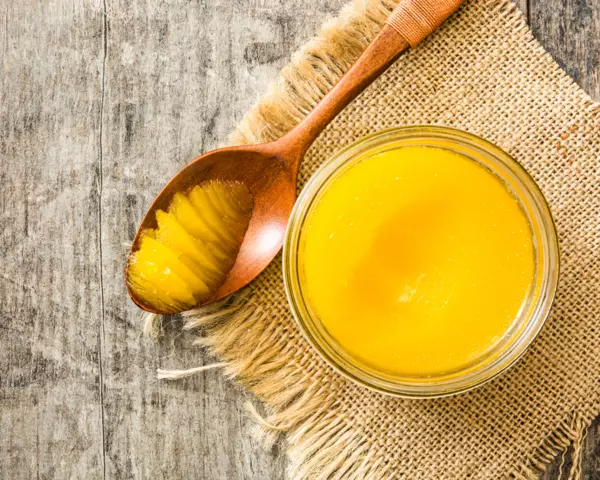
- For frying, it is recommended to use heat-stable fats rather than heat‑unstable oils. For high temperatures (180 to 230 degrees Celsius) use coconut fat, ghee, clarified butter, high‑oleic oils and refined sunflower, peanut, soy and rapeseed oils. Extra virgin olive oil and butter are suitable for medium temperatures (160 to 180 degrees Celsius).
- When frying, take care that butter does not turn black and that no smoke occurs, as happens with overheated oil. If oil begins to smoke during frying, it should not be used any further. The oil has decomposed.
- When deep-frying, use only an air fryer, because it requires considerably less oil than conventional deep fryers.
- Do not reuse already used oil and wash pans thoroughly after use. Otherwise you promote the formation of trans fatty acids.
- Check ingredient lists carefully when shopping. If the ingredients list contains terms such as “vegetable fat, partially hydrogenated” or “vegetable fat, hydrogenated”, these are hidden clues to the presence of trans fats.
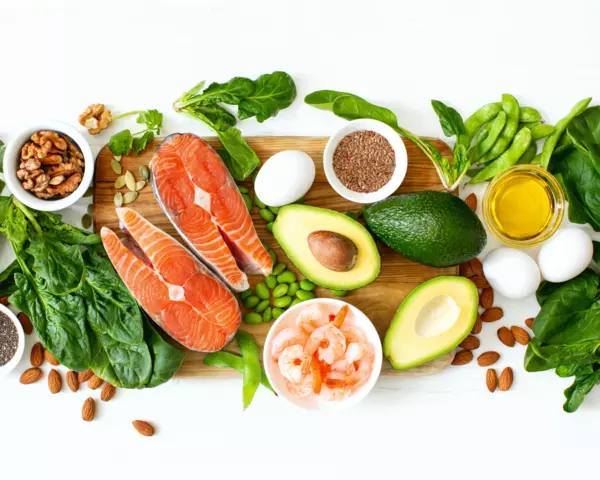
- Omega‑3 fatty acids, by contrast, are healthy fats. Fatty sea fish such as salmon, mackerel and herring are particularly rich in EPA and DHA. Short-chain omega‑3s are mainly found in linseed, hemp and walnut oils as well as in the corresponding nuts and seeds. Healthy adults are recommended a daily intake of about 250 milligrams of EPA and DHA.
- And always remember: alongside a balanced diet, regular exercise is essential to stay healthy and avoid overweight.
By eating a balanced diet with fresh, unprocessed foods we can minimise negative impacts on our health. Small but consistent changes to our eating habits make a big difference to our wellbeing!