

Ghee
The ancient elixir for healthy cooking
What is Ghee (clarified butter)?
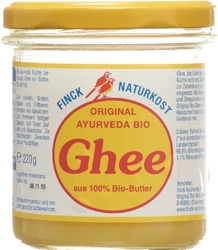
Often also called clarified butter, it is a traditional fat that plays a central role in Ayurvedic cuisine. It is produced by gently heating butter to remove milk solids and water.
This process gives it its characteristic golden-yellow colour and intense butter aroma. Unlike ordinary butter, which contains a high proportion of liquid and milk protein and is therefore only partly heat-stable, ghee consists of roughly 99 percent fat. This composition allows it to be used at high temperatures without burning or losing its flavour.
In India it is used not only in cooking but also in religious ceremonies. Ghee is thus more than just a cooking fat — it is a cultural symbol of purity and is valued for its versatile uses and health benefits.
What does ghee do for our health?
The traditional Indian clarified butter has a high status in Ayurveda and is considered beneficial for health. While many of the claimed health benefits are not fully proven by science, there are several properties supported by both tradition and modern research.
Ghee is considered easy to digest, as it is lighter on the stomach compared with other fats and oils. It contains short-chain fatty acids that can be quickly converted into energy. These properties make it particularly valuable for people with sensitive digestion or digestive issues.
Because ghee is almost free of carbohydrates, it is well suited for ketogenic diets, which prioritise low carbohydrate intake.
It contains compounds with anti-inflammatory properties. Studies show that ghee can reduce the production of pro-inflammatory molecules in the body. This may be helpful for chronic inflammatory conditions such as arthritis or inflammatory bowel diseases.
In Ayurveda, ghee is primarily used externally for wound healing. It is applied directly to the skin to promote healing of injuries and reduce scar and blister formation. Due to its moisturising properties, it is also used to care for dry and irritated skin.
Thanks to its high nutrient density, including antioxidants, vitamins and minerals, it can support the immune system. Antioxidants help combat free radicals and protect cells from damage, which supports overall health.
Experiments show that regular consumption may contribute to lowering cholesterol levels. A balanced cholesterol level is important for cardiovascular health because it reduces the risk of heart disease.
Does ghee offer more benefits than butter?
Both fats are widely used in cooking but differ in their health effects and applications.
Both are rich in saturated fatty acids, but ghee contains no milk proteins since these are removed during the production process. As a result, ghee is also suitable for people with lactose intolerance or milk protein allergies.
The calorie difference is minimal: one tablespoon of ghee contains about 120 calories, while butter provides around 100 calories. The saturated fat content in one tablespoon of ghee is about 13 grams, compared with about 11 grams in butter.
A key advantage of ghee is its high smoke point of approx. 250 degrees Celsius. That means it can be used at high temperatures without forming harmful substances like acrylamide, which can develop when heating other oils. It is excellent for frying.
Studies have shown that when soybean oil is heated to 160 degrees Celsius, the risk of acrylamide formation is ten times higher than with ghee. Butter, on the other hand, is better suited to moderate temperatures due to its creamy taste and better baking properties.
Research suggests that moderate consumption has positive effects on heart health, as it raises HDL cholesterol and may prevent the build-up of fatty deposits in the arteries.
One study found that ghee stimulates the production of the protein ApoA, which is important for HDL synthesis. Nevertheless, people with elevated cholesterol should consume both ghee and butter in moderation, since excessive intake can also negatively affect LDL cholesterol.
Is ghee healthier than oil?
There is no blanket answer to this question, as both fats have different properties and health advantages.
Ghee is rich in saturated fats and stable at high temperatures. It is therefore excellent for frying and cooking, as it is less prone to forming harmful compounds. It also contains butyric acid, a fatty acid with anti-inflammatory effects that can promote gut health.
Plant oils such as olive and rapeseed oil are, by contrast, rich in mono- and polyunsaturated fats, including the essential omega-3 and omega-6 fatty acids. These fats are essential in a balanced diet because the body cannot produce them. They not only contribute to heart health but also support skin health and general well-being.
Whether ghee is healthier than oil depends on individual diet and health goals. A balanced diet combining different fat sources is crucial to harness the health benefits of each type of fat. Ghee can be a valuable addition but should not be the sole source of fat.
Does ghee contain milk protein?
Ghee is made from clarified butter derived from the milk of grass-fed cows. The production process involves slowly heating the clarified butter until all moisture has evaporated. During this process a layer of foam forms on the surface and is skimmed off while cooking.
An important step in production is pouring the melted butter through a cloth. This step removes milk proteins and other components so that ghee represents a purer form of fat.
For people with a cow's milk allergy, who often react to milk sugar (lactose) or milk protein (casein), ghee is generally well tolerated. The heating process significantly reduces the amount of these substances. Technically speaking, ghee therefore no longer contains milk components and is considered dairy-free.
How long does ghee last?
Shelf life mainly depends on the manufacturer's instructions. The best-before date (MHD) gives an indication of how long the product maintains its optimal quality, but it does not mean it becomes immediately inedible afterwards. With proper storage, ghee can often be used 3 to 6 months beyond the MHD. Ideally it should be consumed within one year of the production date.
Storage method plays a decisive role for ghee's longevity. Some recommend keeping ghee in the refrigerator to extend shelf life, while others believe this can affect quality. Regardless of storage method, it should always be kept in the dark and protected from direct sunlight.
If you buy refrigerated ghee, you should keep it refrigerated at home as well. Homemade ghee should be poured into heat-resistant jars, sealed after cooling and stored in the refrigerator too.
Ghee has a longer shelf life than conventional butter, but it can still go bad. Rancid ghee is easy to recognise by its changed smell and taste. If it smells sour or tastes unpleasant, it should be discarded.
Ghee: how to use the benefits of this versatile ingredient
- To make ghee you only need butter that is about 82 percent fat. The remainder consists of water, protein and lactose. Slowly heating the butter yields pure butter fat while liquid and milk proteins are removed.
- To make ghee, melt 250 g of butter in a pot, bring it briefly to a boil and then let it simmer over medium heat for about 30 minutes. During this process the water evaporates and the milk proteins form a white foam that should be skimmed off regularly.
- After straining the ghee, let it cool completely and store it in a clean jar in the refrigerator. Ghee has a long shelf life and can be stored for several months, making it a practical ingredient in your kitchen.
- For dry eyes, an eye bath with warmed ghee can provide relief. It increases the fat content in the tear film and thus prevents rapid evaporation. For application heat the ghee to about 33 °C and then bathe the eye with it.
- Be aware that ghee is a high-calorie food. One tablespoon contains about 120 calories, so it should be consumed in moderation to avoid weight gain.
- Use ghee for frying meat, fish and vegetables to enhance flavour. It gives dishes a fuller aroma and improves texture.
- Add ghee when baking, for example on warm bread or in pancakes, to create a nutty flavour and delight the palate.
- When buying ghee, make sure it is made from high-quality butter. Ghee from organic, grass-fed butter is healthier and contains fewer harmful additives. High-quality ghee often has a rich, nutty aroma and a creamy texture.
- For vegans there is plant-based ghee (vanaspati), but be cautious as it can lead to the formation of trans fats. An alternative is coconut oil, which is also suitable for high heat.
- Combine ghee with equal parts water to obtain a smooth paste. Apply the mixture to your skin and massage gently. Leave the paste on for 10–15 minutes for best results. Rinse the paste thoroughly and enjoy silky-smooth skin! This paste can also be used to treat abrasions, burns or to help prevent heavy scarring.
- For shiny lips, ghee is an excellent moisturiser. Apply a few drops before sleeping to wake up with soft, hydrated lips.
Ghee is not only a tasty fat but also a healthy one that, thanks to its nutrient density and versatility in the kitchen, is gaining popularity. Its positive properties, such as supporting digestion and immune function, make it a valuable dietary supplement. At a time when healthy eating and mindful food choices are increasingly important, ghee is an excellent option for those who prioritise quality and health.
.png.webp)


