
Benign prostatic enlargement (BPH)
How to cope better with it as a man
editorial.overview
What is a benign prostatic enlargement (BPH)?
Benign prostatic enlargement, also called benign prostatic hyperplasia (BPH), is a common age-related change in men. The term “hyperplasia” means “increase in size” and “benign” indicates that it is not malignant, meaning it is not a cancerous disease such as prostate cancer. This slow enlargement of the prostate gland often occurs at older ages and is sometimes referred to as a prostate adenoma or "an older man's condition".
The prostate lies below the bladder and surrounds the urethra. It consists of glands, connective tissue and muscle fibres. The prostate produces a fluid that is important for the nourishment and transport of sperm and makes up a large part of the ejaculate. The exact causes of enlargement are not fully understood, but hormonal changes — in particular the reduction of male sex hormones and the relative increase of female hormones — are thought to play a role.

What are the symptoms of benign prostatic enlargement?
BPH can cause various symptoms, mainly due to the pressure of the growing prostate on the urethra, the bladder and the bladder muscle. Impaired urine flow causes the bladder muscle to work harder, which can lead to thickening and strengthening of the bladder wall and cause additional problems.
Typical symptoms of an enlarged prostate include men having to urinate more frequently, even when only small amounts of urine are passed. Many men also need to get up several times at night to urinate. It can be difficult to start urinating. The urine stream is not as strong as it used to be, and it takes longer to pass urine. Urine flow is interrupted more often and there may be some dribbling after urination. There is often a feeling that the bladder has not been completely emptied. In advanced stages, uncontrolled urinary leakage may occur.
The severity of these symptoms can vary from man to man. While some have only mild complaints that hardly affect their daily life, others may experience pronounced and very bothersome symptoms.
Why does the prostate enlarge?
The causes of prostate enlargement are not yet fully clarified. Doctors assume, however, that this slow enlargement of the prostate is part of the normal ageing process. Other factors may also play a role.
Prostate growth is influenced by sex hormones such as testosterone and its breakdown product dihydrotestosterone (DHT). Female oestrogens may also be involved in prostate enlargement. These hormones affect the growth and function of prostate cells and can lead to enlargement.
The tendency to develop prostate enlargement can be inherited. In some families, BPH occurs more frequently, suggesting that genetic factors may play a role.
Lifestyle is another potential risk factor. An unhealthy diet, overweight and obesity can promote prostate growth. A diet high in fat and calories and a high proportion of animal proteins are thought to increase the risk. Studies suggest that the metabolic syndrome (overweight, high blood pressure, elevated blood lipids and raised blood sugar) may play a role in the development of prostatic hyperplasia: there is a connection between metabolic syndrome, prostate volume and its tendency to grow.
There is some evidence that smoking and alcohol consumption may be associated with an enlarged prostate, but there is not yet sufficient proof to confirm this claim.
In summary, prostate enlargement appears to be a complex interplay of age, hormones, genetic factors and lifestyle. A conscious lifestyle with healthy nutrition, regular exercise and avoidance of risk factors such as smoking and excessive alcohol consumption can help reduce the risk of prostate enlargement.
What are the possible consequences of benign prostatic enlargement?
BPH can lead to a variety of consequences and complications that can significantly impair wellbeing and health. In advanced stages, there can be a sudden, complete urinary retention and a slowly progressive incomplete bladder emptying (residual urine), which can cause urine to back up into the kidneys and lead to kidney failure. In urinary retention the bladder can no longer empty spontaneously, which is a medical emergency. A catheter must be inserted to drain the urine. The prostate often needs to be reduced surgically.
Residual urine that is not completely flushed out during urination can allow bacteria to multiply in the bladder and prostate, causing recurrent urinary tract infections and cystitis (bladder infection).
The blood vessels of the prostate or bladder can rupture, leading to blood in the urine. These bleedings can be aggravated when blood-thinning medications are taken.
Bladder stones that would normally have been passed with the urine may remain in the bladder and increase in size.
An enlarged prostate can lead to erectile dysfunction and other sexual dysfunctions. Nerves and blood vessels important for an erection can be affected by prostate growth.
An enlarged prostate can therefore cause extensive and sometimes serious health problems. It is therefore important to consult a doctor at the first signs of discomfort. Early diagnosis and treatment can help prevent these complications and preserve quality of life.
How does the doctor diagnose benign prostatic enlargement?
To diagnose BPH, the doctor uses various methods and examinations. Here are the main steps that are performed.
The International Prostate Symptom Score (IPSS) is a standardised questionnaire developed by the American Urological Association. It includes a series of questions to assess the extent of symptoms and their impact on quality of life. The questionnaire is completed by patients at home and brought to the doctor's practice.
Patients keep a urination diary in which they record fluid intake, toilet frequency and the volumes of urine passed.
The doctor examines the external genitalia, for example for phimosis. A digital rectal examination is performed via the rectum: the doctor assesses the size, consistency and possible hard areas of the prostate. A normal prostate feels like the pad of the thumb of a closed fist, whereas malignant changes are as hard as a knuckle and inflammations are very soft and painful.
In the neuro-urological examination, the tone of the anal sphincter as well as motor and sensory functions of the lower limbs, the perineum and the genital area are checked.
The ultrasound examination is performed via the rectum and serves to determine prostate volume. Using sonography, the volume of residual urine that remains in the bladder after voiding is also calculated.
The urine is tested for inflammatory markers, blood, proteins and sugar to detect possible infections or other anomalies. The determination of the PSA value (prostate-specific antigen) in the blood is also important: it can provide indications of prostate volume and the risk of progression of the enlargement. An elevated PSA value can have various causes, including prostate cancer, but is not always a sign of it.
Which herbal medicines help with an enlarged prostate?
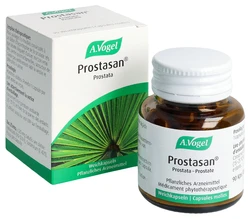
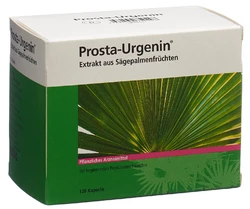
In the case of an enlarged prostate, herbal medicines can be a possible treatment option, especially for mild complaints. Although the effectiveness of these phytotherapeutics has not yet been fully proven by studies, they are often used. Here are some herbal preparations commonly used to treat prostate enlargement.
Saw palmetto contains phytosterols and free fatty acids. Phytosterols are similar to cholesterol and are thought to have health-promoting effects. Free fatty acids have antiandrogenic properties, reduce the enzyme 5α-reductase (which is involved in converting testosterone into its most biologically active form, dihydrotestosterone), decrease growth factors and have anti-inflammatory properties.
Pumpkin seed extracts contain fatty acids (e.g. linoleic acid), sterols, carotenoids, selenium and magnesium salts. They are thought to have anti-inflammatory and antiandrogenic effects and to favourably influence the smooth muscle of the bladder and prostate, which may relieve urinary problems.
Nettle root contains high concentrations of vitamins A, C, E, D and K, as well as iron, calcium, magnesium, potassium, phosphate and chloride. In addition, it is rich in scopoletin, flavonoids, sitosterol and unsaturated fatty acids. These ingredients are believed to have anti-inflammatory and antioxidant properties.
African plum contains long-chain fatty acids and phytosterols. Extracts from its bark are said to have anti-inflammatory and tissue-decongestant effects and to inhibit certain growth factors.
Pine is notable for the substance ß-sitosterol, which belongs to phytosterols and is chemically similar to cholesterol. The exact effect of ß-sitosterol is still unclear, but it is suspected that free fatty acids may also play a role.
Phytotherapeutics for an enlarged prostate are available as single-plant preparations or as combination products (extracts from several plants). It is important to note, however, that the precise mechanism and the active substances in these herbal medicines are often not fully clarified. Patients should therefore always consult their doctor before starting a herbal treatment.
How is a benignly enlarged prostate treated?
Treatment for benign prostatic hyperplasia varies depending on the stage and severity of symptoms. In the early stages, herbal medicines with anti-inflammatory and antiandrogenic properties can be used.
Alpha-blockers are drugs that relax the bladder neck and the muscles of the prostate, making urine flow easier and relieving symptoms such as frequent urge and nocturia. 5-alpha-reductase inhibitors reduce the size of the prostate by blocking the conversion of testosterone into dihydrotestosterone. This can cause prostate tissue to shrink and relieve pressure on the urethra.
If medication is not tolerated or no longer effective due to side effects, surgical treatment may be necessary. The aim of surgery is to widen the narrowed urethra. There are various surgical methods. In transurethral resection of the prostate (TUR-P) excess prostate tissue is removed piece by piece through the urethra. This method is known as the „shaving operation". In electrovaporisation prostate tissue is vaporised using electrical current. There is also laser vaporisation: here the excess tissue is removed with a laser. Both methods have the advantage of a lower bleeding risk. Open surgery (adenomectomy) is used for very large prostates; the excess tissue is removed by an open surgical approach.
The choice of treatment method depends on various factors including prostate size, symptom severity and the patient's general health. A detailed discussion with the treating physician helps to determine the best treatment strategy.
Prevention and management of benign prostatic enlargement: the most effective tips
- Take advantage of the annual prostate screening from age 45, which is covered by health insurance. It includes a medical history, an examination of the groin and external genitals, and a digital rectal examination of the prostate.
- Drink about 1.5 to 2 litres of fluids evenly throughout the day. Avoid large amounts in the evening to reduce nocturia.
- Reduce alcohol and caffeinated beverages, especially in the evening. Both have a diuretic effect and can increase nighttime urinary frequency.
- Use spicy seasonings sparingly, as they can also have a diuretic effect.
- Bladder training can be carried out in consultation with your doctor. Try to control the urge to urinate and not respond immediately. This can extend the intervals between toilet visits.
- Get sufficient physical activity and exercise regularly. Endurance sports such as jogging, hiking, cycling or swimming are particularly recommended.
- Perform pelvic floor exercises regularly to strengthen the muscles and relieve prostate symptoms.
- Eat a balanced diet with plenty of fresh fruit, vegetables and whole grains. Prefer plant-based fats and reduce sugar intake.
- Maintain a healthy body weight and avoid overweight. If you are overweight, aim for weight reduction.
- Drink alcohol only in moderation. A glass of beer or wine is acceptable, but excessive consumption should be avoided.
- If you smoke, try to quit and seek support if necessary.
- Avoid prolonged sitting and keep yourself warm to prevent cooling of the pelvic area.
- Ensure regular bowel movements to reduce pressure on the prostate.
- An active and satisfying sex life can have a positive effect on the prostate and urinary symptoms.
- Pay attention to your body's warning signs and inform your doctor promptly if symptoms worsen.
- In the early stage, herbal preparations, alpha-blockers or 5-alpha-reductase inhibitors can be used to relieve symptoms and slow the progression of prostate enlargement.
- For mild complaints, a strategy of watchful waiting may be appropriate. In this approach the prostate enlargement is regularly monitored and symptoms are recorded.
- A newer surgical method is aquablation, in which excess prostate tissue is removed by a powerful water jet. This method also uses ultrasound and a robot to assist the surgeons during the procedure.
Benign prostatic enlargement can significantly affect quality of life, but with early diagnosis, targeted treatment and conscious lifestyle changes, symptoms can be effectively relieved. With the right measures and regular doctor visits, men can actively contribute to the health of their prostate and avoid possible complications.