
Blackcurrant
The healthy wonder berry with anti‑aging power
What health benefits do blackcurrants offer?
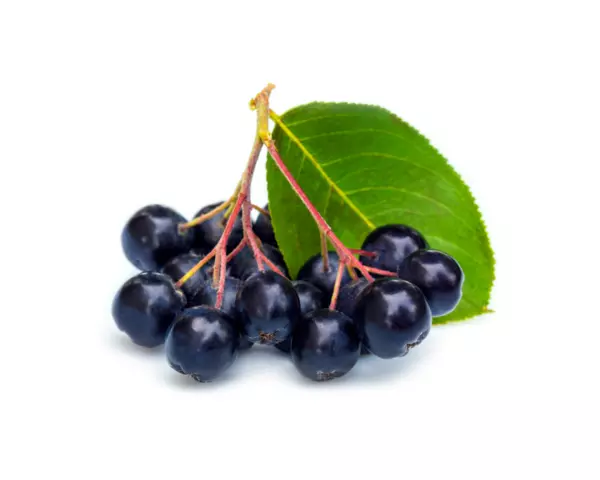
The blackcurrant (Ribes nigrum) is a true native superfood packed with valuable nutrients. The berries contain a particularly high level of antioxidants, offering numerous health benefits and exhibiting a vasculoprotective effect.
The secondary plant compounds called anthocyanins not only give them their characteristic colour but also act as effective free radical scavengers.
Some studies demonstrate their blood‑sugar lowering and vasodilating effects. By reducing oxidative stress, they may also slow cellular ageing.
These small berries are true vitamin bombs. Their vitamin C content is nearly four times that of an orange and they help prevent and . Blackcurrants are rich in all B‑group vitamins (except B12), minerals, tannins and fibre. The abundant potassium supports good kidney function and plays a role in carbohydrate metabolism.
How are blackcurrant leaves and seeds used in herbal medicine?
In herbal medicine, almost every part of the plant is used. The tart‑bitter leaves are dried, finely powdered and taken as a tea or in extract form.
An antioxidant oil is extracted from the seeds; it is rich in gamma‑linolenic acid and used in anti‑ageing products. This anti‑inflammatory, polyunsaturated omega‑6 fatty acid benefits the skin and is recommended for atopic dermatitis.
Blackcurrant leaves are notable for phenolic compounds such as quercetin, myricetin and kaempferol, as well as chlorogenic, caffeic, gallic and ferulic acids and the anti‑inflammatory compound prodelphinidins.
What role does pectin play in blackcurrants?
Blackcurrants are rich in the soluble fibre pectin. On contact with water this fibre forms a viscous gel. Pectin is a healthy fibre: the gel not only coats the intestinal walls but also slows sugar and fat absorption, lowers cholesterol and helps regulate blood sugar.
Finally, this pectin is also an excellent appetite suppressant, useful during diets to control appetite and support weight loss.

How do blackcurrants support urinary tract health?
Blackcurrant leaves increase urine volume, have a diuretic effect and are often used to flush the urinary tract. They can relieve mild urinary complaints by promoting the removal of pathogens.
By increasing urine volume, they also help eliminate crystalline deposits in the urinary tract, which is why blackcurrant is used in the treatment of renal gravel and the prevention of kidney stones.
Since excess uric acid can crystallise and deposit in joints, blackcurrant leaves may help with mild joint pain by promoting uric acid excretion and providing anti‑inflammatory and analgesic effects.
Power from the berry: tips for using blackcurrants correctly
- No specific dosage is given for the fresh berries. They can be eaten fresh or processed into juice, jelly or jam. The high vitamin C content is only minimally reduced by processing.
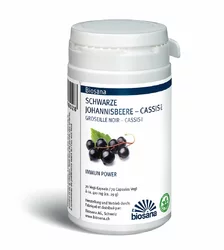
- Blackcurrant leaf powders and extracts are usually offered in capsule form. Preparations in lozenges, syrups or drops are also available.
- For a tea, pour two to four grams of finely cut leaves over about 150 milliliters of boiling water and strain after ten minutes. Alternatively, the leaves can be covered with cold water and briefly brought to the boil. Drink a cup of blackcurrant‑leaf tea several times a day for urinary infections, renal gravel or joint pain.
- A daily dose of six to twelve grams of blackcurrant leaves should not be exceeded.
- When preparing tea to relieve urinary complaints, blackcurrant leaves can be combined with other medicinal plants such as orthosiphon, hedysarum, goldenrod, birch or nettle.
- Unsweetened fresh plant juice can be diluted with hot water and drunk for sore throat and colds. A glass of blackcurrant juice is also recommended during convalescence.
- If you are using blackcurrant leaves as a flushing therapy, drink plenty of fluids throughout the day — at least two litres in total. Tea, water and clear broths are best suited.
- Flushing therapy is not suitable in cases of impaired heart or kidney function, during pregnancy, breastfeeding or in children. If urinary symptoms worsen, or if fever, painful spasms when urinating or blood in the urine occur, seek medical attention immediately.
- For joint and urinary complaints the recommended dose is 340 mg of blackcurrant leaf powder three to five times daily. The powder should be taken with a large glass of water at mealtimes. The daily dose of 1000 to 1700 mg should not be exceeded.
- Fresh berries keep for about one week in the refrigerator. Do not wash them before eating and leave them on the clusters.
- In rare cases, supplements containing blackcurrant may cause soft stools, mild diarrhoea or bloating. No general side effects are known.
Benefit from the synergy of the healing compounds in these small powerhouses!