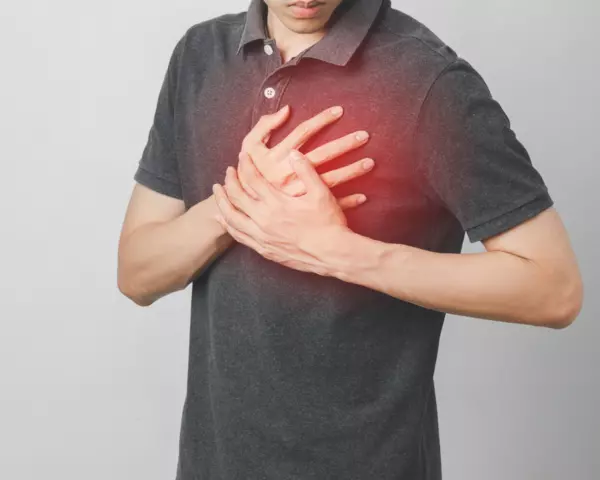

Broken‑Heart Syndrome
When emotions change your body
editorial.overview
Broken-Heart Syndrome: Can a heart really break?
Broken-heart syndrome, also known as Tako‑Tsubo cardiomyopathy or stress cardiomyopathy, is a sudden dysfunction of the heart muscle triggered by severe emotional or physical stress. The symptoms resemble a heart attack — including chest pain and shortness of breath — but there is no blockage of a coronary artery. Instead, the left ventricle goes into a kind of “stunned” state and its pumping ability is temporarily reduced.
The condition was first described in the 1990s by Japanese researchers and named after a traditional octopus trap (“Tako‑Tsubo”), because the shape of the affected ventricle during an episode resembles that trap. In most cases the dysfunction fully recovers within a few weeks, but in some cases serious complications can occur.
Heart attack or broken-heart syndrome?
At first glance, broken‑heart syndrome and a heart attack share many features, but they differ in key aspects. Both conditions cause symptoms such as chest pain, shortness of breath and a feeling of tightness in the chest. The main difference lies in the cause: a heart attack is caused by an occlusion of the coronary arteries, whereas this does not occur in broken‑heart syndrome. Instead, intense emotional or physical stress puts the left ventricle into a “stunned” state, temporarily limiting its pumping performance.
There are also initial similarities in diagnostics. Both ECG and certain blood markers such as troponin can be abnormal. Only a coronary angiography provides clarity: in a heart attack the coronary arteries are narrowed or occluded, while in broken‑heart syndrome they are usually unremarkable. An echocardiogram can additionally show the typical balloon‑like deformation of the left ventricle.
It is estimated that 2–5% of people admitted with suspected heart attack actually have broken‑heart syndrome. Although it often has a milder course, prompt medical evaluation is essential because serious complications can occur in both conditions.
Causes of broken‑heart syndrome: is heartbreak a trigger?
In most cases broken‑heart syndrome is triggered by intense emotional stress. Negative events such as the loss of a loved one, a separation or existential worries — but also (rarely) extreme positive emotions, such as a wedding or an unexpected lottery win — can precipitate the condition.
Another important factor is stress hormones: people with broken‑heart syndrome often have markedly elevated adrenaline and noradrenaline levels in the blood. These hormones can disturb the blood supply of the heart muscle and lead to spasms, coronary vasospasm or dysfunction of the left ventricle. In rare cases a hormone‑producing tumour (pheochromocytoma) can predispose to the condition.
Genetic factors may also play a role. Studies suggest that certain genetic variations could increase the risk, particularly in association with blood pressure and metabolic disorders. There is also evidence that post‑menopausal women are especially affected. The reason: the protective hormone oestrogen is no longer produced in sufficient amounts, reducing the heart’s resilience to stress hormones.
Certain medical conditions and treatments, including chemotherapy, chronic respiratory diseases, psychological stress or drug use, may also increase the risk of broken‑heart syndrome. It remains unclear why some people stay healthy despite great stress while others develop this particular form of heart muscle disease.
Does broken‑heart syndrome mostly affect women?
Yes — the condition predominantly affects women, especially after menopause. More than 90% of affected individuals are female and the average age is around 66 years. This may be related to the decline in oestrogen: the female sex hormone has a protective effect on the heart, but after the menopause this protection decreases. Women then react more sensitively to stress hormones such as adrenaline and noradrenaline, which can overload the heart and disturb blood flow.
Studies show that about 2–8% of women admitted with suspected heart attack actually have broken‑heart syndrome. While it was initially observed mainly in Asian countries, it is now known to occur worldwide.
Broken‑heart syndrome: what symptoms are typical?
The symptoms of broken‑heart syndrome are nearly identical to those of a heart attack. Affected people often suddenly experience a strong tightness in the chest, accompanied by severe pain that may radiate into the left arm, back, shoulders or jaw. Shortness of breath, sweating, nausea and vomiting are also typical signs. Blood pressure may fall (hypotension) and the heart rate may be elevated (tachycardia).
Because the heart temporarily does not work properly, heart failure can occur, leading to fluid accumulation in the lungs or legs (oedema). This can cause overwhelming fear and, in severe cases, be life‑threatening. Some patients develop a cardiogenic shock or, in rare cases, a cardiac arrest.
Since broken‑heart syndrome and a heart attack cannot be distinguished by laypersons, medical help should be sought immediately if appropriate symptoms occur.
What complications can occur with broken‑heart syndrome?
Although cardiac function recovers in most patients within a few weeks, broken‑heart syndrome can be associated with serious and sometimes life‑threatening complications.
A small proportion of patients develop severe arrhythmias that in the worst case can lead to ventricular fibrillation. The heart then beats extremely fast and chaotically, so that no effective blood flow is maintained. Untreated, this can result in sudden cardiac death.
If the heart is severely weakened by the condition, it may no longer be able to pump enough blood around the body. Blood pressure then drops dramatically and organs are no longer adequately oxygenated. Without rapid medical intervention a cardiogenic shock can be fatal.
In some cases blood clots form in the heart (cardiac thromboses). These can travel through the bloodstream to the brain and cause a stroke. Studies indicate that the stroke risk within five years after broken‑heart syndrome is 6.5% — almost twice as high as after a heart attack (3.2%).
Rarely, clots from the heart or other vessels can travel to the lungs. Such a pulmonary embolism can impair gas exchange and lead to severe shortness of breath or even death.
A temporary reduction in the heart’s pumping ability can cause fluid to accumulate in the lungs and legs. This leads to breathlessness, swelling (oedema) and general physical weakness.
In extreme cases a rupture of the heart muscle can occur. This rare but life‑threatening complication requires immediate medical treatment.
Even after the acute phase has passed, an increased risk of long‑term consequences remains. In addition to stroke risk, some patients have a higher chance of recurrent heart problems. About 5% of patients experience another episode of broken‑heart syndrome within four years.
Can you die from broken‑heart syndrome?
Most people with broken‑heart syndrome recover completely within a few weeks and have no long‑term damage. Nevertheless, the condition can be fatal in rare cases: about 4% of affected individuals die from it.
Later, heart failure or a recurrent broken‑heart syndrome may also occur. Regular medical follow‑up is therefore important to detect and treat any subsequent problems early.
How does the doctor diagnose broken‑heart syndrome?
Because the symptoms of broken‑heart syndrome closely resemble those of a heart attack, doctors initially perform the same tests to rule out a life‑threatening infarct as early as possible. While some test results are similar in both conditions, certain features point to broken‑heart syndrome.
Ultrasound examination (echocardiography) shows typical motion abnormalities of the left ventricle in broken‑heart syndrome, usually affecting the apex. The affected muscle is markedly impaired (akinesia) and appears ballooned. This change gives the heart a characteristic shape. In addition, fluid accumulation in the lungs due to heart failure can be visible. However, an infarct can cause similar changes, which is why further investigations are necessary.
On the electrocardiogram (ECG), broken‑heart syndrome often shows changes suggestive of myocardial oxygen deprivation — similar to a heart attack. A distinguishing feature is that these changes in broken‑heart syndrome often extend across all ECG leads, whereas in myocardial infarction they appear only in specific regions of the heart.
As in a heart attack, certain cardiac enzyme levels in the blood, particularly troponin T and creatine kinase (CK‑MB), rise in broken‑heart syndrome. However, this rise is usually less pronounced than in a classic heart attack and does not always match the conspicuous changes seen on echocardiography and ECG.
Angiography (imaging of the coronary arteries) is used to assess coronary blood flow. While in a heart attack one or more arteries are usually blocked by a clot, angiography in broken‑heart syndrome typically shows no coronary occlusion. Thus angiography is a decisive test to differentiate the two conditions.
An important clue to broken‑heart syndrome is the occurrence of a severe emotional or physical stressor immediately before the event. In the consultation the doctor asks specifically about stressful experiences such as the loss of a loved one, severe fears or exceptional stress. However, severe stress can also trigger a classic heart attack, so this information alone is not sufficient for diagnosis.
Treatment: how is broken‑heart syndrome managed?
- Because broken‑heart syndrome can lead to dangerous complications, treatment takes place in two phases: the acute therapy to stabilize the patient and the long‑term therapy to prevent recurrence.
- In the first hours there is a risk of life‑threatening complications such as arrhythmias or cardiogenic shock, so patients are monitored in intensive care. Cardiac function is continuously observed for at least 24 hours.
- Depending on the individual situation, physicians use various medications. Beta‑blockers blunt the effect of stress hormones and reduce cardiac workload. ACE inhibitors support recovery of the heart muscle and improve pump function. Diuretics unload the heart by reducing blood volume. Anticoagulants prevent thrombus formation, especially when thrombosis risk is high.
- If arrhythmias occur, targeted antiarrhythmics may be used. In rare cases temporary pacing support is necessary.
- Blood pressure fluctuations can further impair cardiac function. Drugs to stabilise blood pressure help avoid complications.
- Because stress plays a central role in broken‑heart syndrome, psychotherapeutic support is advisable. It helps patients process emotional burdens and prevent relapses.
- Relaxation techniques to reduce stress, such as meditation, autogenic training or progressive muscle relaxation, can calm the nervous system and reduce strain on the heart.
- After an episode of broken‑heart syndrome, patients should have their heart checked regularly to detect changes early.
- Balanced nutrition with low saturated fat and plenty of vegetables promotes heart health.
- Regular physical activity, like walking or moderate endurance exercise, improves cardiac function.
- Avoiding smoking and excessive alcohol reduces the risk of cardiovascular disease.
- Some patients benefit from long‑term medication, particularly with beta‑blockers or ACE inhibitors. Treatment should be regularly coordinated with the physician.
- If symptoms such as chest pain or breathlessness recur, a doctor or emergency services should be contacted immediately, as broken‑heart syndrome can recur in rare cases.
- This combination of medication, psychological support and healthy lifestyle helps most patients recover fully and prevent relapse.
Broken‑heart syndrome powerfully demonstrates the close link between body and mind — intense emotional strain can literally “break” the heart. Although most patients recover completely, the condition remains unpredictable and can, in severe cases, be life‑threatening. That is why it is important to take warning signs seriously, actively manage stress and protect the heart over the long term. Not only love, but also inner balance can keep the heart strong and resilient.