
Coriander
The oldest herb in the world for your immune system
editorial.overview
What is coriander?
Coriander (Coriandrum sativum) is one of the oldest culinary herbs in the world. The name “coriander” comes from the Greek word “koris,” which means bug. This may refer to the strong, bug-like smell of the fresh parts of the plant, such as the leaves and unripe fruits.

What health benefits does coriander offer?
Coriander is a small herb with big effects. With its beneficial nutrients, essential oils and proteins, it helps with many ailments.
It fights inflammation, acts against bacteria, improves circulation and helps with digestive issues such as bloating and diarrhea. In addition, it can ease chronic inflammatory conditions like rheumatism, inhibit the growth of bacteria and fungi, support the body’s detoxification, relieve bladder infections, lower cholesterol and blood sugar, act antibacterial against salmonella and promote healing of wounds and ulcers in the mouth.
What valuable constituents are found in coriander?
Coriander oil contains linalool, pineol, borneol, limonene and geraniol. The phenols in this oil, which belong to beneficial plant compounds, stimulate the production of enzymes and digestive juices in our body. Dodecenal has antibacterial properties and gives perfumes and cosmetics a fresh citrus scent. Camphor promotes circulation and helps loosen mucus. These valuable constituents are found not only in coriander oil but also in the leaves and the sweet-bitter seeds. Two tablespoons of ground seeds provide 68% of the daily requirement for vitamin K, 10% for iron, 8% for calcium and 4% for vitamin C.
How does coriander work against bacteria and inflammation?
The essential oil obtained from the seeds of coriander is a real superhero in the fight against germs, even against the most resistant hospital strains. The University Hospital of Freiburg found that the constituent linalool in coriander oil is strongly antibacterial and fungicidal.
Tests at a Portuguese university showed that a 1.6-percent solution of coriander oil can kill or at least strongly limit the growth of almost all types of bacteria, including dangerous salmonella and Escherichia coli. This demonstrates not only coriander’s preventive value as a food, but also its potential as a natural additive in our diet. Coriander therefore tastes good and is a real health booster.
Laboratory tests have shown that dodecenal found in fresh coriander leaves is a natural antibacterial powerhouse. Against dangerous salmonella it is even twice as effective as the conventional antibiotic gentamicin. Researchers at the University of California, Berkeley discovered not only dodecenal but about a dozen other antibiotic heroes in coriander that can effectively fight bacteria.
Citronellol, a component of coriander essential oil, acts not only as an excellent antiseptic but also fights microbes. Thus, consuming coriander not only helps heal canker sores and small mouth ulcers, but also freshens the breath.
Coriander leaves are a true treasure trove of antioxidants that fight free radicals and help maintain the body’s natural balance. This not only strengthens the immune system but can also help with chronic inflammatory diseases such as rheumatism. Researchers have found that people suffering from such diseases often have low antioxidant levels. The high antioxidant content in coriander leaves could help raise those levels and thereby reduce inflammation.
Research published in the journal “Plant Foods for Human Nutrition” shows that coriander contains the highest levels of antioxidative carotenoids — beta-carotene and beta-cryptoxanthin — as well as lutein and zeaxanthin. In experiments at the All India Institute of Medical Sciences, an extract from coriander seeds was tested on lab rats with rheumatism. The result: the coriander-treated animals experienced significantly less inflammation and swelling than those treated with cortisone.
What role does coriander play in detoxification and regulation of cholesterol and blood sugar?
Coriander plays an important role in the removal of harmful heavy metals such as mercury, cadmium, lead and aluminium from the body. These metals can accumulate in tissues, impair the immune system and, over time, lead to serious diseases such as Alzheimer’s or cancer. Coriander acts like a super detox agent: it traps molecules of toxins and heavy metals, transports them out of the body and thus helps cleanse internally.
Coriander contains acids that break down cholesterol in the blood and effectively clean veins and arteries. And not only that: coriander stimulates the hormone glands to produce more insulin from the pancreas. This is particularly useful for people with type 2 diabetes, as it helps them better regulate their blood sugar levels.
How can you benefit from all these health-promoting properties of coriander?
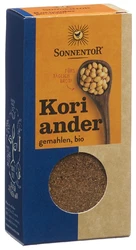
- Coriander powder has a mild, sweet, fruity taste with a light orange note. Compared to the fresh herb it is much milder. Whole coriander seeds can be crushed well in a mortar. For a more intense flavour, the seeds can be lightly toasted in a non-stick pan without oil.
- Ground coriander is great not only in Asian cuisine but also with compotes, hearty stews, pastries, mulled drinks and bread. You can also mix the powder into butter and enjoy it on bread, potatoes, roasted vegetables or rice dishes. Simply cream the butter, season with coriander and a little fleur de sel — it tastes really good.
- Whole coriander leaves are excellent for fresh salads, vegetable dishes, meat, fish and poultry. When chopped fresh, they give curries a wonderful flavour. You can simply wash the coriander, shake it dry and pluck the leaves or chop them together with the fine stems. This enhances any dish.
- Like many other herbs, coriander greens can easily be blended with sweet fruits into a tasty smoothie.
- A coriander pesto is easy to prepare at home. Instead of basil, use a handful of fresh coriander leaves, half a cup of pine nuts, one garlic clove, two tablespoons of lemon juice and five tablespoons of olive oil. Put everything into a blender and enjoy the creamy pesto!
- If you suffer from iron deficiency or anaemia, regularly add a handful of coriander leaves to your soup, salad or vegetables. Or mix chopped coriander leaves with olive oil, salt and spices for a tasty spread.
- An infusion of coriander can reduce swelling caused by rheumatic conditions and arthritis. It also has a diuretic effect and can help with fluid retention due to kidney problems. To prepare it, roughly crush a teaspoon of coriander seeds in a mortar, pour 200 ml of boiling water over them, let the infusion steep for half an hour and then strain it. Then soak a muslin cloth in the infusion and apply it as a compress to the affected areas.
- Coriander tea can be a simple and effective solution for various problems. You can pour hot water over some fresh coriander leaves or make an infusion from the seeds. This tea helps mainly with gastrointestinal or digestive issues, but also with loss of appetite or bladder infections. It is best drunk after meals so that it can exert its digestive-promoting effect. One to three cups per day are recommended. It is advisable to take a break after six weeks of use. After that you can drink coriander tea for another six weeks. This break helps avoid unwanted long-term effects.
- Coriander oil is suitable for mouthwashes to combat bacteria in the mouth. It can also be applied externally to the skin or a cloth can be soaked in coriander tea. Both can help with infections or be used for athlete’s foot and other fungal conditions.
- The Canary sauce Mojo Verde features coriander as a main ingredient. To prepare it, puree 100 ml of olive oil, 50 ml of red or white wine vinegar, two to five chopped garlic cloves, a bunch of fresh coriander, one teaspoon of cumin, salt and pepper in an immersion blender. If the sauce becomes too thick, add a little more oil and stir well.
- Fresh coriander stays fresher in the fridge if wrapped in damp kitchen paper. Coriander can also be frozen. If you store the seed powder in a dark, airtight container, its flavour will keep for up to 6 months.
- An overdose of fresh coriander is not possible, as the toxic coumarin is present only in very small, health-safe amounts. For a tea made from dried coriander seeds, however, a maximum daily dose of three grams is recommended.
Coriander proves to be a strong fighter against germs, which is particularly valuable in times of increasing antibiotic resistance. The essential oil of coriander seeds emits a pleasant scent that is wonderfully relaxing. Coriander has many other advantages, so it is worth including both fresh coriander herb and coriander seeds in your diet. A small herb with great benefits for health!