Eau de Toilette
How to support your personality
editorial.overview
What is a perfume made of?
A perfume is made up of three main components: alcohol, distilled water and fragrance oils. Fragrance oils account for only a small proportion compared with alcohol and water, yet they are decisive for the perfume’s character. Their concentration varies by perfume type between 1 and 40 percent, which determines the intensity and longevity of the scent.
What are the main differences between different fragrance concentrations?
There are five categories, from highest to lowest fragrance concentration. A classic Eau de Parfum typically has a concentration of 10 to 15 percent. There are also Eau de Parfums labelled “Intense”, whose fragrance share rises to 10–20 percent.
Even more concentrated is the Eau de Parfum “Extrait” with a fragrance concentration of 15 to 30 percent per bottle. This scent is particularly suited to romantic evenings, celebratory occasions such as weddings, or festive outfits for Christmas or New Year’s. It can last up to five hours and longer.
Eau de Toilette have a fragrance concentration of 6 to 10%. They are ideal for daily use, perfect on a hot summer day, on holiday, for everyday wear and in the office. They can be used more generously because they are less intense. The scent lasts three to four hours.
Lighter than an Eau de Toilette is an Eau de Cologne with a fragrance concentration of 3 to 5%. This more volatile scent is excellent for subtly rounding off an outfit with a hint of perfume. Longevity ranges from one to three hours. An Eau de Cologne can be applied generously like an Eau de Toilette, bearing in mind that the lighter scent evaporates somewhat faster.
Much more delicate than Eau de Parfum and Eau de Toilette is Eau Fraîche, which has only 1 to 3% fragrance concentration. This scent is especially popular during the warm summer months. Longevity is about one hour and Eau Fraîche acts more as a subtle nuance than as a full-bodied perfume.
Where should a fragrance ideally be applied and why?
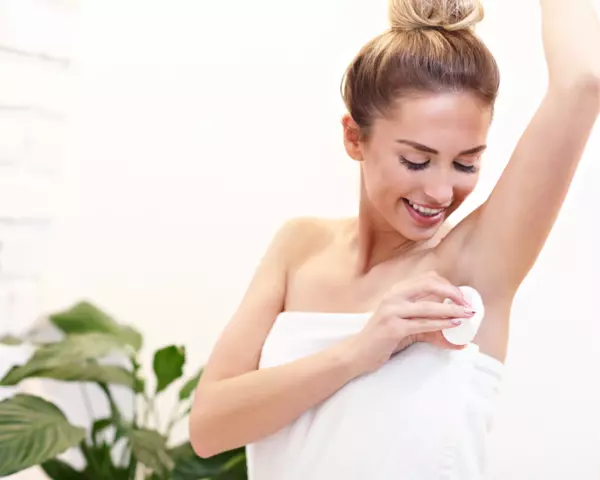
The effect of a fragrance depends not only on its concentration but also on where it is applied. A perfume applied to the nape is mainly perceived by the wearer and is ideal for personal moments. When applied to the front of the body, the scent is noticeable to the surroundings depending on the amount used. Many choose pulse points where skin heat releases the fragrance optimally. These include the inner sides of the wrists or the areas behind the ears.
How is a perfume structured?
The structure of a perfume, comparable to a pyramid, gives each scent a fascinating complexity. In the three elements — top note, heart note and base note — a unique depth unfolds.
The top note as a first impression is quick to act and dissipates rapidly. Lively and fresh scent notes such as citrus essences and delicate floral aromas dominate this phase and shape the immediate character of the perfume.
The heart note of the perfume develops about ten minutes after application and remains present for a long time. Here various fragrance components combine into a harmonious melody. Floral and spicy notes bridge the top note and the base note and make up a substantial part of the overall composition.
The base note, also called the foundation, develops slowly and only fully unfolds after about an hour of skin contact. Woody and musky ingredients characterise this phase and give the scent its individual depth and character. It stabilises the overall composition and ensures that the notes remain perceivable for a long time.
What distinguishes unisex and gender-specific fragrances?
Fragrances that cannot be clearly assigned to a gender: Unisex perfumes are for everyone. They transcend traditional boundaries and appeal to women and men alike. Unisex perfumes are usually exciting without being overly dominant or extreme. For this reason such scents are regarded as gender-neutral.
Nevertheless there are accords often perceived as masculine and others as feminine. Men’s fragrances offer a wide selection of fragrance families for different styles. Citrus notes like orange, lemon and grapefruit impart a sporty, youthful character. Aromatic scents with herbal notes suit active men particularly well. Woody nuances characterise many classic men’s fragrances and lend them a masculine aura. Amber-based scents focus on a mix of opulent and sweet accents. The exclusive Fougère accord with oakmoss, coumarin and lavender has been a timeless classic since the 19th century.
For women’s fragrances there is likewise a broad palette depending on personal style. Sensual women prefer exotic scents such as balsam or spices that have a soft, sweet and sometimes heavy note. Romantic women opt for floral fragrances with roses, orchids or lily-of-the-valley for a fresh, delicate aura. Sporty women favour fruity and fresh notes like melon or aquatic accords. Those who love extravagance can underline their personality with exotic notes such as Florentine iris or blackcurrant blossom and introduce refreshing accents.
From proper application technique to discovering new aromas: tips and tricks
- Spray the perfume directly onto the skin so it can develop optimally. It is advisable to do this after a shower or a warm bath to make use of opened pores and improve the perfume’s adhesion.
- Keep a distance of about 20 cm from the skin when spraying the perfume. Then let it dry in the air to ensure a long-lasting fragrance experience. The fine mist that forms settles evenly on the skin.
- Apply the perfume from bottom to top for optimal distribution. This allows the scent molecules to distribute evenly on the skin. If the bottle has no spray head, dab the liquid gently with your fingers and pay attention to an even distribution.
- Use a moisturising, odour-neutral body lotion before perfuming. This helps especially with dry skin, since well-hydrated skin holds the fragrance longer. The scent molecules adhere better to lipids, the fatty substances that strengthen the skin’s natural protective film.
- Use perfume sparingly, as most scents are intense and only fully unfold over time. Even if you do not perceive the scent strongly yourself, it will be experienced intensely by others. Eau de Toilette is suitable if you want to apply the scent more generously.
- Do not rub the perfume. This destroys the scent molecules and the aromas dissipate more quickly.
- Blend different fragrances carefully, as the combination can be very intense. Use scents developed specifically for this purpose.
- Avoid perfuming your hair. The high alcohol content of perfumes can dry out hair and, on coloured hair, even cause colour changes.
- Be ready to discover new scents and scent combinations. Don’t limit yourself to brands or trends. Trying new fragrances can lead to pleasant surprises.
- Learn about top, heart and base notes to help you choose.
- Research fragrances and brands. Read reviews and ask for recommendations.
- Visit a perfumery and test different scents on test strips or on your skin. Observe how the scent evolves over time.
- Consider in which situations and seasons you would like to wear the perfume.
- Note the perfumes you like and compare them regarding scent family, longevity and sillage.
- Test the perfume for several hours on your skin to ensure it remains pleasant and harmonises with your skin chemistry.
- When in doubt, start with a smaller bottle or a sample set to test it thoroughly.
- Surprise your loved ones with a refined perfume – a gift idea that always delights, whether at Christmas, for a birthday or Mother’s Day, but take the time to find a perfume that suits the future wearer.
Fragrances are an expression of an artful unfolding of personality. A successful perfume is a declaration of uniqueness. Dive into the fascinating world of scents, discover the nuances and let yourself be inspired by the magic of perfumes – a scent experience that enriches the senses.