Pheromones
The secret of irresistibility
What do pheromones smell like?
Pheromones are chemical signals used for communication between individuals of the same species. They can influence the behaviour and reactions of other living beings without being actively recognised. In the animal world, pheromones play a crucial role: for example, they can indicate whether a female is fertile or warn of danger.
There are different types of pheromones. Releasing pheromones trigger immediate behavioural changes, while primer pheromones have longer-term effects on social structures and mate choice.
In humans, pheromones also serve an important function. They act subtly and can influence unconscious reactions and decisions. Evidence suggests that changes in body odour due to stress or anxiety can trigger deeper emotional responses. These chemical signals are significant for interpersonal communication, even if their precise properties and mechanisms are still being researched.
How do humans perceive pheromones?
The perception of pheromones by humans occurs on a subtle, unconscious level. Unlike many animals that detect pheromones with a specialised organ, the Jacobson's organ, humans use other mechanisms to recognise these chemical signals. Although the Jacobson's organ is not functional in humans, we can still perceive pheromones via specific receptors on the olfactory mucosa in the nose.
This unconscious perception may explain why pheromones play a role in interpersonal communication even when we are not actively aware of them. Studies suggest that pheromones can influence behaviours such as attraction or even empathy without conscious deliberation.
Wie oft verwenden Sie heute schon Pheromon-Parfums?
How do fragrances affect pheromones?
Fragrances can affect the action of pheromones by altering or enhancing their perception. Pheromones act as chemical messengers that unconsciously shape the behaviour and reactions of others. Unlike conventional fragrances, which are perceived consciously, pheromones operate on a subtler level. Perfumes can either mask or amplify the natural scent of pheromones, depending on the composition of the fragrance and its interaction with an individual's scent profile.
A conventional perfume masks body odour by replacing it with a new scent. Pheromone perfumes, on the other hand, aim to support the natural body odour and thereby increase unconscious attractiveness. These perfumes are intended to highlight biological compatibility between two people, which according to evolutionary theories could enhance attraction. Subtle differences in an individual's scent profile may reflect genetic variations that matter in mate selection.
Pheromones and fragrances are processed via different neural pathways. While ordinary scents reach the brain through the olfactory bulb and are consciously perceived, pheromones activate specialised receptors that send signals directly to brain regions involved in behaviour and emotion. This separate signalling explains why certain fragrances can be interpreted differently: a perfume that supports the natural scent can enhance pheromone effects, while a strong dominant fragrance may rather cover the chemical signals and reduce their influence.
However, the effectiveness of pheromone perfumes is not yet scientifically proven conclusively. Human interactions are not governed solely by smells. Factors such as facial expression, body language, voice and tone also play a decisive role in perception and interpersonal communication. Even if a pheromone perfume accentuates natural scent, it is questionable whether this alone is sufficient to produce a noticeable change in behaviour or emotion. In many situations, it is likely the combination of conscious and unconscious perception that determines behaviour.
editorial.facts
- The first identified pheromone was bombykol, produced by female silkworm moths to attract males. This discovery was a milestone in pheromone research.
- In agriculture, pheromones are used as an environmentally friendly alternative to insecticides. These scents confuse male insects so they cannot find the females, preventing pest reproduction and reducing populations.
- Pheromones are used not only for pest control in agriculture but also to protect livestock from predators. A newly developed collar that simulates a wolf territory can significantly reduce the risk of wolf attacks on farm animals such as sheep and goats.
- Fragrance notes like amber, musk and tonka bean contain chemical components that are structurally similar to pheromones and can have an aphrodisiac effect. Other notes such as bergamot, frankincense, grapefruit, ginger, jasmine, lime, mandarin, patchouli, rose, sandalwood, vetiver, cinnamon, lemon and cypress are considered intoxicating and increase attractiveness.
How does a pheromone perfume work?
Pheromone perfumes are fragrances specifically designed to simulate the effect of pheromones and increase attractiveness. They contain ingredients that target pheromone receptors in the nose.
The attraction effect of these substances can vary and is not universally effective. General statements about their efficacy are difficult to make because chemical reactions and personal perception are highly individual.
Although pheromone perfumes often smell pleasant and can positively affect an individual's body scent, their impact on interpersonal attraction is not definitively established. Still, fragrances can emphasise a person's natural charisma and subtly influence how others perceive them.
What are pheromone perfumes made of?
Pheromone-containing fragrances consist of a variety of ingredients intended to increase attractiveness. The main components commonly referred to as pheromones are estratetraenol and copulin, which are thought to attract men, and androstadienone, considered attractive to women. These compounds are the subject of scientific debate and study, with mixed results so far.
Besides these active substances, many pheromone perfumes include natural notes such as white jasmine and carob tree extract, believed to be aphrodisiac and to complement the action of pheromones. Aloe vera is also commonly used to moisturise the skin and extend fragrance longevity.
It should be noted that the exact composition of pheromone perfumes can vary and many manufacturers do not disclose all their specific ingredients. The effectiveness of these products remains controversial, yet they are popular in the cosmetics industry and often featured in marketing campaigns.
How to use a pheromone perfume correctly: helpful tips
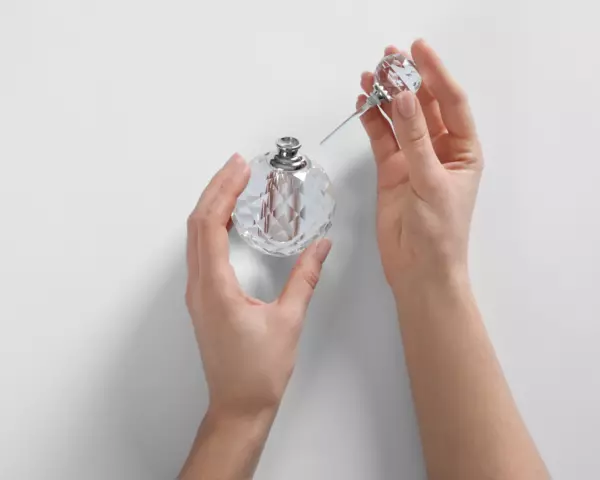
- Apply perfume to pulse points such as the wrists, behind the ears and on the neck, as these areas emit heat and enhance the scent.
- Use one to two sprays of the pheromone perfume. Too much perfume can be overwhelming and reduce the intended effect.
- Make sure to apply the perfume on clean, dry skin to improve adherence and scent intensity.
- Spray the pheromone perfume before dressing to avoid clothing absorbing or masking the scent.
- Try the perfume in different environments to see how others react and how you feel wearing it.
- Neutral, unscented lotions should be used so as not to interfere with the pheromone perfume's effect.
- Mix the pheromone perfume with complementary scents to create a unique fragrance combination that reflects your personality.
- Pheromone perfumes can also boost your positive self-image. Wear them to increase confidence and feel more attractive.
- Reapply the perfume regularly to maintain the effect, especially after several hours in a social setting.
Pheromones unconsciously influence our attractiveness and interpersonal relationships by sending subtle signals. The interplay between fragrances and pheromones offers fascinating insights into social behaviour and deepens our understanding of attraction and communication.