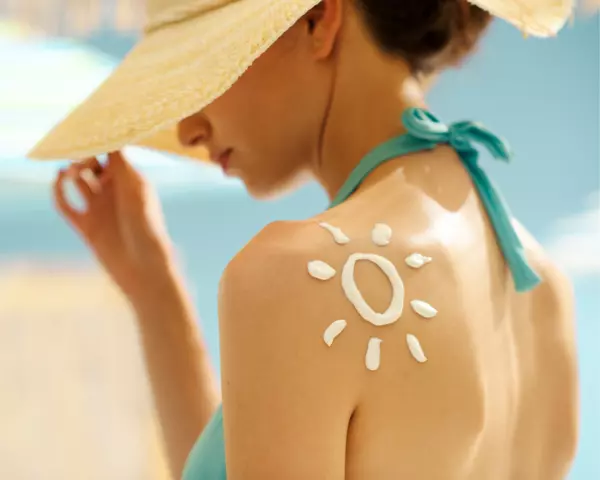
Eye protection in summer
Protect your most important organ from the sun
How does the sun endanger our eyes?
The sun is an important energy source, but it also poses risks to our eyes, mainly due to its radiation. Visible rays make up about half of solar radiation and can cause discomfort and damage if looked at directly. Even more dangerous are the rays invisible to the human eye, particularly ultraviolet (UV) radiation.
Although 90% of UV radiation is absorbed by the Earth's atmosphere, the remaining portion is still strong enough to cause significant harm. The intensity of UV radiation varies depending on geographic location, weather conditions, and the season and time of day, so it is important to protect yourself from this radiation.
What effect does UV radiation have on the eyes?
UV radiation can damage the eyes both in the short term and the long term. Short-term exposure can irritate the cornea and conjunctiva, producing symptoms such as redness, itching, pain, tearing and possibly temporary vision loss. This often occurs shortly after strong sun exposure, for example after a day at the beach or on the ski slopes without adequate eye protection.
Long-term repeated and intense exposure to UV radiation can have more serious consequences for eye health. In particular, UV radiation can increase the risk of cataract and age-related macular degeneration (AMD). Cataracts are clouding of the eye's lens that can impair visual acuity. AMD affects the retina and leads to loss of central vision, which in the worst cases can result in blindness.
People with a lighter iris are particularly at risk, as a less pigmented iris offers less protection against UV rays.
It is important to protect the eyes year-round, not just in summer. UV radiation can also be strong in winter, especially when snow reflects the light and can cause snow blindness. Adequate protection by wearing UV-blocking sunglasses is therefore essential to minimise the risk of these conditions.
What UV protection do sunglasses offer?
Sunglass lenses must provide effective UV protection to protect the cornea and lens of the eye from damage. An integrated UV filter in the lenses is essential. The presence of this filter is indicated by the CE mark, a European seal usually located on the inside of the temple. It guarantees that the glasses block UV radiation up to a wavelength of 380 nanometres.
Additional protection against UVA rays in the range of 380 to 400 nanometres is offered by lenses carrying the “UV 400” mark. These lenses filter the blue portion of visible light and help protect the macula, the point of sharpest vision in the eye, from damage.
However, the tint of the lenses is not a reliable indicator of UV protection. Although darker lenses reduce glare more effectively, they do not necessarily provide UV protection. Dark lenses without sufficient UV protection can even be dangerous because they dilate the pupils and let more UV rays into the eye.
What should you look for when choosing sunglasses?
Sunglasses protect the eyes not only from glare but also from harmful UV radiation that can cause serious eye diseases. When buying sunglasses, it is important to choose the right UV protection level, defined by different categories.
Category 0 sunglasses block up to 20% of sunlight and are suitable for cloudy days or evening hours. Category 1 sunglasses with protection of 20 to 57% are ideal for mild sunshine or changeable spring weather. Category 2, which absorbs up to 82% of light, provides adequate protection for normal sunny days in temperate latitudes, while category 3—filtering between 82% and 92% of light—is particularly suitable for beach holidays, southern latitudes or mountain activities where sunlight is stronger.
In cases of very high UV exposure, such as in high mountains, a category 4 pair is recommended; these block more than 90% of light but should not be worn while driving as they are too dark and significantly impair visibility.
The quality of the lenses is also important, as low-quality sunglasses can cause side effects such as headaches and burning eyes. The colour of the lenses affects colour perception and should be chosen carefully; certain tints, such as yellow, can increase contrast but may distort perception.
Furthermore, the size of the sunglasses plays an important role for comprehensive eye protection. Large lenses that reach up to the eyebrows are optimal to effectively block lateral UV rays as well.
Which is better, photochromic or interchangeable lenses?
The choice between photochromic lenses and interchangeable lenses ultimately depends on personal preferences and needs. Photochromic lenses have the major advantage of automatically adapting to changing light conditions. They darken in strong sunlight and lighten when it gets darker. This saves the wearer the inconvenience of manually changing lenses, which is especially useful if the glasses might be left behind elsewhere.
Darkening is critical for protecting the eyes, particularly in situations that require a quick response to changes in light. By contrast, changing lenses can take some time—often 15–30 seconds—and during this period the eyes are unprotected because one is busy swapping lenses.
Interchangeable lenses, however, offer greater flexibility in terms of protection level. While photochromic lenses are generally available in categories 2 to 4, interchangeable lenses allow the use of lenses with different protection levels and are therefore more versatile.
How to best protect your eyes in summer: helpful tips
- Take sunglasses with you even on cloudy days, as UV rays can penetrate cloud cover.
- Choose sunglasses with large, curved lenses to ensure optimal side protection.
- Supplement eye protection by wearing sun hats or caps.
- When applying facial sunscreen, don't forget the eyelids to avoid sunburn in this sensitive area. Prefer non-greasy or mineral sunscreens that are less likely to get into the eyes.
- Rinse your eyes thoroughly with clean fresh water after swimming in the sea to remove salt residues.
- Avoid rubbing your eyes after swimming in chlorinated water to prevent additional micro-injuries that can serve as entry points for germs.
- Protect your eyes in air-conditioned environments by taking regular breaks and blinking consciously.
- Use artificial tears and drink enough water to keep the eyes hydrated from the inside.
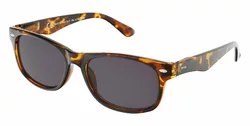
- Invest in high-quality sunglasses with UV protection that protect not only the cornea and retina but also the delicate skin around the eyes.
- Make sure children wear especially lightweight sunglasses with flexible temples so they sit comfortably.
- Use UV-protective measures. A parasol or other shade providers protect not only the skin but also the eyes.
- Avoid direct sun exposure during the most intense hours. UV radiation is strongest between 10:00 and 16:00.
- For reading outdoors, choose sunglasses with your prescription or reading glasses with UV protection.
- Take regular breaks when reading or working at a screen to avoid eye strain: the 20-20-20 rule can help. Try to focus on a point about 6 m away for at least 20 seconds every 20 minutes.
To effectively protect your eyes in summer, make sure your sunglasses provide the necessary protection against solar radiation. This will help minimise the risk of long-term damage and preserve your eye health while you enjoy sunny days.