
First aid kit
Better to have it than to need it
Why is a personal first aid kit so important?
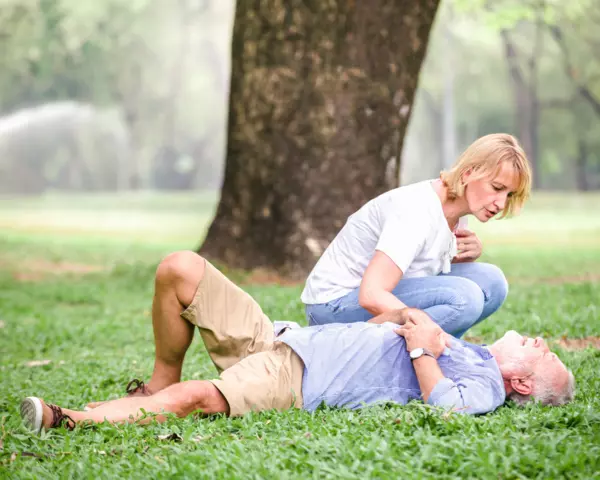
Without exaggeration, a personal first aid kit can save lives in extreme situations – whether at home, during outdoor activities or while travelling.
To be well prepared and equipped in any situation, you should always carry a small or large bag with sufficient first aid supplies. Whether you put together such an emergency bag yourself or buy a standard pre-packed kit, there are some things to consider.
What should not be missing in an optimally equipped first aid kit?
The number of items and the type of equipment depend on the particular model of the first aid box or kit and can vary greatly. Different standards exist, so the intended use must be taken into account: the contents of a home medicine kit differ, for example, from those of a hiking kit.
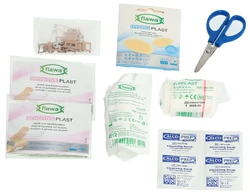
However, some items should definitely not be missing. These include compression bandage, small dressing packs, plasters, absorbent compresses, a rescue blanket, a tourniquet, disposable gloves, scissors and gauze for wound dressing (possibly with haemostatics). Packed in a waterproof and compact bag, such an emergency kit is particularly practical to carry and ready to use for a wide range of injuries.
How do first aid kits differ for various areas of use?
Besides initial treatment of wounds and other injuries at home or in the office, individual first aid kits are intended for many other environments and situations: mountaineering, bike tours, hunting, camping, etc.
For example, the contents of a hunting first aid kit focus on the particular treatment needs of gunshot wounds, where the main cause of death is major blood loss.
A mountaineering first aid kit contains, in addition to general dressing materials, triangular bandages, blister plasters, foot powder, ankle bandages, splints, safety pins, a signal whistle and a rescue blanket. A tick card or remover, insect repellent and sunscreen should not be missing either.
On bike tours, grazes and fractures are common, so mainly self-care items for grazes, sprains and fractures such as a fixation bandage or a plaster kit should be included in the first aid equipment.
When choosing individual camping equipment, it is advisable to consider the activities planned during the camping stay. Typically, first aid kits for mountaineering and cycle touring are combined here.
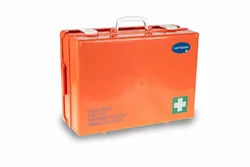
Buy a ready-made first aid kit or assemble your own?
Better to have it than to need it – this also applies to the first aid kit. Investing in a good first aid box is worth the effort. The fastest and easiest way to get an emergency case ready to use is to buy a first aid kit that is already packed.
It is definitely worth topping it up with your own contents. After all, no first aid box will meet your individual requirements 100%.
Be well prepared for emergencies: the best tips
- At home, in the car, at the workplace or during outdoor activities – a first aid kit should always be stored in a place that is easily accessible so it can be found quickly in an emergency.
- Choose an emergency bag with several inner compartments so you can quickly find what you are looking for even in poor visibility or stressful situations.
- The integrated belt loop and supplied carabiners are a practical solution to keep the first aid kit handy while on the move. This way it can be easily attached to a belt.
- The bag must be securely closable. When closed, it should protect its contents at all times from external influences thanks to its durable and water-repellent outer material. A rubber seal is advantageous: it prevents the ingress of dust and liquids.
- Some first aid boxes come with a wall mount so the box can be attached to a wall and remain readily accessible when needed.
- If you need an emergency bag for holidays, excursions, hikes or other outdoor activities, choose a model that is small and lightweight but still contains all the important first aid items.
- For the hiking first aid kit every gram counts. It is advisable to prefer small and lightweight products. Sunscreen as well as wound and hand disinfectants are available, for example, in trial sizes or can be filled into small bottles. Instead of a whole pack of plasters, it is often enough to pack only a few.
- But even here you should not lightly dispense with items that may seem unnecessary. A pair of scissors should never be missing, even if plasters are already pre-cut: in an emergency it may be necessary to cut clothing open in a very short time.
- So‑called ventilation sheets (resuscitation masks) are space‑saving and very useful. They are also available as key‑ring versions. They are used as an aid in artificial respiration and prevent direct mouth contact between rescuer and recipient.
- When choosing the storage bag for your emergency kit, ensure that there is still some space left despite the basic equipment. This allows additional items to be added if necessary. However, the margin should remain reasonable.
- It may sound odd, but sometimes a cuddly toy belongs in the emergency kit. For children it is a proven means to reduce emotional stress in exceptional situations and facilitates initial care.
- If you suffer from allergies, asthma or high blood pressure, complement your hiking emergency kit with medications that you should always carry with you.
- A clear instruction sheet for first aid measures belongs in every emergency kit and provides greater safety in dangerous situations. Because without knowledge, even the best first aid box is of little use. To know what you have and how to use it in an emergency, familiarise yourself with the contents at home.
- An inventory list of the first aid box provides an overview of which items are still available and which may have been used up or expired. The expiry date can also be noted here.
- If materials are missing or the expiry date has passed, the ideal condition must be restored. Only then are you prepared for an emergency.
- A first aid kit is an important first responder in emergencies but cannot replace medical treatment. It is important to contact emergency services immediately in case of serious injuries or illnesses.
At home, at work, during sport or on the move: with these tips you are prepared for all emergencies without stress or improvisation. A well-equipped first aid kit provides reassurance!