
Hair colour
The secret weapon for your new look
What types of hair colours are there?
The way we style our hair, the choice of hair colour and similar decisions are a form of expressing our personality. Choosing a hair colour can completely change our appearance and help emphasise our individual style.
There are different types of hair colours to achieve various colour effects and looks. Here are some of the most common types of hair colour.
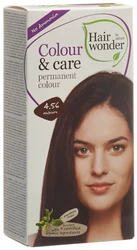
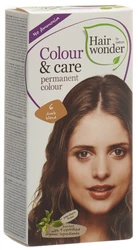
Permanent hair colours are long-lasting colours that penetrate deeply into the hair and permanently change the natural colour. They contain a developer and often ammonia to open the hair structure and lock in the colour. These products offer high durability and coverage and are well suited for full colour changes.
Temporary hair colours are not permanent and last only for a few washes or until the next shampoo. They are often offered as sprays, mousses or colour rinses and provide a quick and temporary way to colour hair. These colours are suitable for temporary looks or special occasions.
Semi-permanent hair colours last longer than temporary colours but gradually fade with each wash. They typically do not contain ammonia or developers and sit on the surface of the hair only. These colours are ideal for subtle changes or to test new shades, as they wash out after a few weeks.
Henna is a natural hair dye obtained from the leaves of the henna plant. It has been used for centuries to colour hair and produces shades ranging from reddish to chestnut brown. Henna is a good option for those who prefer a natural, chemical-free dye. Grey coverage refers to specialised products for covering grey hair; they contain pigments that mask grey strands and restore the natural shade. These products offer strong coverage and are available in various shades.
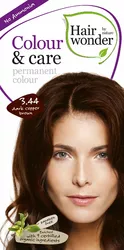
What product formats of hair colours are available?
Hair colours are available in a variety of product formats to meet different needs and preferences. Each format has its own advantages and application methods. Here are some of the most common forms of hair colour products.
Cream-based colours are among the most popular forms. They are easy to apply and allow an even distribution of colour throughout the hair. The creamy consistency makes application easier and enables the colour to be spread evenly across the entire hair.
Colouring gels offer a slightly thicker consistency than creams. They are ideal for those who want to colour specific areas or strands of hair. With a gel, the colour can be applied more precisely, making it possible to create highlights or specific effects.
Colour foam is a light, airy formula that allows the colour to be distributed evenly through the hair. The foam offers good adherence and is well suited for a full hair colour. In addition, it is easy to apply and leaves fewer stains or residues on the scalp.
Colour sprays are a temporary form of hair colouring. They are often used to create highlights or temporary colour changes. The spray enables quick and precise application, and the colour can be washed out easily. It is a great option for those who like to experiment with different colours or temporarily change their look for a specific occasion.
Which ingredients are found in hair colours?
The contents of hair colours vary by product and brand. Dyes are the main components of hair colours and give the hair the desired shade. There are different types of dyes, including synthetic and natural. Synthetic dyes are frequently used to achieve permanent and intense colour results.
Developers are an important component in hair colours because they activate the dyes and enable the chemical reaction necessary for colouring. They help fix the colour in the hair and make it permanent. Developers often contain peroxides at different concentrations.
Many hair colours also contain nourishing ingredients to protect and care for the hair during the colouring process. These can include conditioners, oils, proteins and other nourishing substances that hydrate the hair, add shine and protect it from potential damage caused by colouring. Hair colours may also contain other ingredients to improve specific properties or meet particular needs, such as fragrances, preservatives, pH regulators and UV filters.
How to choose the right hair colour for individual needs?
Finding the right hair colour for individual needs requires a combination of personal style, skin undertone, hair condition and the desired result.
The skin undertone should be taken into account: people with warm complexions often harmonise better with golden, copper or honey tones, while cool skin tones usually suit ash, platinum or blue-tinged shades.
The natural hair colour also plays a role – choosing a shade just one tone lighter or darker often yields a particularly natural result. For damaged hair, caring colour formulas with reduced ammonia content or plant-based dyes are a good choice.
One should also consider how long-lasting the colour should be: temporary tints, semi-permanent colours or permanent colourations offer different intensities and durability. If unsure, you can perform a strand test in advance or seek professional colour advice.
Applying hair colour correctly – for a radiant result without regret
- Always perform an allergy test before using a new hair colour to avoid unwanted reactions.
- Care for your hair before colouring to achieve an optimal result. Use deep-conditioning treatments or oils to strengthen and protect your hair.
- Protect your clothing and skin by wearing an old top and applying a protective cream to your forehead and ears.
- Divide your hair into sections to apply the colour evenly.
- Always start applying the colour at the roots and work towards the ends.
- Leave the colour on for the indicated time to achieve optimal results.
- Avoid excessive washing of coloured hair to reduce fading.
- Treat your hair to regular trims to remove split ends and brittle tips and keep hair healthy.
- If you want to experiment with different colours, allow your hair enough time to recover between colour treatments to prevent damage.
- Consult a professional stylist for complex colouring techniques such as balayage or ombré to achieve the best results.
- Note that darker colours generally last longer than lighter tones.
- Be patient in achieving your desired colour. Sometimes multiple colouring sessions are required to reach the desired result.
Hair colour is a creative way to change your style and make your hair shine in different shades. Be bold and try new colours to enrich your personal look and express yourself. Let your creativity run free and discover the exciting world of hair colours!