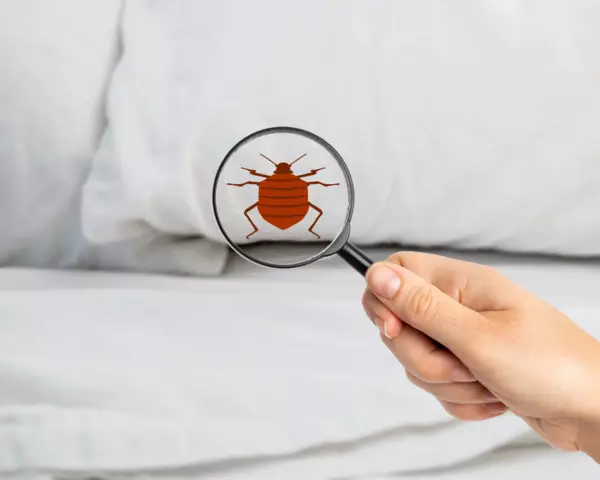
Head lice
When things start crawling on the head
editorial.overview
What are head lice?
Head lice are tiny, wingless insects that make their home on the human scalp and feed on blood. Although their bites can be irritating and cause intense itching, they are usually harmless from a medical perspective – unlike ticks, they do not transmit diseases.
Head lice are especially common in children, particularly in group settings such as nurseries or schools. These small pests reproduce rapidly. Their eggs, known as nits, are clearly visible and stick to the hair close to the scalp. Within a few days new lice hatch, so an infestation can spread quickly.
How can you tell if your child has head lice?
If you learn that head lice have been found in your child's environment – for example at school or nursery – be alert and examine your child's head carefully. Early signs include frequent scratching of the head, especially at the nape or behind the ears. Many children also report an unpleasant tickling or tingling sensation on the scalp. In some cases you may notice the child sleeping poorly or being restless because of the itching.
On close inspection you may spot small reddish skin irritations at the hairline, particularly at the temples or behind the ears. Using a fine‑toothed metal comb or a special lice comb, comb the hair strand by strand. This will reveal the tiny parasites.
Typical signs of an infestation are live lice, which turn brownish‑red after feeding and are visible to the naked eye. Young lice, called nymphs, are also a clear indicator: they are smaller and less mobile but grow quickly. The eggs that cling firmly to the hair, known as nits, also provide obvious evidence. They are grey or brownish, cannot be shaken off or washed out, and prefer to sit close to the scalp. Their chitin shell makes them particularly resilient. If such signs are found, treatment should begin immediately to stop further spread.
How are head lice transmitted?
Head lice live exclusively on the human head – not on animals or in the environment such as trees or carpets. Although they cannot jump or fly, they are surprisingly quick and move skilfully from hair to hair. The most common source of infection is direct contact, for example when children put their heads together while playing, cuddling or hugging. That is why places like nurseries, schools or summer camps are real hotspots for transmission.
Lice make no distinction – they settle on any head, whether the hair is long or short, freshly washed or oily. Head lice infestations are not related to poor hygiene, since normal hair washing does not remove these small parasites.
In rare cases transmission can also occur indirectly, e.g. via shared hats, combs, hairbrushes, pillows or scarves. The risk of infection increases particularly in the cold season, when closer contact is more frequent because of heavy clothing or shared activities.
What do head lice and their eggs (“nits”) look like?
Head lice are tiny but highly specialised parasites perfectly adapted to life in human hair. They grow up to four millimetres long, have six legs with small grasping hooks and are wingless. With these hooks they can hold on securely to hair even during movement or combing. Their colour varies by environment and region from light brown to grey to dark brown. Interestingly, the louse adapts to the hair colour of its host – darker in southern countries, lighter in northern regions. After a blood meal their body often turns reddish, making them easier to spot.
The eggs, called nits, are also visible to the naked eye. They look like tiny pale dots and are usually located close to the scalp, firmly glued to the hair – especially at the nape or behind the ears. They are often mistaken for dandruff, but unlike dandruff nits cannot be simply shaken off. For removal a special nit comb with very fine teeth is recommended; it combs the hair strand by strand.
Their colour tells you a lot about their condition: if they are dark or light brown there is usually still a larva inside. Whitish nits are empty – the young louse has already hatched.
Can head lice transmit dangerous diseases?
The good news: head lice are unpleasant but generally harmless. Contrary to many fears, they do not transmit dangerous pathogens. Their bites can itch and scratching may cause small skin injuries, but serious infections are rare and usually occur only if the areas become infected.
The situation is different with a related species, the body louse. As the name suggests, these live in clothing rather than on the head, especially in seams or areas that contact the skin directly. Body lice are known to transmit diseases such as louse‑borne relapsing fever or epidemic typhus. These pathogens are, however, very rare in Central Europe, although they still occur in some parts of the world.
How long do head lice survive outside the scalp?
Head lice are true survivors – but only as long as they live on the human head. Remove them from their usual environment and they are doomed. In theory they can survive up to 48 hours outside the scalp, but already after 8 to 10 hours their body begins to dry out. Without a blood meal and sufficient moisture they soon become so weakened that they cannot even produce saliva – and therefore would not be able to feed, even if another opportunity arose.
This means the risk of infection via objects such as clothing, pillows or brushes is not completely excluded but relatively low – especially if those items have not been used for some time. Head lice depend on direct contact with the scalp and quickly lose their ability to survive once that contact is lost.
Getting rid of head lice: step‑by‑step treatment
- As soon as you discover head lice on your child, you are obliged to inform the nursery or school. Only then can further spread be prevented in time. Close contacts such as friends or relatives should also be informed.
- Do not wait: start immediately with a suitable lice product from the pharmacy. You will also need a fine lice comb to remove the parasites mechanically. The sooner you act, the easier it is to get the situation under control.
- Use only approved insecticidal products from the pharmacy. Rely on tested preparations developed specifically for this purpose. These are available over‑the‑counter or on prescription. Home remedies are not a reliable alternative.
- Apply the product correctly. Read the package leaflet carefully and follow the instructions exactly. Pay attention to the specified exposure time – if it is too short, eggs or nymphs may survive. A repeat treatment is usually required.
- Examine all family members. Even if only one child shows symptoms, you should check everyone in the household. Lice often go unnoticed, especially in the early stages. Wet combing is particularly reliable for detection.
- Apply the product generously and evenly. It is essential that every single hair is covered. If the product is applied sparingly or unevenly, some lice may remain and the infestation can start again.
- Avoid absorbent textiles on the head. Do not wrap a towel around the head after application, as it can absorb the product. This reduces its effectiveness and important ingredients may not reach the scalp in sufficient quantity.
- Allow time for combing. Wet combing takes at least 30 minutes and often much longer for long hair. Make time for this – it is a central part of the treatment and greatly increases the chances of success.
- Repeat combing at regular intervals. Only those who comb regularly – every four days for a period of two weeks – ensure that newly hatched lice are removed in time before they can reproduce. A single check is not enough.
- Wash textiles at high temperature – but targeted. Bedding, towels and clothing that have had direct hair contact should be washed at least at 60°C. A complete disinfection of the house is unnecessary – a targeted approach is sufficient.
- A simple but effective protection: tie your child's hair into braids or a bun. This makes it harder for lice to crawl from one head to another.
Head lice are widespread and can affect anyone, regardless of personal hygiene. Early detection and consistent treatment are essential to prevent further spread. With regular checks, especially for children, an infestation can be detected and treated quickly.