Henna
With this beauty trick Cleopatra enchanted the world
What is henna?
Henna (Lawsonia inermis) is also known as Egyptian dye plant. At the time of henna harvest in spring and autumn, the leaves are picked from the branches and immediately dried in a dark place and ground into powder, because the red dye they contain is light-sensitive.
This plant contains numerous beneficial active compounds such as gallic acid, tannins, the dye pigment lawson, glycosides, apigenin, p-coumaric acid, betulin, flavone, esculentin and others. Only the leaves are used for dyeing, while flowers, seeds and roots are also used in medicine.
What antimicrobial and medicinal effects does henna have?
Laboratory studies have demonstrated henna's strong antimicrobial activity. When applied externally, the plant can reduce skin colonisation by Staphylococcus aureus. It also acts against Pseudomonas aeruginosa, E. coli and trypanosomes.
In addition, henna is credited with cooling, soothing, anti-perspirant, antioxidant and anti-inflammatory effects. The plant is said to relieve pain, improve circulation, support wound healing, strengthen the heart and liver and regulate the female cycle. Henna bark extract is used as a calming and sleep-promoting remedy for nervousness.
An infusion of dried henna leaves is also used in folk medicine for various other ailments: liver inflammation, rheumatism, respiratory diseases, colds and pains of all kinds.
How is henna used for excessive sweating and skin problems?
Applying henna powder to the palms of the hands and soles of the feet effectively reduces excessive sweating and, especially in summer, produces a pleasant cooling effect over the whole body.
Because henna also has an antifungal effect, henna paste can be used against athlete's foot.
What benefits does henna offer for hair care and colouring?
The antibiotic properties of henna can even match prescription antibiotics when henna is combined with alcohol or oil. Such henna tinctures and hair preparations are successfully used against dandruff, fungal infections and as a disinfectant for lichen, eczema and chickenpox pustules.
Henna soothes itchy and irritated scalps, promotes circulation to the hair roots and supplies them with important nutrients, which can help with hair loss.
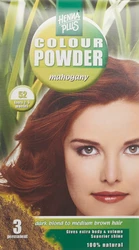
The most common use of henna is as a hair dye. But women who do not colour their hair also use colourless henna as a deep-conditioning treatment.
How does henna differ from conventional hair dyes?
Henna coats each individual hair, repairs the cuticle of the hair, seals split ends and tames frizz. Fine hair becomes thicker and more manageable.
Unlike conventional hair dyes, henna does not penetrate the hair but simply sits on the surface. The natural acidic protective film of the scalp remains intact.
Vibrant tones from plant power: tips for using henna
- To dye hair, henna powder is mixed with boiling water, applied to the hair and left on for up to three hours. Rule of thumb: the longer the application time, the more intense the result.
- Avoid silicone-containing shampoos and conditioners several weeks before dyeing, as they form a coating around the hair. This prevents henna from colouring the hair.
- Since henna powder can further dry out dry hair, moisturizing ingredients should be added. A little jojoba or wheat germ oil conditions the hair and prevents drying.
- To test the colour result, do a strand test a few days before dyeing.
- For a reliable colour change, dye three to four times within two weeks. This creates multiple colour layers around the hair.
- If your hair has been permed or chemically coloured, wait at least three weeks before dyeing with henna. After dyeing with henna you should not switch back to chemical dyes, as greenish discolorations may occur.
- Henna can only be partially washed out and is very persistent. If you want to remove the colour completely, have it grown out by a professional.
- Neutral henna can be used as a dry shampoo. Mix 30 g of baking soda or neutral baby powder with 30 g of colourless henna, fill the mixture into a tightly closable container and apply a small amount to dry hair as needed. Massage lightly and brush thoroughly.
- The same mixture can be used as a deodorant powder. Apply the mixture to the affected area with a cotton pad.
- For an anti-dandruff rinse, stir a teaspoon of neutral henna powder into 100 ml of nettle tea. Add three drops of tea tree oil. Apply the rinse to towel-dried hair after washing and massage well into the scalp. Rinse off after 15 minutes with lukewarm water.
- For sustainable care of dry hands and feet, sift two teaspoons of neutral henna powder and mix with jojoba or almond oil to a creamy paste. Apply this cream to the affected areas and leave on overnight. Wear cotton gloves and socks. Then wash off with warm water.
- Perform an allergy test before every application of henna on skin and hair. If no redness or irritation occurs after 24 hours, the powder can be used.
- Buy henna only in a health food shop or drugstore. It should be 100 percent organically grown, otherwise the powder may contain harmful additives and pesticides.
- Pay attention to the synthetic dye para-phenylenediamine (PPD) listed in the ingredients. This genotoxic substance accelerates the dyeing process and makes the colour more intense, but it has harmful health effects and can cause severe allergic reactions. Henna hair colour must be a pure natural product.
- Pregnant or breastfeeding women, children under 12 and persons with hypersensitivity to henna components should generally not use henna products.
Henna is a skin-friendly, gentle care product for hair and skin with many benefits. Try it yourself!