House dust mite allergy
The invisible threat in our homes
editorial.overview
What is a house dust mite allergy?
The medically correct term for a house dust allergy is “house dust mite allergy”. It is not the dust itself that triggers the allergy, but the allergenic substances (allergens) found in the faeces of house dust mites. These tiny particles dry out and break down into even smaller components that mix with the dust and become dispersed throughout the room.
House dust is almost unavoidable. When it is stirred up, for example by drafts or by shaking bedding, dust particles spread through the air and the allergens they contain are inhaled. An increased risk of allergy may be hereditary and environmental factors such as air pollution and cigarette smoke can promote allergies.
The house dust mite allergy belongs to the so‑called atopic disorders. People with this type of allergy have a higher risk of developing other atopic conditions. If left untreated, a house dust mite allergy often carries the risk of progressing to asthma, noticeable through coughing fits and noisy breathing. In children, allergic asthma occurs in three quarters of cases. Other allergens such as mould spores, pollen or animal allergens can also trigger allergic reactions.
What are house dust mites and where are they found?
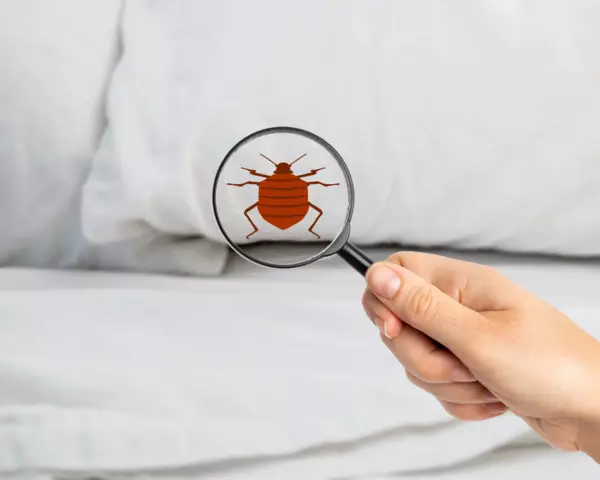
Although these tiny creatures are not visible to the naked eye, they play an important role in allergic reactions. The mites themselves are harmless, as they neither sting nor bite and do not transmit disease. Their natural habitat is house dust, where they feed on skin flakes, mould and components of flour‑based products.
The lifespan of a house dust mite is about 2–4 months, during which it produces roughly 200 times its body weight in faeces. The presence of mites in a household is not, however, a sign of poor hygiene. People shed 1 to 2 grams of skin flakes daily, mainly in places where they spend a lot of time. This amount is sufficient to feed 1.5 million house dust mites for one day.
For this reason, very many mites accumulate particularly in mattresses and upholstered furniture, where there is close bodily contact, as well as in carpets that retain dust well. The optimal living conditions for house dust mites are room temperatures from 25°C and relative humidity of 65–80%. They therefore reproduce here mainly between May and October. When the heating season begins in late autumn, humidity drops and a large portion of the mites die. This leads to a peak in symptoms for allergy sufferers, as accumulated faeces and additionally released allergens from inside the mites are dispersed.
What symptoms are typical for a house dust mite allergy?
Allergic symptoms result from an over‑sensitive reaction of the body to substances that are normally harmless. The immune system reacts to these substances, called allergens, by producing antibodies that bind to certain cells. On renewed contact with the allergen, these cells can release chemicals such as histamine, which then trigger allergic reactions like sneezing or itchy eyes.
House dust allergy sufferers often experience sneezing fits, a runny or blocked nose, and feel weak and tired when symptoms are more severe. Symptoms such as watery eyes and swollen eyelids may occur. Asthmatic symptoms like coughing, wheezing and shortness of breath are also possible. On the skin, a house dust mite allergy can cause itching and rashes.


How can the symptoms of a house dust mite allergy be distinguished?
Symptoms of a house dust allergy can be mistaken for those of other allergies or other illnesses. In urticaria (hives), similar wheals form on the skin – small red swellings. In addition, symptoms like a runny nose and cough are often wrongly interpreted as signs of a common cold. This means that a house dust allergy is often recognised late or not at all.
Compared with a pollen allergy (hay fever), the symptoms of a house dust allergy are often less intense but occur throughout the year. Symptoms worsen particularly at night and in the morning because high concentrations of house dust mites are found in mattresses, pillows, duvets and covers.
The symptoms of a house dust mite allergy can be somewhat different in children than in adults. Early detection is important. Small children often rub their nose because the mucous membranes are irritated. Sleep problems due to nocturnal allergy symptoms lead to tiredness and concentration difficulties. Other symptoms are similar to those in adults. Symptoms often worsen at night, in closed rooms or when in contact with soft toys.
What treatment options are available for a house dust mite allergy?
Various medicines are available for the treatment of a house dust mite allergy. These include antihistamines, also called histamine receptor blockers, which inhibit the effect of histamine and thus relieve mild to moderate allergic symptoms. Mast cell stabilisers (chromones) have a similar function, preventing the release of pro‑inflammatory mediators and must be used preventively.
Corticosteroids, hormones of the adrenal cortex, are used in spray form for allergy‑related asthma. Leukotriene receptor antagonists act similarly to antihistamines as inhibitors, and decongestant nasal drops can relieve symptoms. In addition to drug treatments there are also non‑drug options such as saline nasal sprays and nasal rinses, which can reduce symptoms but generally do not fully replace medications.
A long‑term method to reduce sensitivity to allergens is hyposensitisation, also called specific immunotherapy. Similar to vaccination, small regular doses of an allergen are injected under the skin or administered under the tongue. Specific immunotherapy lasts at least three to five years.
How can the risk of a house dust mite allergy be reduced?
- Reduce upholstered furniture and prefer dust‑resistant alternatives such as leather suites.
- Avoid dust catchers such as carpets, cushions, heavy curtains and open bookshelves.
- Vacuum upholstered furniture and carpets thoroughly every day, preferably with a vacuum cleaner equipped with a HEPA filter (HEPA – stands for High Efficiency Particulate Air).
- Use washable curtains and clean them every six months.
- When cleaning, use damp dust cloths and mop floors damp to minimise dust resuspension.
- When cleaning, allergy sufferers should wear a mouth mask and protective goggles.
- Choose mite‑proof mattress covers and wash them every three months.
- Use cotton bed linen and wash it weekly at at least 60 degrees.
- Choose covers with a pore size of 0.5 µm for optimal mite protection.
- Wear pyjamas at night to reduce skin flakes in the bed.
- Ventilate daily, especially the bedroom, to reduce humidity.
- Use air purifiers against dust to reduce allergen load.
- Avoid plants and humidifiers in the room as they can promote mite growth.
- In hotels, ask for allergen‑free rooms or bring your mattress protector.
- Remove plush toys from the room and air them well.
- Remove children's soft toys by giving them a "visit" to the freezer (48 hours at -15 degrees).
- Wash the soft toys afterwards at moderate temperatures to remove faeces and mites. Alternatively, use plush toys that can be washed at 60°C.
- Be aware that pets can promote the proliferation of house dust mites. Therefore clean your home regularly and take care of your animals to reduce allergen load.
- Do not smoke indoors and keep the home completely smoke‑free.
A house dust mite allergy is a major burden for many affected people, but targeted cleaning measures can produce significant improvements. Implementing these practical tips not only relieves symptoms but also creates a more allergy‑friendly environment.