Lady's mantle
From the meadow to the home medicine cabinet
What is lady's mantle?
Lady's mantle (Alchemilla vulgaris) is a long‑established herb known in herbal medicine particularly for its uses in women's health — a fact reflected in its common name. The hardy plant, found mainly in the forests and meadows of Central and temperate Europe, is appreciated for its adaptability to cooler climates and its preference for well‑drained soils.
The semi‑rosette perennial reaches a height of 30 to 50 centimetres and displays its greenish‑yellow flowers in dense, clustered inflorescences from May to September. Lady's mantle is not only visually attractive but is also notable for its mildly astringent taste, which makes it a popular ingredient in traditional tea preparations.
Which constituents does lady's mantle contain?
Lady's mantle contains a range of natural plant compounds that have long attracted attention in research and herbal medicine. These include polyphenols, tannins and various flavonoids. These secondary plant compounds are often studied for their potential antioxidant properties.
Compounds found in lady's mantle include, for example, phenolic acids and the flavonoids kaempferol, rutin and quercetin. In plant science, these substances are generally associated with various biological processes.
In which areas is lady's mantle traditionally used?
Lady's mantle has been used for a long time in various areas of traditional herbal medicine. It is particularly well known for its use in disorders of the female cycle.
For example, it is taken during menstruation. Women who wish to conceive have long used lady's mantle to help regulate their cycle. The plant is also frequently mentioned during the menopausal transition in herbal practice.
In addition, lady's mantle is sometimes applied externally. The herb is used as teas, infusions or compresses, for example for the care of skin and mucous membranes.
In traditional herbalism, lady's mantle is also occasionally described in relation to the general well‑being of the gastrointestinal tract or of the blood vessels. Such uses are primarily based on passed‑down experiential knowledge.
Besides these classical applications, lady's mantle is valued for its mild flavour and is used as an ingredient in various herbal tea blends.
Is lady's mantle tea safe during pregnancy?
In some traditions it is associated with pregnancy and breastfeeding. However, scientific data on its safety are limited.
Therefore, as a general rule, the use of herbs during pregnancy and breastfeeding should be approached with caution and ideally discussed with a healthcare professional beforehand. If in doubt, it is advisable to seek medical advice before regularly consuming herbal teas.
What side effects can lady's mantle cause?
Lady's mantle is generally considered well tolerated when used moderately. As with many herbs, however, mild digestive complaints can occasionally occur in sensitive individuals. These are often attributed to the tannins present and mainly appear at very high doses.
Allergic reactions are rare but cannot be ruled out. Interactions with medications are scarcely documented so far. Because tannins can influence the absorption of certain substances in the gut, it is advisable to allow a time interval between taking medicines and drinking herbal tea.
For infants, young children, pregnant and breastfeeding women, it is generally recommended to coordinate regular use with a healthcare professional.
Is lady's mantle toxic?
Lady's mantle is a non‑toxic plant. Its leaves, flowers, stems and roots are used in a variety of traditional medicinal applications. In principle, the plant is also harmless to pets such as dogs and cats that may occasionally come into contact with the leaves in the garden or in nature.
Note: Individual reactions in sensitive people or animals cannot, however, be excluded.
How to use lady's mantle: helpful tips
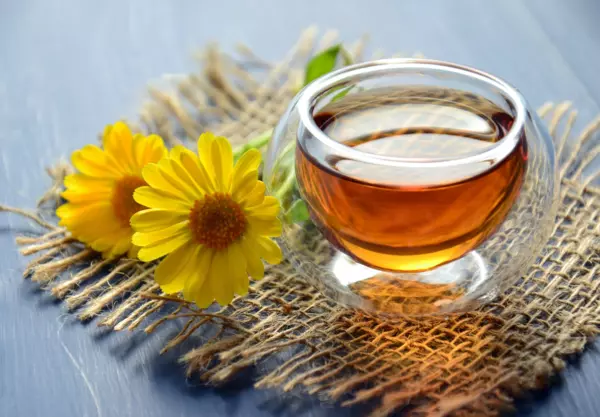
- To extract plant compounds gently, brew your tea with water heated to about 80 to 90 °C.
- For lady's mantle tea, use two teaspoons of dried herb per cup and let the infusion steep for around ten minutes. This allows the constituents to dissolve evenly without the tea becoming too bitter.
- For a clear cup presentation, fine tea strainers or teapots with filters are recommended so that no plant parts remain in the tea and your enjoyment is uninterrupted.
- Lady's mantle tea is not only for drinking: it can also be used as a mouthwash if you want a gentle application for the oral and throat mucosa.
- Prepare compresses from lady's mantle by pouring two tablespoons of dried herb over 250 ml of hot water, letting the decoction steep for 15 minutes, and then soaking a cotton cloth in it. Compresses can be used for gentle topical applications on the skin.
- Ensure you apply the compress only once the decoction has cooled to a comfortably warm, tepid temperature to avoid irritating the skin.
- For a relaxing lady's mantle bath, pour five tablespoons of dried herb into one litre of hot water and let the decoction steep for 15 to 20 minutes. Then strain the infusion and add it to the bath water.
- If you wish to use lady's mantle internally, it is recommended to drink two to three cups of lady's mantle tea daily. This can help support the gastrointestinal tract and relieve discomfort.
- Besides tea, you can also use extracts available as tinctures or capsules. Follow the manufacturer's dosage recommendations.
- If you use lady's mantle as a sitz bath, this can traditionally be used for gentle application in the intimate area.
- Also experiment with the young leaves in your kitchen, for example as a fresh addition to salads or herb butter, to integrate the plant into your daily routine.
- Note that dried lady's mantle herb is more intense and bitter in flavour than fresh leaves — adjust the amount accordingly to keep the taste balanced.
Lady's mantle is a plant with a long tradition and has occupied a firm place in European herbal culture for many generations. To this day it is valued by many people as part of a conscious lifestyle.