
Manuka honey
The liquid gold with great effect
editorial.overview
What is Manuka honey?
Manuka honey is a very special type of honey made from the floral nectar of the New Zealand Manuka bush (Leptospermum scoparium). Unlike ordinary honey, it contains exceptionally high levels of the natural active compound methylglyoxal (MGO), which forms only during the bees' processing of the nectar and gives the honey its strong antibacterial properties.
The Māori, the indigenous people of New Zealand, already used Manuka honey to treat inflammation and infections. Today it is valued worldwide not only as a precious natural product but also as a medicinal aid to support wound healing and strengthen the immune system.
MGO: what does this label mean on Manuka honey?
The abbreviation MGO on a jar of Manuka honey indicates the content of the natural compound methylglyoxal – and it is precisely this substance that makes the honey so special. Methylglyoxal does not form directly in the flower but later. When bees carry the nectar into the comb, a natural process begins in which the ingredient dihydroxyacetone (DHA) is slowly converted into MGO – partly through heat and time.
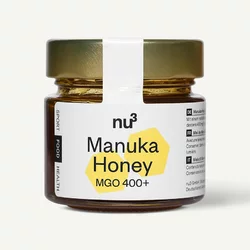
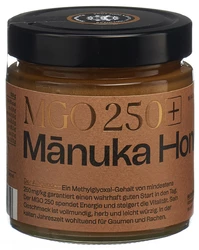
The more MGO a honey contains, the stronger its antibacterial effect. Regular floral honey contains hardly any MGO (usually under 20 mg/kg). Genuine Manuka honey, by contrast, can reach values of 100, 400 or even over 1000 mg/kg. The higher the MGO number on the label, the more premium and effective the honey is.
How healthy is genuine Manuka honey from New Zealand?
Genuine Manuka honey from New Zealand is not only a sweet treat but also a natural product with remarkable health properties. Studies suggest that Manuka honey can inhibit the growth of certain bacteria, including Helicobacter pylori, a germ associated with stomach ulcers.
In addition, the honey's components may slow bacterial cell division, which makes it particularly interesting as a natural remedy against infections. Manuka honey is therefore traditionally used for a wide range of complaints: from digestive issues to sore throats, bronchitis and sinusitis, to skin infections, acne, athlete's foot or slowly healing wounds.
Whether MGO might play a role in cancer therapy is not yet conclusively established scientifically – but as a tried-and-tested home remedy, Manuka honey is a valuable everyday companion for many people.
Can Manuka honey help with colds?
Manuka honey can naturally help with colds – and not only because of its pleasant taste. Unlike many traditional home remedies whose effects are often attributed to the placebo effect, the efficacy of Manuka honey is now well documented scientifically. The active compound methylglyoxal has proven antibacterial and antiviral properties. Studies show that MGO can damage the cell walls of pathogens and block their metabolism – without disturbing the healthy bacterial flora.
This honey is particularly helpful for typical cold symptoms such as cough, sore throat or early nasal congestion. It forms a protective film on the mucous membranes that soothes irritation and promotes healing. It also provides valuable antioxidants that strengthen the immune system and support recovery.
Is Manuka MGO 800+ suitable for children?
In principle yes, but only from the ageof 1 year. For infants under 12 months any honey, including Manuka, is strictly off-limits. Honey can contain botulism spores – bacteria that can produce a dangerous nerve toxin (neurotoxin) in the still-immature infant gut. This can be life-threatening.
For older children, Manuka honey with MGO 800+ can be helpful, for example for coughs or sore throats – however in small, age-appropriate amounts. The high MGO content means that very small amounts are often sufficient to achieve beneficial effects. Therefore, when giving it to children, always start with a small dose and increase it slowly.
If the child tends to food allergies, consult a doctor before use. This can ensure that the natural aid is well tolerated.
How to recognise genuine Manuka honey?
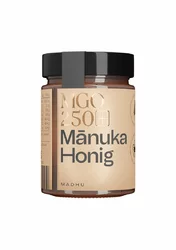
Recognising genuine Manuka honey is not that difficult – if you know what to look for. The most important feature is the MGO rating, which should be stated directly on the label. This value measures the honey's antibacterial activity in milligrams per kilogram. The higher the value – for example 100+, 400+ or even 800+ – the more effective and higher quality the honey.
In addition to the MGO rating, there is also the UMF seal (Unique Manuka Factor). It is one of the strictest quality seals and guarantees that not only MGO but also other important natural compounds such as leptosperin and DHA are present. These substances make Manuka honey so special – and the seal is issued only by certified laboratories in New Zealand.
Colour and texture also reveal a lot. Genuine Manuka honey is darker than regular floral honey and has a thick, creamy texture. If it drips slowly from a spoon and clings to the rim, that's a good sign.
And last but not least: the price. Genuine Manuka honey commands a price – and rightly so. If it is sold particularly cheaply, be cautious. Production is limited to certain regions of New Zealand and is strictly controlled.
How is Manuka honey used for the skin?
Manuka honey is much more than a superfood – it is a real secret weapon in skincare. Thanks to its unique ingredients such as MGO, polyphenols, B vitamins and minerals like magnesium, potassium and calcium, it acts anti-inflammatory, antibacterial and repairing. That is why it is excellent for caring for sensitive, irritated or mature skin.
For wounds and abrasions, the honey is applied directly to the affected area. It disinfects gently, protects against germs and promotes the formation of new skin cells. It can also bring relief for eczema or atopic dermatitis. It calms itching, reduces tightness and helps to restore the skin's balance.
Those with acne or impure skin can use Manuka honey specifically – for example spot-applying with a cotton swab or using it as a mask over a larger area. It clarifies the complexion without drying the skin, regulates sebum production and visibly soothes inflammations.
Also in anti-age care it supplies intensive moisture, stimulates the production of collagen and elastin and improves skin elasticity. Its antioxidant action also protects against free radicals – and all that naturally.
Manuka honey: how to use this natural talent correctly
- Start with a teaspoon daily to strengthen general wellbeing. Manuka honey is traditionally taken pure rather than spread on bread. A teaspoon in the morning can help support your defences naturally. The dose can be adjusted to individual needs.
- Increase the dose at the onset of a cold. If you notice early signs such as a scratchy throat or chills, 2–3 tsp of Manuka honey spread over the day can help. Let it dissolve slowly in the mouth so it acts directly in the throat. This method has proven especially effective for coughs and sore throats.
- Add Manuka honey to cooled tea only. Although methylglyoxal is heat-stable, other valuable enzymes can be destroyed at high temperatures. Stir the honey into the tea only when it has reached drinking temperature. This preserves the full strength of the ingredients.
- Use Manuka honey specifically for small wounds. Apply the honey directly to clean scrapes or scratches. Its antibacterial action can promote healing and prevent infections. Manuka honey with an MGO value between 100+ and 200+ is particularly suitable for external use.
- Treat your skin with a Manuka honey mask. Apply a thin layer of honey to a cleansed face and leave it on for about 20 minutes. The skin becomes soothed, moisturised and gently cleansed – ideal for blemished and stressed skin.
- Treat spots locally with a cotton swab. Put a little honey directly on the spot and let it work. This targeted application can noticeably reduce redness and inflammation. Rinse off afterwards with lukewarm water.
- Use Manuka honey to care for dry lips. Apply a small amount directly to the lips. After a few minutes chapped areas will appear visibly smoothed. The honey provides moisture and protects the delicate lip skin.
- Use Manuka honey for nasal infections. Dissolve a teaspoon in lukewarm water and use the mixture for a nasal rinse. Alternatively, honey can be applied carefully into the nasal cavity with a cotton swab. Ensure cleanliness and perform the application preferably in the evening.
- Incorporate Manuka honey into your anti-age routine. It promotes collagen formation, improves elasticity and moisturises the skin. Especially around the eye area it can soften wrinkles. Use an eye care product or cream containing Manuka honey for visibly firmer skin.
- Care for your hair and scalp with Manuka honey. Shampoos and conditioners with Manuka honey moisturise dry hair and nourish the scalp. The honey soothes irritation, reduces dandruff and strengthens the hair structure from root to tip. The result: shiny, healthy hair.
- Pay attention to quality when buying. Genuine Manuka honey always carries an MGO or UMF value on the label. An MGO value from 100+ indicates medical quality, from 400+ particularly high efficacy. Buy only certified products from trusted retailers.
- Pamper your hands with a Manuka honey treatment. Apply the honey as a natural hand mask – pure or mixed with a little olive oil. Put on cotton gloves and leave the treatment on overnight. The next morning your hands will feel noticeably softer and regenerated.
- Combine Manuka honey with natural scrubs. Mix it, for example, with fine sugar or ground oats to make a gentle scrub. This combination removes dead skin cells while simultaneously providing moisture. Ideal for sensitive skin types as the honey soothes irritation.
- Use Manuka honey as a natural sweetener substitute. It is excellent for sweetening smoothies, yoghurt or cold drinks. Unlike plain sugar, it brings not only sweetness but also valuable ingredients. However, avoid adding it to hot foods or drinks.
Manuka honey is far more than a sweet spread – it combines natural healing power, cosmetic benefits and enjoyment in a single product. Whether taken internally to strengthen the immune system or applied externally for skincare, its versatile uses and scientifically supported efficacy make it a true natural treasure. When you pay attention to quality, genuine Manuka honey provides a powerful, natural means for greater wellbeing in everyday life.