
Marigold (Calendula)
This prophetic medicinal plant regenerates your skin
Which ingredients make marigold (Calendula) so valuable?
Marigold (Calendula officinalis) is a medicinal plant from the Asteraceae family. Its name probably comes from the Latin word “calathus” (woven basket): in the past it was customary to weave marigolds into flower baskets. The dried ray florets of Calendula are used as a medicinal product.
Valuable constituents of marigold flowers include antioxidants such as triterpenoid saponins, flavonoids, carotenoids, mucilages and an essential oil containing the active ingredient alpha-cadinol. Together these substances promote wound healing, have anti-inflammatory, antibacterial, partially antiviral, antifungal, lipid-lowering and antispasmodic effects. They also stimulate bile flow, boost the immune system and have a calming effect on the nervous system.
For which conditions is marigold used medically?
The external use of marigold is medically recognised: for poorly healing wounds, sunburn and inflammations of the mucous membranes in the mouth and throat.
What traditional uses does marigold have?
In folk medicine, marigold tea is also used internally for biliary and gastrointestinal complaints, liver weakness and menstrual problems, chilblains and lymphoedema. Marigold is believed to support the lymphatic system in cases of swollen lymph nodes and tonsillitis.
This medicinal plant has also proven effective in folk medicine for external treatment of wounds, anal eczema, bee stings, frostbite, conjunctivitis, for intimate dryness and inflammatory skin conditions.
How does marigold ointment work on skin injuries and inflammations?
Calendula is mainly used for cuts and grazes of the skin, for bruises and inflamed wounds, for burns and scalds, for sunburn and for bites and mosquito stings.
Marigold ointment regenerates damaged skin: it acts as an antiseptic, anti-inflammatory, cell-regenerating and circulation-promoting agent. As a result, the injured area is better supplied with immune system helpers, oxygen and nutrients. Dead cells and pathogens are removed more quickly and replaced by new cells.
Some studies support the efficacy of marigold ointment in diaper dermatitis and poorly healing wounds in diabetics. In addition, the ointment helps to increase skin moisture, to firm and to tone the skin.
Using marigold correctly – natural power for skin and more
- You can flavour your dishes deliciously with marigolds: the petals are excellent for savoury spreads, flower butter, soups or cakes. Young leaves taste good in leaf salads or wild herb salads. Note that older leaves are slightly more bitter.
- Marigold butter is easy to make yourself. Pick the petals from 6 marigold flowers, chop them slightly and mix with 200 g soft butter, a pinch of turmeric, 2 pinches each of curry, pepper and salt and a splash of lemon juice. Stir well again and it’s ready.
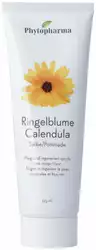
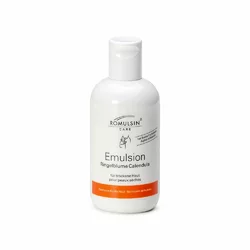
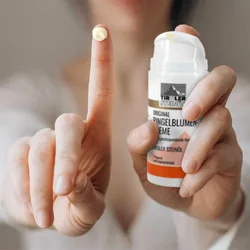
- It is best to use ready-made preparations based on marigold: creams, ointments, bath oils, tinctures and sunscreens. Please note that these preparations must not be applied to open wounds as they could otherwise enter the bloodstream.
- For blunt injuries, sprains, bruises and black-and-blue marks, marigold ointment helps. The active ingredients of the ointment can penetrate through the intact skin surface into deeper skin layers and exert their regenerating effect there.
- For wounds and inflammations in the mouth and throat as well as for inflamed gums, marigold tea is suitable as a gargle and mouthwash. Pour one to two grams of marigold flowers over 150 millilitres of hot water, let steep for ten minutes and strain. The tea can be used several times a day for gargling and rinsing.
- For biliary and liver complaints, a tea blend of marigold, nettle and yarrow has proven effective.
- For conjunctivitis, place a compress soaked in marigold tea on the closed eye. Such a compress, applied for an hour to the affected area, can also be helpful for mild inflammations and small, poorly healing wounds.
- Marigold tea can also be used as a facial toner to make the skin clear and fresh, or as a rinse after shampooing to refresh flaky and dry scalp.
- For poorly healing wounds you can prepare marigold oil: put three handfuls of marigold flowers in a jar, cover with cold‑pressed olive or sunflower oil, close well and let stand for six weeks in a warm place. Simply rub the affected area with marigold oil. From this oil you can also make a marigold ointment: heat the marigold oil to a maximum of 60 degrees and melt beeswax into it (use 10 g wax per 100 ml oil). Store the ointment in the refrigerator.
- For wounds and inflammations of the skin, marigold tincture helps. You can buy this as a ready-made preparation or make it yourself. To do this, pour 15 g of fresh marigold flowers over 100 ml of 50–70 percent alcohol and let the whole thing steep in a closed vessel for 14 to 20 days in a dark place.
- In rare cases allergic reactions to marigold may occur. To exclude this, test the marigold product on the skin before use. There is an increased risk in people allergic to chamomile, mugwort or arnica.
With these tips, the synergistic effect of marigold’s active ingredients guarantees a fresh, healthy-looking complexion in every situation!