
Mustard
This remedy is in your fridge
How is mustard made?
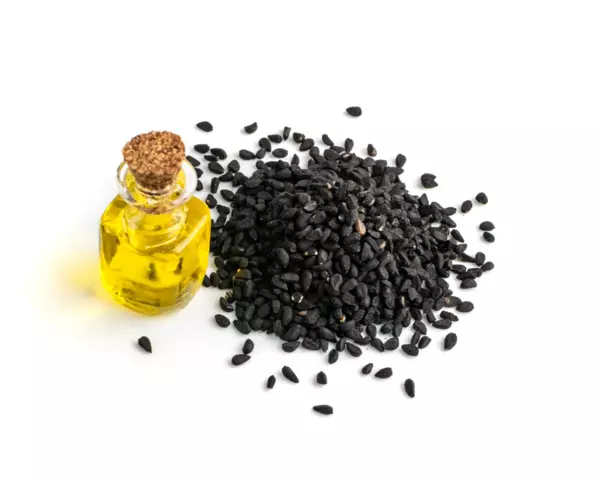
Mustard, a classic spice, is produced from the seeds of the mustard plant — the white, brown and black mustard seeds. While white mustard tends to be mild, brown and black mustard are known for their heat.
The main ingredients in mustard production, besides the ground mustard seeds, are water, vinegar and salt. Some producers use white wine or the juice of unripe grapes instead of vinegar, especially for Dijon mustard.
The mustard seeds are first cleaned, then crushed and de-oiled. The meal is milled into a fine flour and mixed with other ingredients. This mixture is then fermented for several hours until a mash forms.
Afterwards the mass is ground again thoroughly to achieve a fine and creamy consistency. For sweet Bavarian mustard, however, the seeds are coarsely ground. Throughout the entire production process it is important that the temperature does not exceed 50°C to avoid destroying the valuable mustard oils.
By adding further ingredients such as sugar, honey, horseradish, cayenne pepper and many more, the seasoning paste (also called table mustard) is expanded manyfold and covers all taste preferences from sweet to hot.
How healthy is mustard?
Rich in nutrients such as vitamin B1, vitamin B3, vitamin E, calcium, magnesium, selenium and iron, mustard seeds are true nutrient powerhouses. Thanks to the variety of vitamins and minerals, mustard supports a healthy nervous system, may lower total cholesterol levels and has positive effects on the heart, bones and muscles.
Mustard was formerly well known and prized as a remedy, and for good reason. The abundant mustard oils, also called glucosinolates, offer a range of health benefits. These oils have anti-inflammatory properties and promote digestion and gut health. They ease the digestion of fatty or hard-to-digest foods by relieving the stomach, gallbladder and intestines.
Mustard oils also act antibacterially and antivirally by killing bacteria, fungi and viruses. They are therefore often referred to as “plant-based antibiotics”. Mustard oils are particularly effective against infections of the upper respiratory tract and the urinary tract. Unlike conventional antibiotics, mustard oils can also penetrate the biofilm that some pathogens use as protection. Highly concentrated mustard oils can, for example, be used for the prevention of an emerging cold.
The glucosinolates contained in mustard have been shown to have a protective effect against cellular damage and, according to studies, can effectively help prevent certain cancers of the stomach, intestines and lower abdomen. It has even been observed that mustard can inhibit the growth of existing cancer cells.
In addition, the mustard oils present in mustard may protect against heart attacks and relieve symptoms such as angina pectoris and arrhythmias. Mustard may also help prevent diabetes and alleviate diabetes-related complications. Mustard oil is particularly strongly skin-irritating and thereby promotes local blood circulation.
The external application of mustard oil is scientifically recognised for chronic degenerative joint diseases such as osteoarthritis, respiratory conditions like bronchitis and soft tissue rheumatism (fibromyalgia).
How much mustard should you eat per day?
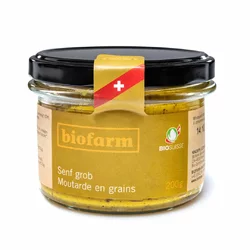
Even a small amount of mustard is enough to benefit from its health advantages. In particular, hot mustard can, according to studies, have positive effects on health. It is recommended to consume about 20 grams of hot mustard daily, as at this amount the cancer-preventive effect — due to the high content of mustard oil glycosides — is most pronounced. It is important to consume mustard cold, since heat can largely destroy the health-promoting components.
How long does mustard keep?
Unopened, mustard is almost indefinitely shelf-stable. Even after opening, mustard keeps for a very long time if the jar or tube is stored in the refrigerator. If you leave an opened jar of mustard at room temperature, you will find after about half a year that the sharp aroma has faded. This is because too much light, heat and oxygen damage the mustard.
The situation is somewhat different for the mustard seeds. Stored dry, not too warm and airtight in a dark jar, they will keep without problems for up to two years.
What is mustard powder?
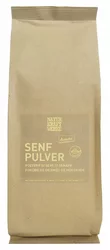
Mustard powder is an excellent spice to give sauces, salad dressings and marinades a fine touch. The spice powder made from ground mustard seeds has a robust aromatic, spicy flavour with a pleasant heat. It gives dishes the characteristic, tingling heat otherwise offered only by horseradish and wasabi.
Mustard powder can be mixed with various liquids to make mustard. With water you get a hot mustard, with vinegar a milder variant, with wine a savoury heat and with beer a fine, piquant version.
How versatile mustard can be used: practical tips
- Prepare a mustard foot bath, which helps with various ailments such as colds or muscle pain. Fill a foot bath with water at 38 degrees warm up to half the calf height. Then distribute 10 to 30 grams of black mustard flour evenly in the water. Sit on a chair in front of the tub, place your feet in it and let them act for 5 to 10 minutes.
- Mix 100 grams of freshly ground mustard flour with water warmed to a maximum of 45°C to make a mustard poultice. Apply the paste to a linen cloth, place the poultice on the affected area and leave it for 3 to 10 minutes. It can help with various complaints such as joint pain or muscle tension.
- Protect sensitive skin areas such as nipples from irritation by the mustard flour compress by covering them beforehand with petroleum jelly.
- Monitor the application of mustard flour closely and stop immediately if the skin burns too much, becomes red or feels uncomfortable.
- Try mustard as an ingredient in homemade face masks to cleanse and invigorate the skin.
- Gently massage mustard oil into the scalp to promote circulation and stimulate hair growth.
- Avoid touching your face when handling mustard to prevent skin and mucous membrane irritation.
- If you experience digestive problems after eating, take a teaspoon of mustard. This helps against symptoms such as heartburn.
- Vary your use of mustard. Besides classics like mustard with cold cuts and grilled meat, you can also use it in sauces, salad dressings or as a seasoning for meatballs.
- Try different types of mustard to discover new flavour combinations.
- Broaden your culinary horizon by using mustard in various dishes such as in an egg sauce, with fish or steak.
- Try different salad dressings. Instead of mayonnaise you can mix a spoonful of mustard with vinegar and oil to dress your salad.
- Try quark with mustard. Mix fresh herbs, spices and a splash of mustard into the quark for a tasty variation.
Mustard is not only a condiment but also a true powerhouse for the body. Thanks to its valuable ingredients, mustard is not only popular in the kitchen but is also used for various health complaints. Mustard covers a wide flavour spectrum from mild to hot and offers countless variation possibilities.