
OPC
The healthy power extract for a youthful appearance
editorial.overview
What is OPC?
OPC stands for Oligomeric Proanthocyanidins. These are secondary plant compounds from the group of polyphenols that our body can fully utilise.
OPC is often referred to as grape seed extract, because the concentration of this active ingredient is particularly high in grape seeds and it is most commonly made from them. OPC is also found in pine bark, cocoa beans, plums, berries, apples, hazelnuts, red wine and the reddish-brown skins of peanut kernels.
How does OPC work as an antioxidant against free radicals?
The main action of OPC, which gives this extract its positive health effects, is its strong antioxidant activity. OPC neutralises free radicals – metabolic by-products that cause oxidative stress and thus damage cells and tissues, lead to premature ageing and worsen the general condition of the body. Free radicals are generated continuously through physical exertion, stress, sun exposure, chronic illness and infections, as well as through smoking and air pollution.
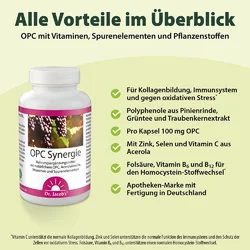
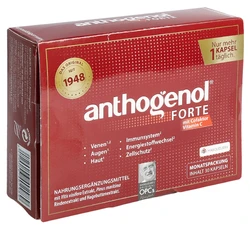
What health benefits does OPC offer for the heart and immune system?
Free radicals attack fibrous proteins that give our blood vessel walls stability and elasticity. As a result, these can harden, leading to increased blood pressure. OPC provides antioxidant protection so that the number of fibrous proteins does not decrease, the vessel walls retain their elasticity and blood circulation improves. This reduces the risk of various cardiovascular diseases.
In addition, nutrient absorption is improved. One of OPC's roles is to protect the plant from microbiological invaders. Studies show it can also act antibacterially in our body. OPC supports our immune system by inhibiting the activity of Bacillus subtilis, Bacillus cereus, Bacillus coagulans, Escherichia coli, Pseudomonas aeruginosa and Staphylococcus aureus.
OPC slows the activation of enzymes responsible for histamine release and thus acts as a natural antihistamine for allergy sufferers.
Can OPC improve brain function and gut health?
OPC protects brain tissue and the nervous system from oxidative attacks. This helps improve cognitive abilities, counteract age-related decline and reduce the risk of dementia and strokes.
In addition, stressors can be processed more effectively without a drop in mental performance.
The stomach and intestines can also benefit from the positive effects of OPC. According to studies, OPC supports a healthy gut flora, can prevent the growth of cancer cells in the stomach and help prevent intestinal inflammation.
Furthermore, OPC may help improve calcium uptake into bone and increase bone density. This also improves oral health, and through its antibacterial action OPC helps prevent inflammations in the mouth.
How does OPC support skin, hair and recovery in athletes?
OPC's strong antioxidant properties make this power extract a proven beauty aid. Since free radicals attack fibrous proteins and skin cells, the skin loses elasticity and wrinkles form. Every skin cell must be supplied with nutrients and oxygen by the tiniest blood vessels, which are partly made of fibrous proteins. If these are attacked by free radicals, the blood vessels regress.
OPC helps stop free radicals and protect fibrous proteins and blood vessels. In addition, OPC produces a natural face-lift by repairing unstable collagen and restoring firmness to the skin.
Hair also benefits: it grows thicker, longer and the number of hairs in the anagen phase (growth phase) increases.
The antioxidant effect of OPC also helps athletes, as the body produces more free radicals during intense exercise. Furthermore, OPC supports collagen and elastin synthesis and repairs blood vessels, which is important for sports injuries and bone healing, leading to faster recovery.
Grape power for your health: how to get the most from OPC
- The recommended daily dosage is 150 to 500 mg (a general rule is 3 mg OPC per kg body weight) – depending on whether OPC is used preventively or for an acute or chronic condition. It is important to take the recommended dose regularly so your body can adapt to it.
- You can take OPC as capsules, powder or drops. The effect does not depend on the dosage form; it is up to you which form you prefer.
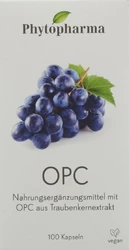
- Pay attention to the composition: OPC should not be presented as an isolated substance but in the form of grape seed extract containing 150–200 mg OPC and supplemented with natural vitamin C. Usually this is acerola or camu-camu fruit powder.
- Note that the amount of grape seed extract or polyphenols listed in the composition does not necessarily indicate the amount of OPC. The product should explicitly state 150–200 mg OPC on the label, while, for example, it may also list 500 mg grape seed extract and 475 mg polyphenols.
- OPC is better absorbed on an empty stomach and should be taken 30 minutes before a meal. Otherwise, it can bind to other proteins in the digestive tract and become less available to the body.
- If you have a sensitive stomach, OPC can be taken after meals. Note, however, that its effectiveness may be reduced in this case.
- In some cases, taking OPC can lead to an initial worsening with symptoms such as headache or diarrhoea. This condition does not last long.
- If you are taking other medications, allow a time gap of 1–2 hours before or after taking OPC.
- According to a study, OPC can alleviate PMS symptoms. For this purpose, one should take 200 mg OPC daily from day 14 to day 28 of the cycle for several months.
- Concurrent intake with vitamins enhances the effect of OPC many times over and vice versa. OPC and vitamins act synergistically, meaning they reinforce each other's health benefits.
- Consult your doctor about possible interactions with other medications, for example anticoagulants.
- If you are allergic to grapes or red wine, you should avoid OPC from grape seed extract and take OPC from pine bark extract instead.
Try this vital nutrient yourself. OPC provides a full health plus and contributes to a beautiful, youthful appearance!