Psyllium seeds
The small miracle remedy with a big effect
editorial.overview
What are psyllium seeds?
Psyllium seeds are the seeds of certain plantain species in the Plantaginaceae family. Two species in particular, Plantago afra and Plantago arenaria, are known for medicinal use. The plants originate from the Mediterranean region and are nowadays mainly cultivated in France and Spain.
There are also Indian psyllium seeds (Plantago ovata), which come from India and neighbouring areas. They are often sold as psyllium husks, notable for their high fibre content.
Plantain prefers to grow at the edges of paths — hence the name. Its leaves form a ground-level rosette and its flowers are arranged in spike-like inflorescences. After flowering, capsules form that contain the tiny, flea-like seeds. Despite their small size, they have a remarkable effect, especially on digestion, since they are rich in swelling (hydrophilic) fibres.
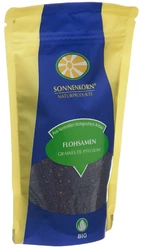
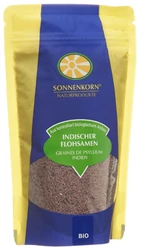
Psyllium seeds or psyllium husks — what's the difference?
Psyllium seeds and psyllium husks come from the same plant but differ in effect and use. Psyllium seeds are the whole seeds and contain both the outer husk and the inner kernel. They are rich in fibre and support digestion, but they can sometimes pass through the digestive tract partially undigested, which limits their swelling effect.
Psyllium husks, by contrast, consist solely of the outer seed husk. This husk is a natural swelling agent of soluble fibres that, when combined with liquid, swell considerably and form a gel-like substance. As a result, they have a stronger effect on the digestive tract, promote regular bowel function and support gut health more effectively than whole seeds.
A key advantage of psyllium husks is their ability to absorb many times their own weight in water. This improves stool consistency and eases intestinal transit. For best results, psyllium husks or seeds should be allowed to swell in liquid for a few minutes and then taken with yoghurt, muesli or juice.
Psyllium husk effects — what makes them special?
Psyllium husks are a true digestive wonder of nature. Their special effect is due to two properties: their high swelling capacity and the mucilage they release, which forms a protective layer on the intestinal wall.
On contact with liquid, psyllium husks can absorb many times their volume. This is due to long-chain carbohydrates in the outer layer that bind moisture and form a gel-like mass. This gel provides gentle stool regulation, firming or softening stools as needed.
In diarrhoea, the husks absorb excess moisture and thicken the stool, slowing transit and reducing the urgency to use the toilet.
In constipation, the swelling gel increases stool volume and stimulates the natural movements of the intestine — prompting it to evacuate.
Besides their swelling capacity, psyllium husks have another feature: they release a protective mucilage that coats the intestinal lining like a film. This effect helps to soothe irritations, calm the mucosa and ease the passage of food.
Additionally, psyllium husks are thought to bind harmful substances and help eliminate them with the stool. This makes them an ideal natural means to support gut health.
Buying psyllium seeds and husks — what to watch for?
Consumers wishing to buy psyllium seeds or husks should not simply pick the first product available. Quality, origin and processing are crucial to obtaining the greatest health benefit.
High-quality psyllium seeds come from controlled cultivation and are processed gently. This means that neither the valuable fibre content nor the natural swelling capacity is impaired by industrial procedures. Organic-certified products are especially recommended, as they are free of pesticides and other unwanted residues.
Make sure that psyllium seeds or husks contain no additives. Some manufacturers add anti-caking agents or fillers that can reduce quality. A look at the ingredient list helps you choose a 100% pure natural product. High-quality psyllium products are also available in pharmacies, where they are subject to strict quality controls and are free from harmful additives.
To keep psyllium and psyllium husks fresh for longer, they should be packaged away from light and airtight. Moisture and direct sunlight can impair quality by reducing the swelling capacity of the fibres.
When should psyllium husks be used?
Psyllium husks form a natural gel in the digestive tract that loosens stools, increases their volume and facilitates intestinal transit. They are particularly helpful in constipation, as they gently stimulate bowel activity without burdening the body. They have also proven useful for diarrhoea, as they bind excess fluid in the bowel and help regulate stool consistency.
They are also recommended for irritable bowel, haemorrhoids or after operations in the rectal area, as they act gently and soothingly. It is important to hydrate sufficiently — at least two litres per day — to ensure an optimal swelling effect.
Psyllium husks can do more. They help stabilise blood sugar levels. Studies show they reduce sugar absorption in the intestine and thus prevent blood sugar spikes after meals. This relieves the pancreas and can be particularly beneficial for people with type 2 diabetes.
Cholesterol levels also benefit from psyllium. The fibres bind bile acids, which are then excreted with the stool. The body must produce new bile acids and uses cholesterol for this — a natural mechanism to lower LDL cholesterol.
Psyllium husks also contribute to lowering blood pressure, especially in people with hypertension and disturbed lipid metabolism. Studies have measured improvements in blood pressure values after several weeks of intake.
For weight loss they are not a miracle cure but a valuable addition. Their swelling capacity provides a long-lasting feeling of fullness, reduces cravings and helps the body absorb less fat and sugar from food.
Psyllium husks are also an important component of intestinal cleansing, as they bind contaminants, reduce bloating and help regulate the gut flora. They may also support people with chronic inflammatory bowel diseases such as ulcerative colitis and help delay flare-ups.
How quickly do psyllium seeds work?
The effect of psyllium seeds does not occur immediately but develops gradually. In most cases it takes 12 to 24 hours before a noticeable improvement in digestion appears. Sometimes the body needs longer, especially if the intestine must first adapt to the additional fibre intake. Then it can take up to seven to ten days for the full effect to emerge — provided the psyllium seeds are taken regularly.
When should psyllium preparations not be taken?
Although these products are known as natural digestive aids, there are situations in which their use is not recommended. Their strong swelling capacity can sometimes be problematic.
People with swallowing difficulties should avoid psyllium preparations, as the seeds can become lodged in the throat if not taken with sufficient liquid. Caution is also advised in cases of narrowing or obstruction of the gastrointestinal tract, since swelling may lead to complications.
In acute inflammations of the digestive tract or chronic digestive disorders, additional fibre intake can worsen the condition. If bowel habits change suddenly and symptoms persist for more than two weeks, medical evaluation is necessary. Those with throat problems should also refrain, as the mucilages can aggravate symptoms.
Psyllium: how to get the best from its effects
- Psyllium husks should always be taken with plenty of liquid. They swell strongly and therefore need water to exert their digestive effect. Without enough liquid they can cause constipation or even intestinal blockage. Drink at least 2 litres per day.
- Ideally, take psyllium husks in the morning, preferably before breakfast. This supports digestion optimally. Later intake, especially in the evening, is not recommended as it may upset fluid balance overnight.
- If you take medication regularly, discuss taking psyllium husks with your doctor first. They can slow or alter the absorption of certain active substances and change the effect of medicines.
- If you suffer from haemorrhoids, taking psyllium husks can provide relief. Softer stools reduce pressure during bowel movements and help ease discomfort. This may slow the progression of the condition.
- Psyllium husks are extremely rich in fibre — 100 g contain about 70 g of fibre. The recommended daily amount of fibre is around 30 g. Therefore, follow this dosing: at most twice daily one level teaspoon of psyllium husk powder mixed with 250 ml of water and drink immediately. Then take an additional 1–2 glasses of water.
- Those aiming to reduce weight can benefit from psyllium husks. Their strong swelling capacity provides a long-lasting feeling of fullness. This can help avoid cravings and stabilise blood sugar.
- Milk inhibits the swelling capacity of psyllium husks and can reduce their effect. Mix the seeds into water or unsweetened plant milk instead. A mix with juice is possible but should be free of added sugar.
- When buying psyllium husks, choose high-quality organic products. This helps avoid contaminants and ensures the product is free from pesticides and additives. Also check the product’s origin and opt for reputable suppliers.
- Psyllium husks are tasteless and versatile. You can stir them into smoothies, yoghurt or porridge. They also work well as a binding agent in soups, sauces or low-carb baked goods.
- In conditions such as intestinal obstruction, severe inflammations or narrowing of the oesophagus, do not take psyllium husks. In these cases consult your doctor first to avoid risks.
Psyllium seeds are a natural and versatile source of fibre that support digestion and contribute to gut health. Through their swelling property they can not only relieve constipation but also promote satiety and support mindful eating. They are also valued as a gentle, plant-based aid for gastrointestinal complaints and are a useful addition to a balanced diet.