Razors
The 14 secrets of the master blade
What types of razors are there?
Razors are now an integral part of modern grooming routines, for both men and women. They allow for a smooth, neat shave and play an important role in personal hygiene and appearance.
There is a wide variety of razors on the market, each offering its own features and benefits. Here are some of the most common types of razors.
Wet razors (manual razors) have long been a popular choice for a thorough, smooth shave. They are used with shaving foam or gel and work by cutting hair at the skin surface. Wet razors come in disposable and reusable variants. Disposable razors are convenient for travel, while reusable razors often have replaceable blades and represent a more cost-effective and environmentally friendly option.
Electric razors are a convenient option as they can be used without shaving foam or water. There are two main types of electric razors: foil razors and rotary razors. Foil razors have a thin metal foil that captures and cuts the hairs. Rotary razors have several rotating heads that adapt to the contours of the face. Electric razors provide quick cutting power and are well suited for people with sensitive skin.
Safety razors are a more traditional form of razor that has regained popularity in recent years. They consist of a handle and a metal head that holds a single blade. Safety razors require a bit of practice and care but offer a precise shave and are a sustainable option since they are reusable and produce less waste.
What are the differences between women's and men's razors?
Both women's and men's razors remove hair, but there are a few important differences based on the shaving needs of women compared with those of men.
Women's razors are designed to treat larger areas of the body, such as legs and underarms, while men's razors are intended for the face. So it's less about who uses the razor and more about which body part is being shaved.
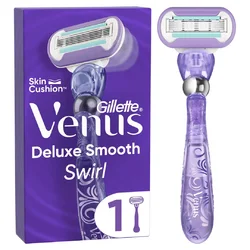
The razor head of women's razors is usually somewhat wider than that of men's razors, as it is used for broader body areas. It is often rounded to adapt to body contours. Some women's razors feature moisturizing strips that lather the skin and help the razor glide comfortably.
The blades on men's razors are often positioned closer together to provide a thorough shave of the face. The smaller razor head on men's razors also allows for precise shaving, which is important when styling facial hair. Women's and men's razors can have between two and five blades. The more blades a razor has, the more thorough the effect. The number of blades depends more on the respective razor model than on whether it is marketed to men or women. Women's razors are designed to be used in wet environments, such as in the shower or bath.
The handles are often fitted with soft rubberised grips and shaped ergonomically. Some even feature a Flexiball handle to safely shave difficult areas like knees and ankles. Handles of men's razors tend to be straight and less grippy, making them harder to hold when wet or when shaving areas other than the face.
The blade angle for men is only slightly higher than for women's razors. Facial hair is generally thicker than body hair. The blade angle must be higher so that the blades can better catch facial hairs. For the face, this means a more thorough removal of hair, but on body hair it can lead to skin irritation.

How to choose the right razor for sensitive skin?
Choosing the right razor for sensitive skin is crucial to avoid irritation, redness or razor burn. Look for razors with multiple, preferably flexible blades that glide gently over the skin and require less pressure. Models with a pivoting head adapt better to contours.
Razors with an integrated lubricating strip containing soothing ingredients like aloe vera or vitamin E are especially gentle on the skin. Electric shavers with protective systems to reduce skin contact are also a good alternative. It is also important to use sharp blades and change them regularly—dull blades further irritate the skin.
Why are safety razors sustainable and how do you use them?
Safety razors are considered particularly sustainable because, unlike disposable razors or cartridge systems, they are almost entirely made of metal and do not require plastic parts or complex head systems. The blade itself is made of stainless steel and can be recycled. In addition, a safety razor generates significantly less waste since only the single blade is replaced — not an entire blade cartridge.
Using them requires some practice but is straightforward: the blade is clamped between the two metal parts of the head. When shaving, it is important to hold the razor without pressure and gently glide it over the skin at an angle of about 30 degrees. Short strokes and a steady hand ensure a thorough and skin-friendly shave. Shaving foam or soap help prepare the skin optimally and let the blade glide smoothly.
Gentle and thorough: the best tips for proper razor use
- Prepare your skin thoroughly before shaving by cleansing it well and moistening with warm water to soften the hairs.
- Use shaving gel or foam to improve the razor's glide and protect your skin.
- Shave in the direction of hair growth to avoid irritation and ingrown hairs.
- Do not press too hard on the razor to prevent cuts and skin irritation.
- Rinse the razor regularly under warm water to remove cut hairs and gel residue.
- After shaving, use a soothing aftershave lotion or balm to care for and calm your skin.
- Do not shave over pimples, cuts or irritated skin to avoid worsening the issues.
- Try different shaving methods — wet shaving, dry shaving or electric shaving — to find what suits you best.
- For sensitive skin, use a razor with fewer blades to minimise irritation.
- Keep your blades dry and clean to prevent rust.
- Do not share your razor with others to avoid infections or skin problems.
- Use razors with flexible heads to better follow the contours of the body or face.
- Avoid alcohol-based products after shaving as they can dry out and irritate the skin.
- If you choose electric shaving, clean the heads or blades regularly to ensure optimal performance.
A well-chosen razor is the key to a thorough and pleasant shave. Choose the razor that meets your needs and enjoy an effective and comfortable shave!