
Reishi
The strengthening mushroom of eternal life
editorial.overview
What is Reishi and which active components make it special?
Reishi is found worldwide and grows mainly on deciduous trees, especially oaks, beeches and birches. In the wild, Reishi lignifies very quickly and becomes hard and bitter. Because of its shiny, lacquer-like surface it carries the Latin name Ganoderma lucidum (“shiny varnished bracket”). Its Chinese name Ling Zhi means “immortality”. For this reason, Reishi is often referred to as the “mushroom of eternal life”.
Reishi contains a total of 400 bioactive substances, including 150 highly active triterpenes, 100 polysaccharides (glycans, beta‑glucans), vitamins, minerals, antioxidants, sterols, fiber and protein. Reishi's many uses are due to this unique and balanced overall composition of compounds.
The polysaccharides in Reishi stabilise our immune system so that many pathogens stand little chance: Reishi not only has a preventive effect against viral infections during the cold season, but also shows positive results in the treatment of HIV.
Triterpenes have antibacterial, calming and anti‑inflammatory properties. They protect the fungus from microbial attack, but have the same beneficial effects on our body. In addition, they inhibit histamine release in allergies, strengthen our cardiovascular system, counteract liver insufficiency and help prevent tumour formation.
How does Reishi strengthen the immune system and combat pathogens?
The proteoglycan GLIS contained in Reishi activates theimmune system by increasing the number of B lymphocytes in the spleen three to fourfold; these cells are responsible for antibody production.
The polysaccharides also increase the number of T cells, which constantly seek out cancer cells and virus‑infected cells to eliminate them. All this supports the body's self‑healing powers. At the same time, Reishi dampens the immune response if it becomes overactive.
What effect does Reishi have on the liver and inflammation?
Triterpenes act similarly to anti‑inflammatory cortisone, but without side effects: they inhibit histamine release, reduce redness and swelling, and have a positive effect on inflammation of all kinds such as arthritis and atopic dermatitis.
Reishi supports liver function and is used as an adjunct in various liver diseases: it detoxifies the liver and improves liver values in hepatitis A, B and C as well as in other liver conditions.
Can Reishi positively influence sleep and the nervous system?
Reishi relaxes and has a sleep‑promoting effect at low doses. It calms the central nervous system by exerting a soothing effect on brain cells.
Researchers suspect that Reishi increases the concentration of the neurotransmitter 5‑hydroxytryptamine, thereby stimulating melatonin production and improving sleep duration. Unlike sleeping pills, Reishi is not addictive.
How does Reishi support cardiovascular health and the respiratory system?
In addition, triterpenes and adenosine improve oxygen uptake from the blood, naturally lower blood pressure and thereby help prevent heart attacks. At the same time, the harmful LDL cholesterol is reduced, counteracting dangerous vessel narrowing.
Some scientific studies in people with diabetes show that Reishi polysaccharides can stabilise blood sugar and may be used for the prevention and improvement of diabetes.
Triterpenes and adenosine have a beneficial effect on the airways, strengthen the bronchi and exert a cortisone‑like anti‑inflammatory effect on the skin and mucous membranes. In chronic respiratory diseases with reduced oxygen supply, accompanied by shortness of breath or dyspnoea, Reishi is particularly helpful because it increases blood oxygen saturation.
How to use Reishi correctly: tips for maximising the medicinal mushroom's effect
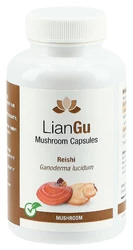
- Reishi is available as syrup, soups, powder, capsules, tea, injections and tinctures. The recommended daily dose according to TCM ranges between 1500 mg and 9000 mg of mushroom powder. For severe illnesses such as cancer the dose must be increased.
- To strengthen and activate the immune system, 1500 to 3000 mg of Reishi extract three times daily are recommended. After two weeks the dose is reduced to 1000 to 1500 mg per day.
- You can prepare a sleep‑promoting Reishi tea yourself: pour one heaped teaspoon of mushroom powder or one tablespoon of grated mushrooms with a cup of boiling water and let it steep covered for 15 minutes. Strain the tea through a sieve.
- Reishi tea is bitter and can be sweetened with a little honey. The tea keeps in the fridge for up to three days and can be drunk cold or warm.
- Making a Reishi tincture is very simple. Mix 450 g of Reishi powder with 1.8 litres of water, bring to the boil, simmer for half an hour, let cool and pour into a glass container. Pour 0.5 litres of alcohol over it, seal and let it steep in a warm place for two weeks. Filter the tincture through a clean linen cloth and bottle it in a dark, closable glass bottle. Take 10–20 ml of the tincture three times a day.
- Although Reishi is well tolerated, digestive complaints may occur at the beginning of use. This is normal as the body needs to adapt.
- Pregnant or breastfeeding women, people with low blood pressure or bleeding disorders and patients undergoing surgery should not take Reishi.
- People taking certain anticoagulants or chemotherapeutic agents should consult their doctor before using Reishi.
Reishi has a positive effect on the whole body and the immune system. See for yourself!