
Soap
The most used product for body care
editorial.overview
What are the basic types of soap?
Today the word soap is more of a generic term than a specific product name. In its most familiar form soap is round or elongated and helps with hand washing thanks to its creamy, often scented lather.
Countless manufacturers offer soaps in different colours and scents. However, this only describes a tiny part of the broader concept of soap. From paste soap to bar soap to liquid soap and metal soap, there are roughly a dozen basic types of soap.
How is soap made and which ingredients are essential?
Soap is a mixture of various alkaline salts of long‑chain fatty acids. They consist of a hydrophobic hydrocarbon chain and a hydrophilic carboxylate group. In water soap forms micelles and therefore does not dissolve completely.
The production of soap uses fats of plant, animal or synthetic origin as raw materials. These fats are heated and mixed in an alkaline solution to form a soap paste of glycerin and alkaline salts. In industrial soaps the components are separated from each other using sodium chloride. The glycerin is then extracted. What remains are pure salts which are mixed with other ingredients such as colourants, fragrances and preservatives.
Surfactants are mandatory for effective washing. Surfactants that create a particularly stable oil‑and‑water mixture are called emulsifiers. During washing the surfactants surround the dirt particles which are then removed during hand washing. In industrial soap production denatured alcohols are used.
Preservatives are as important as surfactants, because without them bacteria would have ideal conditions to multiply and would form large colonies over time. In addition, soaps are usually supplemented with colourants and fragrances.
What are the specifics of natural soap and paste soap?
There are many different kinds and types of soap. With natural soap the glycerin is not extracted, so the skin is nourished during cleansing. Synthetic fragrances and colours are replaced by essential oils and no chemical preservatives are used. Thanks to its cleansing ingredients this soap provides optimal skin hygiene. Accumulated sebum is removed from the pores, normalising skin respiration.
Paste soaps are made from homogeneous substances. This type of soap is characterised by the fact that the glycerin is not separated after saponification — it remains in the soap. In this method fats and lye are saponified at about 40 °C. The substance produced in this way is then poured directly into a container. Paste soaps are often offered in homemade variants.
What are bar soaps and liquid soaps used for?
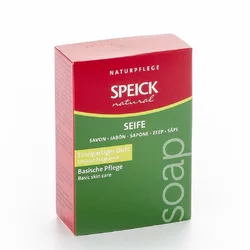
Bar soaps are rightly referred to as solid soaps. Their basic substances are typically sodium salts and fatty acids. Bar soap is produced by salting the soap paste. The usual glycerin is then separated. Although it may not look like it, most commercially available soaps are actually bar soaps. They are generally used when inexpensive and, above all, unscented soaps are required. Bar soaps are mainly used for felting and washing.
Liquid soaps are liquid or semi‑solid soaps made from fats or oils by saponification with caustic potash. They are therefore a mixture of potassium salts of higher fatty acids. Another name for them is „Flüssigseife". As liquids they can be easily added to water and used for cleaning purposes, e.g. in households. Liquid soaps are mainly used as shower gel, shampoo or bath foam.
Which special soap types are suitable for skin care or stain removal?
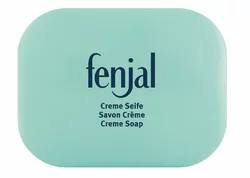
Fine soap is often sold commercially as toilet soap and mainly used for hand hygiene, i.e. for washing hands. It usually contains very fine, naturally odourless fats as well as nourishing additives. These include substances such as lanolin, fragrances and colourants. It also happens that paste soaps appear on supermarket shelves as fine soaps.
Paper soap is primarily a special form of fine soap. Paper soap is simply cut into thin strips. In this way it is portioned for one wash. It also has the advantage of dissolving remarkably quickly. A convenient form of soap for on‑the‑go and travel use.
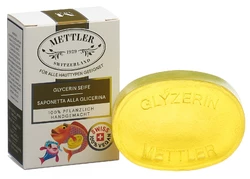
Glycerin soap is mainly recognisable because it is almost transparent. As it melts easily it is also often used for craft projects. Shaving soap has special requirements for its properties. Stearic acid is added and then saponified with sodium hydroxide and potassium hydroxide. This creates the creamy, stable lather that this type of soap needs.
Bile soap is based on a mixture with bovine bile. In this composition it removes stains particularly well when they are organic in nature.
Using soap correctly: top tips for skin care and hygiene
- Pay attention to the soap's texture. A quality soap feels firm, has a uniform texture both on the surface and in cross‑section and is free from cracks, oily spots or deposits. A bar of soap should not feel sticky, soft or uneven.
- The soap should have a consistent colour, in "pure" tones. Multicoloured and striped soaps can, as the name suggests, have an uneven colouration.
- The better the quality of the soap, the better the lather (with the exception of glycerin soaps). Note, however, that foam formation is influenced by water quality and the surface soap – you should "test" the soap under different conditions.
- The acid‑alkali balance (pH) of a natural soap based on salts of fatty acids cannot be neutral. If the soap's pH is neutral, this indicates that its acidity has been artificially reduced through "chemistry".
- The container used to store the soap must be designed so that any water formed can always drain away and the soap does not become waterlogged.
- Not only soap, but also synthetic surfactants strip fats from the skin. They remove the body's own robust fats. This is why many products include re‑fatting substances. Additives such as colourants and perfume in soap or liquid soap also pose a potential allergy risk.
Soap is our first helper for everyday cleaning and provides gentle body care!