

Laundry detergents
How you can expect 100% cleanliness
editorial.overview
What are laundry detergents?
Laundry detergents are products specifically designed for washing and cleaning textiles. They are made from a blend of various substances and are available in liquid, gel or powder form.
The primary purpose of these products is to remove dirt and stains from our textiles. This is achieved through the use of wash-active substances that can detach dirt particles from the fibres of clothing.
What different types of detergents are there?
There are different types of detergents designed for various washing needs and textiles. Universal detergents (also called high-temperature detergents) are suitable for all temperatures from 30°C to 95°C and can be used for most textiles and washing methods. They are often available in powder form but have become less prominent in favour of other product types.
Colour detergents are ideal for wash temperatures between 30°C and 60°C. They suit most textiles and washing methods, are usually available as powder and have gained market share in recent years.
Delicate detergents are specially formulated for sensitive fabrics and are recommended for wash temperatures around 30°C. They do not contain bleaching agents or optical brighteners but instead emphasise enzymes and soap. They are preferred for hand-washing or low-temperature machine cycles.
Speciality detergents are intended for specific textiles such as wool, silk, down, sportswear or membrane fabrics. They are generally designed for low temperatures and meet the particular requirements of these textiles.
Modular detergents offer the flexibility to dose individual detergent components as needed. This allows for a customised approach according to the degree of soiling and the water hardness in different regions.
What ingredients are found in detergents?
Different detergent types vary considerably in composition and concentration of ingredients and preservatives. Conventional detergents contain approximately 15% surfactants, 25% water softeners, 25% bleaching agents, 10% additives and 25% fillers.
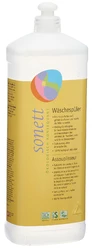
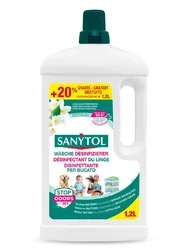
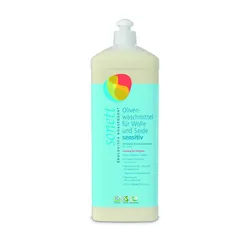
How do surfactants, bleaching agents and enzymes work in the wash process?
Surfactants are wash-active substances that lower the surface tension of water and thus facilitate the mixing of water and grease. They play a central role in the washing process by loosening dirt and preventing it from redepositing on textile fibres. Surfactants can be produced from renewable or fossil raw materials and have been required to be biodegradable since 2005.
Bleaching agents contribute to thorough cleaning of laundry, remove coloured stains such as fruit and vegetable residues and reduce microbial counts even at low temperatures. Bleaching agents are typically found in powder form in universal or full detergents.
The following substances are also found in your detergent: enzymes are responsible for breaking down soils and exist in various types to target specific stains. They are particularly effective at low temperatures.
What role do additives like fillers, colour transfer inhibitors and optical brighteners play?
Fillers mainly increase the flowability of washing powder by acting as free-flow aids. A large proportion of fillers consists of sodium sulphate. They have no cleaning function and end up in waterways after treatment, where they can contribute to salinisation.
Colour transfer inhibitors prevent the transfer of colour particles during washing and thus reduce the risk of discolouration. Some fragrances are hard to break down and can be toxic to aquatic organisms. Since 2005 certain fragrances must be declared on packaging if present at more than 0.01% in detergents.
Optical brighteners convert ultraviolet light into blue light, making textiles appear whiter. They are used in universal or full detergents and in delicate detergents for white laundry. Water softeners are often present as zeolites in washing powders to reduce the effect of hard water on washing efficiency. In liquid detergents they are sometimes implemented via surfactants.
How to improve your wash results: tips for eco-friendly washing
- Sort your laundry. Separate items by colour, fabric type and degree of soiling before loading the washing machine. This helps you choose the right dose and the right detergent for each load.
- Treat stubborn stains before washing with suitable stain removers to ensure complete removal.
- Avoid universal detergents for coloured laundry. Universal detergents contain bleaching agents that can fade the colours of dyed textiles. To keep colours fresh, use detergents formulated for colours.
- Use delicate detergents for sensitive fabrics. If you have particularly delicate garments such as wool or technical wear, choose specific delicate detergents. They protect fibres and help garments last longer.
- Skip special detergents for black textiles. Regular colour detergents are sufficient to wash black laundry. Specialised black detergents offer no significant advantage for colour retention.
- Limit yourself to three detergents. For heavily soiled light textiles, choose universal detergents; for coloured garments, colour detergents; and for delicate fabrics, delicate detergents.
- Dose detergent correctly. The dosage depends on the degree of soiling, water hardness and load size. Dose according to water hardness for lightly to normally soiled laundry.
- Avoid overdosing. Too much detergent leads to longer wash cycles, detergent residues, increased water use and environmental impact. Modern washing machines compensate for overdosing, but overdosing is not good for the laundry, the machine or the environment.
- Ensure sufficient dosing. Too little detergent can make laundry look grey and feel stiff. Make sure you use enough detergent, especially in areas with hard water.
- Wash with detergents formulated for allergy sufferers. These are free from irritating fragrances and are suitable for sensitive skin.
To get clean, fresh clothes you need no more than three detergents. The choice of brand and fragrance is, of course, up to you. It is important not only to use the necessary amount of detergent, but also to care for garments properly. This saves time and money and helps keep our clothes fresh and in good condition.