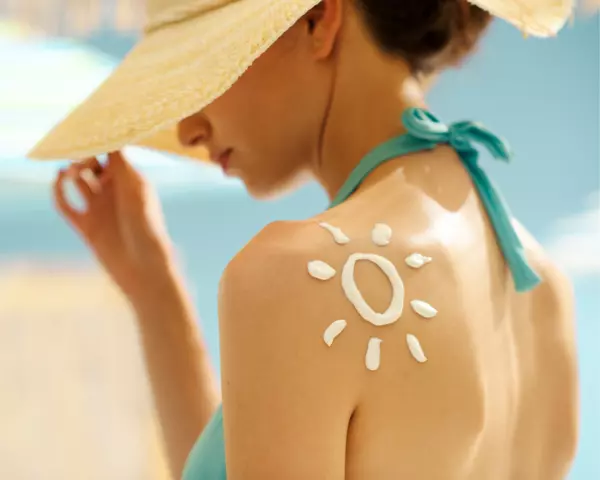
Sun protection for children's skin
Safe play under the sun
editorial.overview
How does the sun affect children's skin?
The sun is essential for children but also carries potential risks for their skin. The sun plays a key role in the synthesis of vitamin D in the skin. Vitamin D is vital for bone health because it helps the body absorb calcium and phosphorus, which are important for strong bones and teeth. Adequate vitamin D production also supports the immune system and can reduce the risk of certain illnesses.
However, children's skin reacts more sensitively to the sun's ultraviolet (UV) radiation than adult skin. It is thinner and contains fewer melanin-rich cells, making it more vulnerable to UV damage. These cells provide natural protection from the sun by absorbing and neutralising UV rays. Because children have fewer of these cells, they are less protected and are more likely to get a sunburn.
In addition, excessive sun exposure during childhood can lead to long-term skin damage such as premature skin ageing, skin cancer and other skin conditions.
Why are sun care products made specifically for children?
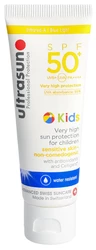
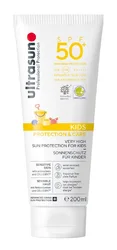
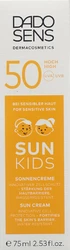
Sun care and skincare products designed specifically for children are tailored to the special needs of their sensitive skin. Children's skin is more susceptible to UV damage. For this reason, products with a high sun protection factor (SPF), often 50+, are recommended to provide effective protection against strong sun exposure.
These products are also often formulated with mild, allergen-free essential oils that are suitable for children's delicate skin. Such oils give a pleasant scent without the risk of skin irritation or allergic reactions that are more common with conventional fragranced products.
How long does sun protection last?
The duration of protection from sunscreen depends on several factors, including the sun protection factor (SPF) and the correct application of the product.
SPF indicates how long you can stay in the sun without getting sunburned compared with the time your skin can tolerate without protection. With an SPF of 50 you can theoretically stay 50 times longer in the sun than without protection. Actual protection time can vary, however, especially if the cream is not applied thickly enough or is removed by swimming and towelling. Experts recommend reapplying every two hours or so to maintain protection.
Unopened sunscreens are generally good for up to three years. After opening they should be used within 6 to 12 months depending on the manufacturer. Be sure to store the cream correctly, preferably in a cool, dark place to prevent ingredient degradation.
How much sunscreen should be applied to children's skin?
When applying sunscreen it is important to use a sufficient amount to achieve full protection. For adults it is recommended to use about three to four tablespoons of sunscreen to cover the whole body. For babies and toddlers it should be about three to four teaspoons per application.
Every area of the body exposed to the sun should be fully covered with sunscreen. The amount that fits on two fingers can be used as a guideline to ensure enough product is applied.
It is also necessary to reapply sunscreen regularly. After any contact with water, whether from swimming or heavy sweating, sunscreen should be reapplied. Even without water contact, sunscreen should be reapplied every two to three hours to maintain protection.
It should be noted that reapplying does not extend the maximum protection time but merely maintains the same level of protection.
What types of sun protection exist for children besides sunscreen?
Besides sunscreens, there are various types of sun protection for children that can effectively protect against harmful UV rays.
Shade is a simple and effective protection against the sun. Natural shade from trees or artificial shade such as umbrellas can block up to 50% of UV radiation. However, reflective surfaces like sand or water can scatter UV rays under the shade.
Wide-brimmed hats are particularly recommended as they protect the face, ears and neck. They offer a simple and portable way to shield children while they play outdoors.
Special UV-protective clothing for children can be very effective. Such clothing is often labelled with a UV protection factor (UPF) and provides comprehensive protection. Tight-fitting clothing may reduce effectiveness, so look for loose, UV-resistant fabrics.
For water activities, swimwear with UV protection is ideal. It often covers a large portion of the body and is specifically designed to protect against UV rays even when wet.
Comprehensive sun protection for children's skin: useful tips
- Choose sunscreens specifically developed for children that block both UVA and UVB rays. They should have at least a sun protection factor (SPF) of 30 and be free from fragrance and preservatives to avoid skin irritation.
- It is important to reapply sunscreen on your child regularly, especially after swimming or heavy sweating.
- Dress your child in UV-protective clothing that covers the whole body. When buying, check for a high UPF rating and that the clothing still protects when wet.
- Keep your child in the shade or indoors as much as possible between 11am and 4pm, as UV radiation is most intense during this time.
- Ensure your child drinks enough fluids to avoid dehydration.
- Check the current UV index to better assess the need for sun protection measures.
- To protect the sensitive skin of your child's head, face, neck and ears, make sure they always wear head covering such as a wide-brimmed hat, cap or a scarf with neck protection when exposed to the sun. Also remember child-appropriate sunglasses that protect against UV rays. These steps help preserve sensitive areas from sunburn and other sun damage.
- In the first year of life, babies should, if possible, avoid sunscreen and instead be physically protected by clothing and shade.
- If you are unsure which type of sunscreen is best for your child, consult a paediatrician. They can give targeted advice and ensure the chosen product optimally protects your child's skin.
- Check the expiry date of your sunscreen and renew it regularly to ensure effective protection.
Effective sun protection for children requires the use of high-quality sunscreens with a high sun protection factor and UVA and UVB blockers. In addition, it is important to protect children from direct sun exposure with long-sleeved clothing, wide-brimmed hats and UV-protective sunglasses. Education about the dangers of the sun and seeking shady spots are also important to raise awareness of sun protection for children.