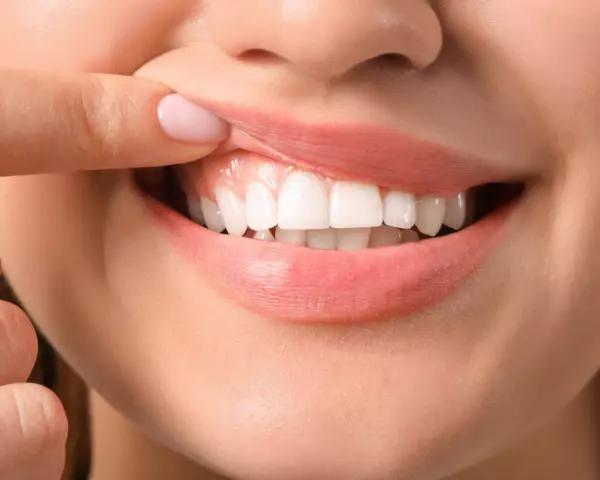

Tartar
How to avoid this oral problem
What is tartar and how does it form?
Tartar is a common oral hygiene problem closely related to dental plaque, also called plaque.
Plaque is a sticky accumulation of bacteria, food debris and other substances that build up on the teeth. These initially water-soluble deposits harden after one to two days and are difficult to remove. Fermentation and metabolic processes occur under the plaque, producing acids. These can damage the enamel and eventually lead to cavities. Tartar is often associated with bad breath. The mineralisation of plaque by minerals from saliva leads to the formation of tartar, which can develop in sensitive people within just a few days.
How quickly and how much tartar forms varies from person to person. This is partly due to differences in the mineral composition of saliva, which in turn depends on metabolism, eating and drinking habits and other factors.
In principle, anyone who has teeth can be affected by tartar, including small children and people with implants or dentures. Deposits can form on any tooth surface, whether it is a baby tooth or dental restorations such as crowns, implants or bridges. Once plaque has formed, the risk of tartar also increases.


What types of tartar are there?
In dentistry two types of tartar are distinguished: supragingival and subgingival tartar. Supragingival tartar is located above the gum line, often near the salivary glands, and can be whitish, yellowish or brown. This type forms quickly but adheres only moderately to the tooth surface.
Subgingival tartar, also called a concretion, develops in periodontal pockets, forms slowly and adheres very strongly to the tooth. It is dark brown to black.
What health problems can tartar cause?
Tartar is not just an aesthetic issue; it also significantly impairs the health of the dental apparatus. Once tartar has formed, it can no longer be removed with conventional means such as brushing or mouthwash, because it adheres firmly to the tooth.
After tartar has formed, millions of bacteria can develop and secrete toxins. These metabolic by-products promote gum inflammation (gingivitis), which can present with symptoms such as gum bleeding and swollen mucous membranes. Subsequently, this can lead to inflammation of the tooth-supporting apparatus (periodontitis), which in the worst case can result in tooth loss. In implant wearers, deposits on the prosthetic parts can lead to an inflammation of the soft tissues known as peri-implantitis.
How can tartar be removed?
Removing tartar is difficult because of its stubbornness and should be performed by a dentist. The dentist can remove tartar either manually with scalers or curettes or mechanically using the ultrasound method. The latter cleans hard-to-reach areas using ultrasonic waves. The instrument tip is set into vibration, producing heat. Water dissipates the heat and at the same time flushes away the tartar.
The removal is usually painless and can be done without anaesthesia. However, if tartar needs to be removed beneath the gum line, the affected area may be anaesthetised. The duration of the treatment depends on the size and amount of tartar and is normally between 5 and 20 minutes.
What should you consider after a tartar removal?
After treatment, the teeth may feel rough temporarily, as the natural protective layer has been removed. Increased sensitivity to cold or heat can also occur, as the teeth need to readjust to these stimuli. This sensitivity normally disappears after one to two hours. It is advisable to schedule regular dental visits for prophylaxis to prevent tartar formation.
Minimise tartar formation and maintain oral health: the best tips
- Brush your teeth thoroughly at least twice a day to remove plaque. This minimises tartar formation because less plaque remains.
- Brush with strokes from red (gum) to white (tooth). This way loose deposits are removed without injuring the gums.
- Clean the interdental spaces once daily with dental floss to remove the biofilm that can accumulate there. Floss reaches areas that the toothbrush cannot and thus helps to clean the teeth thoroughly.
- If possible, gently massage your gums with dental floss. This can promote circulation and help remove deeper, soft deposits.
- Use an oral irrigator if your teeth are very crowded and floss cannot pass between the spaces.
- Use interdental brushes for fixed braces and larger gaps between teeth.
- Use mouthwashes, which are particularly helpful for sensitive tooth necks.
- Strengthen the enamel with a fluoride toothpaste to protect against cavities and reduce tartar formation.
- Use special disclosing agents to make visible where plaque remains. Visualisation makes clear which areas were neglected during brushing.
- Visit your dentist twice a year for a professional cleaning to thoroughly remove all deposits and promote your oral health.
- Reduce your sugar intake to decrease the food source for plaque and minimise the risk of tartar formation.
- Do not use aggressive home remedies such as vinegar, lemon, baking soda or bicarbonate, as these can attack the enamel.
- Try oil pulling by swishing one tablespoon of virgin coconut oil, cold‑pressed sesame oil or sunflower oil through your teeth for about 20 minutes.
- Be cautious with the method of intensive chewing of sesame seeds, as it does not effectively remove tartar.
- Rinse your mouth with diluted tea tree oil to help prevent tartar.
- Do not use at‑home tartar removers, as they pose a risk of injury and cannot completely remove tartar.
- Have tartar removed professionally only, since home remedies are not thorough enough and can damage the enamel. Dentists have special instruments and techniques that remove tartar safely and effectively without harming the enamel.
Even with careful care, tartar can be an annoying problem. However, with the right measures and regular dental visits it can be prevented effectively and treated if necessary. Consistent oral hygiene can not only minimise tartar formation but also help maintain your overall health in the long term.