Tinnitus
How to stop this unbearable sound
What is tinnitus?
Tinnitus, also known as tinnitus aurium, is a disorder characterised by ringing, buzzing or whistling sounds in the ear that are mostly not caused by external sources but originate within the body. These acoustic phenomena can have various causes and often occur as a result of disturbances in the inner ear.
To understand the phenomenon, let's look at how hearing works. Sound waves enter our ear from the outside and are converted into electrical signals in the inner ear by the sensory hair cells, similar to how a telephone receiver converts sound waves into electrical signals to transmit them. Faults in this conversion process can cause the nerve cells to fire without an acoustic input signal, which can lead to tinnitus.
In addition to the inner ear, the brain itself can also play a role. To create an auditory perception, the brain interprets the incoming electrical nerve signals and generates a specific perceptual experience. Disturbances at this level can lead to the brain over-interpreting incoming signals and thus creating a perception of sound out of nothing.
Tinnitus can be classified as acute or chronic. Acute tinnitus lasts up to three months, whereas chronic tinnitus persists longer. Chronic tinnitus can be compensated, meaning the affected person has learned to live with it, or decompensated, which is a serious burden and can be associated with sleep problems, concentration difficulties and depression.
The unwanted ear noise can appear in two main forms: subjective and objective tinnitus. In subjective tinnitus, the sounds originate inside the body and are perceived only by the affected person. This is the more common form and can be due to problems with the auditory system or the nerves. Objective tinnitus sounds, by contrast, occur in only about one percent of cases and can be heard and measured by others. They can be caused by blood flow near the inner ear or by muscular or respiratory causes.
Tinnitus symptoms are perceived by many sufferers as threatening and distressing, although they are fundamentally harmless. Possible accompanying symptoms include sleep disturbances, irritability, poor concentration, muscle tension in the cervical spine and chewing muscles, teeth grinding, headaches, ear pain, dizziness, light-headedness, distorted auditory perception, sound sensitivity, anxiety and depressive moods or depression.
What can trigger ear noises?
Ear noises in tinnitus can be triggered by various factors. One possible reason is a hearing injury, for example from excessive music exposure, which damages the sensory hair cells. As a result, the brain tries to compensate for the loss by over-interpreting weak signals and generating auditory perceptions that do not come from external sound sources.
Common causes of tinnitus include noise, stress, incorrect bite and jaw muscle issues, muscle tension, medication side effects, hearing loss, various illnesses, viral infections and physical injuries to the ears, neck and skull. Acute tinnitus often appears as a symptom of a sudden hearing loss, while chronic tinnitus is more common with age-related hearing loss. Industrial or recreational noise can be the cause in nearly one third of tinnitus patients.
High blood pressure is also a risk factor, as both excessively high and low blood pressure can impair the blood supply to the inner ear. Many tinnitus patients are hypersensitive to loud sounds, which can affect their perception. It has been observed that tinnitus is often related to the facial, jaw, throat, neck and nape muscles, which can lead to muscular imbalances and hence ear noises.
Which conditions occur together with chronic tinnitus?
Chronic tinnitus, a complex condition accompanied by a variety of secondary effects, often shows a close association with other health problems. Current knowledge suggests that the origin of tinnitus lies in the ear, particularly in an area of the inner ear. For example, tinnitus frequently occurs in connection with hearing loss. This is particularly true for the frequencies most affected by the hearing loss. This is probably due to misdirected feedback mechanisms, which explains why many people experience tinnitus in complete silence.
However, the condition is far more complex than a problem in the ear. The central processing of auditory stimuli in the brain plays a decisive role. Even if the auditory nerve were severed, tinnitus can persist. During auditory processing in the brain, amplified responses may occur such as increased irritability, sleep disturbances, attention disorders and anxiety. Many patients find these accompanying symptoms more distressing than the ear noises themselves.


Which examinations are important for tinnitus patients?
Various examinations are important for tinnitus patients to determine the cause of the ear noises and enable appropriate treatment. The ENT specialist must first localise the exact site of the suspected disturbance in the hearing system; in cases of acute tinnitus this should be done as quickly as possible. In addition to the examination of the throat, nose and ears, hearing tests are carried out to determine the extent of any hearing loss. The balance test helps to rule out equilibrium disorders. In objective tinnitus the aim is also to identify a measurable sound source. A tympanogram is used to check the eardrum. The stapedius reflex test checks the natural protection against high sound pressure. The brainstem audiometry test (BERA) is used to assess the function of the auditory nerve.
Further diagnostic methods such as imaging procedures, blood tests or functional examinations of the cervical spine and the jaw joint can be useful depending on the suspected cause. These examinations help to identify the exact cause of the tinnitus and to plan an individually tailored treatment.
What to do for acute tinnitus?
Various therapies are used for acute tinnitus, depending on the type of tinnitus and the patient's individual circumstances. Patients may receive infusions over a period of about ten days intended to thin the blood and improve circulation to deliver more oxygen to the sensory hair cells of the inner ear. If there is no improvement after infusion therapy, hyperbaric oxygen therapy may be considered.
For acute subjective tinnitus, which often accompanies sudden hearing loss, patients receive injections of anti-inflammatory drugs, usually glucocorticoids. In cases without hearing loss, steroid therapy is not recommended. Often the symptoms subside on their own after a few days.
For acute objective tinnitus caused by a known reason, treatment is directed at the underlying cause. For circulatory disorders in the inner ear, circulation-enhancing drugs can be used to regulate blood flow. Microsurgical procedures or radiotherapy are also treatment options for this form.
For muscular causes, medications used for epilepsy or botulinum toxin may help. For problems with the cervical spine or jaw, blockages can be released. Ear noises due to a cerumen plug can be remedied by medical removal.
Although tinnitus cannot currently be cured, there are many methods to alleviate symptoms and improve the quality of life for those affected.
What is tinnitus retraining therapy?
Tinnitus retraining therapy (TRT) is a treatment approach aimed at reducing the ear noise and improving the patient's coping. After detailed counselling, patients receive a so‑called noise device that works similarly to a hearing aid. It is thought that in tinnitus the disturbing sounds in the inner ear are not sufficiently filtered. The noiser produces a gentle sound that apparently improves the filtering function of the central nervous pathways. It is recommended to wear the device for one to two years, three times daily for two hours each time.
More than three quarters of patients experience a reduction in the ear noise and improved coping through TRT. In seven to eight percent of cases the ear noise even disappears completely. The therapy aims to teach the patient not to perceive the tinnitus as bothersome. If needed, psychosomatic or psychotherapeutic treatment can be provided alongside. The chances of success of retraining therapy are higher if the patient is younger and actively participates in treatment. In some cases, initial improvements can be seen after three months.
What helps against ear noises: the most effective tips
- The earlier treatment begins, the better. Then the chances are usually good to get rid of the tinnitus and prevent chronicity.
- If hearing loss occurs with tinnitus, affected persons should seek medical attention immediately, as a sudden hearing loss may be present.
- Withdrawal and fixation on the ear noises is a route into a vicious circle. Hobbies and other activities can help to direct attention to pleasant things.
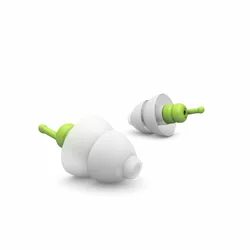
- If exposed to very loud sounds at work or at a rock concert, one should wear hearing protection. Ideally, listening to music too loudly with headphones should also be avoided.
- There are some simple measures to avoid ear noises, such as masking the ear noises with ambient sounds (music, a room fan or the ticking of an alarm clock). In particularly quiet environments ear noises are very noticeable due to a lack of acoustic distraction. Soft music, nature sounds, a small indoor fountain or other discreet background sounds perceived as pleasant can help, for example, when falling asleep.
- Many tinnitus patients show apparent links to psychological or psychosomatic challenges. Therefore, it is advisable to temporarily remove patients with acute tinnitus from stressful environments or place them on sick leave. It is often observed that ear noises are less distressing or easier to cope with on holiday.
- In degenerative diseases or misalignment of the cervical spine, muscle tensions are suspected to contribute to tinnitus in various ways. They may impair blood flow to the inner ear. When these tensions are treated successfully (by massage, lymphatic drainage of the head and neck area and physiotherapy), the ear noise usually improves as well.
- Noiser devices are used to mask tinnitus. They produce a continuous, neutral noise known as white noise. This pleasant, very quiet background sound helps to gradually compensate for the tinnitus. The brain gets used to no longer perceiving the ear tone and the soft noise of the noiser. This application has now become an integral part of tinnitus retraining therapy.
- Numerous scientific studies have shown that hearing aids play an important role in treating tinnitus. Up to 50% of the perceived tinnitus intensity could be reduced by provision of hearing aids.
- Some foods, such as caffeine or alcohol, can affect blood circulation and thus contribute to tinnitus. It is best to avoid unhealthy eating habits and strengthen the body through a suitable lifestyle.
- It is best to take regular time for yourself and try to reduce stress as much as possible. Walks and physical activities can help to improve well‑being. Specific relaxation techniques or yoga can also be helpful in achieving calm. Progressive muscle relaxation according to Jacobson has proven to be an effective relaxation technique against tinnitus complaints in clinical practice. It involves deliberately tensing and then relaxing certain muscle groups.
- Psychotherapy may be considered if, in addition to tinnitus, there are distressing conflicts in professional or private life. For most tinnitus patients an extensive conversation that also includes psychosomatic aspects is sufficient. Currently there is no evidence‑based treatment method backed by scientific proof — apart from cognitive behavioural therapy. According to this approach, tinnitus cannot be completely eliminated, but cognitive behavioural therapy enables better coping with it.
- Acupuncture can help to correct an imbalance in the patient's organism. The same applies to massages, neural therapy, electrotherapy and acupressure. What really helps in individual cases cannot be predicted. Acupuncture seems to have little direct effect on tinnitus itself, but by stabilising the biorhythm and combating sleep disorders it can be a great help.
- Sports are recommended for tinnitus as they are enjoyable and reduce self‑monitoring that can amplify tinnitus. Sport helps to manage misload problems that are partly causes of tinnitus. Stress reduction through exercise is especially important.
From innovative therapies to tried‑and‑tested relaxation techniques, modern medicine offers various approaches to coping with this annoying symptom. Research continues to advance to better understand how tinnitus arises and how its burden can be reduced. Ultimately, it is important to know that you are not alone and that there are ways to find your path through this challenge.