
Arnica
The natural healing power from the mountains
editorial.overview
What is Arnica?
Arnica, also called mountain arnica or wolf's bane in some traditions, is an impressive medicinal plant from the Asteraceae family. In summer it turns remote alpine meadows into a bright yellow sea of flowers and is admired not only for its appearance but also for its healing properties.
It is known for its anti‑inflammatory, pain‑relieving and circulation‑promoting effects. Its valuable constituents make it an indispensable part of many home and travel medicine cabinets. It is commonly used for sprains and bruises as globules in homeopathy or in combination with calendula. Its wide range of uses makes it one of the most popular natural remedies — a true all‑rounder for all ages.
Which active ingredients are found in Arnica?
Arnica montana contains a variety of valuable active ingredients that explain its healing effects. Flavonoids support the cardiovascular system and act as antioxidants, while tannins combat pathogenic bacteria and promote the healing of skin wounds.
Essential oils have anti‑inflammatory, disinfectant and wound‑healing properties, which is particularly helpful for skin irritations and infections. Helenalin, a sesquiterpene lactone, has antimicrobial properties and acts against fungi and bacteria. Choline can have a blood‑pressure lowering and circulation‑promoting effect.

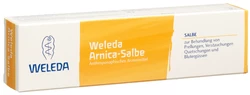
Arnica: what effects does the plant have?
This time‑tested medicinal plant is especially valued for its anti‑inflammatory, analgesic and disinfectant effects. Only the flowers of arnica are used medicinally.
The plant is particularly used for bruises, sprains and contusions, as it reduces swelling and promotes healing. It is also used for rheumatic muscle and joint pain, superficial vein inflammations and fluid accumulation in tissues (lymphoedema). Due to its antiseptic properties it can also help with inflammations of the mouth and throat mucosa, napkin dermatitis, boils and irritations from insect stings. It may also support epidermal regeneration in case of burns and sunburn.
Because the plant is very potent, it should be used exclusively externally — for example as tinctures or diluted solutions for compresses. In this way arnica remains a trusted remedy for many complaints and a valuable aid in naturopathy.
Arnica gel or arnica ointment: which is better?
Whether gel or ointment is the better choice depends entirely on the type of complaint. Both contain the active ingredients, but differ in application and effect.
Arnica gel is particularly suitable for relieving insect stings, as it is anti‑inflammatory and reduces microbial load. It helps ease redness, wheals and itching and speeds up the reduction of swelling. Its texture provides a pleasantly cooling sensation on the skin.
For bruises and hematomas, arnica ointment is the better choice. Its richer consistency promotes circulation and helps relieve pain and swelling. However, the ointment should not be applied to open wounds or injured skin, as it can cause irritation or eczema.
What side effects can Arnica have?
Although it is known for its healing properties, the plant can also cause side effects, especially when misused or in case of an existing allergy to Asteraceae. People who react sensitively to arnica should stop treatment immediately and consult a doctor if necessary.
Prolonged external use can lead to skin irritation, redness or eczema. If applied to damaged skin, it can cause inflammation with swelling and blistering. Highly concentrated or undiluted arnica tinctures are particularly problematic and can trigger severe skin reactions up to necrosis (death of skin tissue).
Arnica should also not be taken internally, as in higher doses it can cause side effects such as dizziness, diarrhoea, nosebleeds or heart rhythm disturbances. Homeopathic dilutions, however, are considered harmless.
Can Arnica be taken internally?
In its natural form arnica should generally not be taken internally, as its constituents can be harmful at higher concentrations. Internally it is therefore used only in homeopathy, where it is available in highly diluted form as globules, tablets or drops.
It is often used for pain, swelling and bruising after minor injuries. It is also used for shock states after falls, e.g. in children. Arnica globules have proven useful before and after dental procedures — especially removal of wisdom teeth — to alleviate pain and swelling.
Since homeopathic arnica preparations are strongly diluted, they are considered safe and well tolerated. Nevertheless, dosing recommendations should be followed and a doctor or practitioner consulted in case of doubt.
Are there interactions between Arnica and other medicines?
To date, no interactions between arnica and other medicines are known. This means arnica preparations can generally be combined with other medications without problems.
However, caution is advised, especially if used over a long period or at high concentration. People with sensitive skin or those already using other topical products should watch for possible irritations or intolerances. In case of doubt, it is always advisable to ask a doctor or pharmacist before use.
Arnica: how to use the medicinal plant correctly and safely
- Use arnica exclusively externally, as its components at high doses can cause health problems. In particular helenalin, a main active ingredient, can cause poisoning and heart rhythm disturbances if taken internally. Only homeopathic arnica preparations are considered safe for internal use.
- Always dilute arnica tincture with water before use, as concentrated tinctures can cause skin irritation. The recommended dilution ratio varies depending on the application between 1:5 and 1:10. Undiluted tinctures should only be applied locally, for example to insect stings.
- Use an infusion to relieve inflammation: pour one tablespoon of arnica flowers over 100 ml of hot water and let the decoction steep for ten minutes. After cooling, soak a cloth in it and apply as a poultice or compress to the affected area.
- Make your own arnica oil to gently relieve muscle tension or joint pain. Put eight grams of dried arnica flowers in 100 ml of olive oil and let the mixture infuse for one week. Then strain the oil and store it in a dark glass bottle.
- Avoid contact of arnica with open wounds, as it can cause strong irritation there. The plant is better suited to supporting healing of closed injuries such as bruises or contusions. If you have no experience with arnica, test the application first on a small area of skin.
- Be aware that arnica products can cause allergic reactions, particularly in people allergic to Asteraceae. Skin redness, itching or eczema are possible side effects. If you are sensitive to chamomile or calendula, be cautious with arnica as well.
- Avoid arnica during pregnancy and breastfeeding, as it is suspected to be able to induce miscarriage. Even with external use there are not enough studies on safety for mother and child. Consult your doctor or midwife before use.
- Buy arnica products only from pharmacies or reputable manufacturers. Wild arnica is protected in many regions and must not be collected. If you want to prepare your own remedies, use dried flowers from a pharmacy or cultivate arnica in your garden.
- Use arnica ointments or gels to treat muscle tension, joint pain or sprains. Apply the product up to three times daily to the affected area and massage in gently. Circulation‑promoting additives such as camphor or rosemary can enhance the effect.
- Avoid contact with mucous membranes, especially the eyes, as arnica can cause severe irritation there. If arnica gets into the eye accidentally, rinse immediately with plenty of water. If symptoms persist or redness continues, consult a doctor.
- Use diluted arnica tincture as a gargle to relieve inflammation of the mouth and throat. Mix the tincture at a ratio of 1:10 with water and rinse the mouth several times daily. Do not swallow the solution, as arnica is toxic if taken internally.
- Use strongly diluted arnica tincture (1:10) for cooling compresses in case of mild sunburn. Soak a clean cloth in the solution and apply it for up to 30 minutes to the affected skin area. The anti‑inflammatory effect can help soothe the epidermis and support healing.
- Combine arnica with other medicinal plants such as calendula, rosemary or comfrey to boost its effect on muscle and joint pain. Many ready‑to‑use arnica gels already contain such plant additives to optimise the anti‑inflammatory and analgesic action. However, watch for possible allergic reactions, especially with sensitive skin.
- Avoid using arnica on small children, as their epidermis can be more sensitive to the active substances. Tinctures and highly dosed preparations in particular can cause skin irritation or allergic reactions. If you are looking for a plant‑based remedy for bruises or sprains in children, consult a doctor or pharmacist.
Arnica is a tried‑and‑tested medicinal plant, valued for its anti‑inflammatory and pain‑relieving properties, particularly in muscular complaints. Its valuable active ingredients promote circulation and support the healing process, which is why it is widely used in ointments, tinctures and gels. Nevertheless, it should be used with caution because at high doses or internally it can cause side effects, so correct use is essential.