
Corns
When your feet are under stress
editorial.overview
Was sind Symptome von Hühneraugen?
These are painful, rounded thickenings of the horny layer that often occur at sites exposed to repeated pressure and friction, e.g. on the toes or the sole of the foot. Typical features are the raised shape and the yellowish-beige colour, often with a glassy core in the middle that is particularly sensitive to pain and resembles a corn – hence the name „corn".
The symptoms are clearly noticeable, above all as pain when standing, walking or under load. The complaints often concentrate on the central area of the thickening, where a glassy, hard core penetrates deep into the tissue and presses on sensitive nerves. These symptoms can become so severe that the affected persons can no longer walk normally.
In addition to pain sensitivity, there may be redness and inflammation around the corn and in some cases the affected area swells or retains fluid due to the irritation.
Wie können Hühneraugen entstehen?
They develop as a result of persistent or repeated pressure and friction on certain areas of the skin, especially on the feet and hands. If the skin in these areas is regularly stressed, the cells of the outermost skin layer respond by dividing more frequently.
This leads to a thickening of the skin that eventually contains more horny substance (keratin) and develops into a round or oval callus. Areas that lie directly over bones, such as soles or toes, are particularly prone because the pressure is greatest there.
Tight shoes that constrict the feet, or frequent strain from tools, sports equipment or musical instruments can promote the development of corns, especially on the dorsum of the toes or the soles where pressure is highest. Foot or toe deformities, such as hallux valgus, can also cause certain areas of the foot to be subjected to greater pressure, which further promotes corn formation.
People with dry skin are also more susceptible because it is less flexible and reacts more quickly to pressure and friction. In some cases, e.g. with sensory disturbances in the legs and feet, affected persons do not initially notice the pressure points, which favours the development of corns.
Was ist der Unterschied zwischen Hühnerauge und Dornwarze?
These two terms are often confused, although they have different characteristics and causes. A corn is a round, smooth thickening of the horny layer with a hard, glassy core in the middle that is painful under pressure or when touched. By contrast, plantar warts (Verruca vulgaris), caused by viruses, are irregularly shaped and have a rough surface.
A striking distinguishing feature is the core. While corns have a light-coloured core, verruca vulgaris show a dark spot caused by blood vessels. Since warts are highly contagious, a correct diagnosis is important to start the right treatment. If in doubt, a dermatologist should always be consulted to determine whether it is a corn or a plantar wart.
Sind Hühneraugen ansteckend?
They are not contagious and generally do not pose a serious danger. Nevertheless, it is important to treat them correctly to avoid inflammation and severe pain. People with rheumatism or diabetes are particularly at risk because their skin reacts more sensitively to pressure points. Interestingly, corns occur more frequently in women than in men, probably due to wearing shoes with heels that are too high.
Wie kann man ein Hühnerauge am Fuss entfernen?
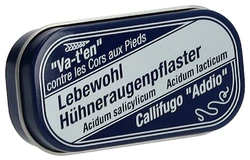
To remove a corn on the foot, there are special plasters and creams that help detach the hard horny layer. These products often contain urea (Urea) or salicylic acid, keratolytic agents that soften the corneous tissue. It is recommended to take a warm foot bath first to prepare the affected area and then apply the corn plaster or cream.
Care should be taken to ensure that healthy skin does not come into contact with the substances to avoid irritation. The plaster should remain on the corn for the recommended period – usually two to four days. After this time, another foot bath can help to soften the horn so that the top layer can be gently removed with a pumice stone.
It is important not to use sharp or pointed objects such as knives or razor blades to remove the corn, as this can lead to injuries and infections. Instead, the layers should be removed slowly and carefully over several weeks. At the end of the treatment, the remaining hard core can be carefully removed after soaking.
Hühnerauge am Fuss: Wann sollte man zum Fachmann?
If a corn on the foot is particularly large, very painful or recurs, it is advisable to see a dermatologist. This also applies if the skin around the corn has become inflamed.
People with impaired wound healing, such as diabetics, should not treat corns themselves but should seek professional treatment from a doctor or podiatrist. Older people who have difficulty bending to care for their feet should also leave foot care to a podiatrist to avoid possible complications.
Welche Hausmittel helfen gegen Hühneraugen?
There are several home remedies that can help gently remove corns and soothe the affected skin.
Arnica tincture is known for its anti-inflammatory and analgesic properties. To treat a corn with it, wash and dry the soles thoroughly. Then put a few drops of arnica tincture on a cotton pad and apply it to the corn. After an exposure time of 10 to 15 minutes, repeat the procedure twice daily. After a few days, the corn can be gently removed after a foot bath.
Tea tree oil has antimicrobial and anti-inflammatory properties that can be helpful in treating corns. A cotton pad with a few drops of tea tree oil is placed on the cleaned skin and left to act for at least 10 to 15 minutes. Until disappearance, the application should be repeated twice daily over several days.
Vinegar, especially apple cider vinegar, can help soften the callus because of its acidic properties. A mixture of three parts vinegar and one part water is applied to a cotton pad and left on the corn for about 30 minutes. After this time the keratinisation should be sufficiently softened to be filed down with a pumice stone. Repeat the process if necessary.
Raisins are also considered a traditional home remedy. For this, cut a raisin in half, place it on the corn and fix it with a bandage overnight. Repeat this procedure for several nights until the horny skin peels off by itself.
Aloe vera is known for its healing and anti-inflammatory properties. The fresh gel of an aloe vera leaf is applied directly to the corn and should be left on for 20 to 30 minutes. Repeat this application twice daily until the corn disappears. Alternatively, aloe vera creams can be used.
The acidity of lemon and its anti-inflammatory and antibacterial properties can also help remove corns. A thin slice of lemon is placed directly on the corn and fixed with a plaster overnight. Repeat this process for several nights until the corn has completely disappeared.
These remedies offer natural alternatives for treating corns but should be complemented by professional medical treatment in the event of persistent complaints or complications.
Hühneraugen: so behandeln Sie diese richtig und effektiv
- If you notice a corn, immediately relieve the affected area. Wear more comfortable shoes that provide enough room, and use orthotic insoles for foot deformities to avoid friction.
- Try a foot bath. Regular foot baths help to soften the callus, making removal of the corn easier. Afterwards use a pumice stone to gently remove the top layer.
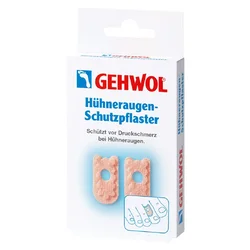
- Use corn plasters. Special plasters containing salicylic acid or other keratolytics can help dissolve the horny layer. Be careful not to use them on children or on sensitive skin, as they can also affect healthy skin.
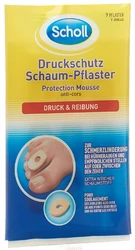
- Protect the affected area with corn rings. These small foam rings relieve pressure on the corn and thus prevent further stress on the sensitive spot.
- Apply a compress with castor oil to the corn and leave it on overnight. The oil softens the skin and helps to dissolve the corn gradually.
- Avoid too-tight shoes. Tight footwear is one of the main causes of corns. Make sure your shoes offer enough space and do not press on certain spots.
- If a foot deformity is the cause of your corn, orthotic insoles or other aids can help distribute the pressure and solve the problem in the long term.
- Care for your feet daily by moisturizing them and removing excess horny skin regularly. This helps prevent corns from forming.
- Avoid sharp instruments. Do not try to remove the corn with a knife or razor blade. The risk of injury and infection is very high.
- If you have diabetes or problems with wound healing, the treatment of a corn should definitely be left to a professional.
- Green clay has anti-inflammatory properties and helps soften the horny skin. Apply it as a poultice to the corn and leave it on for about 30 minutes.
- Monitor the corn. If the corn does not improve despite reducing pressure, or if pain occurs, see a doctor to avoid complications.
- Watch for inflamed areas. If swelling or pus forms around the corn, this indicates an infection. In that case medical treatment is required.
Corns are not only uncomfortable; they can also lead to serious foot problems if left untreated. Regular care and choosing the right footwear are essential to prevent corns. If you already have corns, act early and seek professional help if necessary.