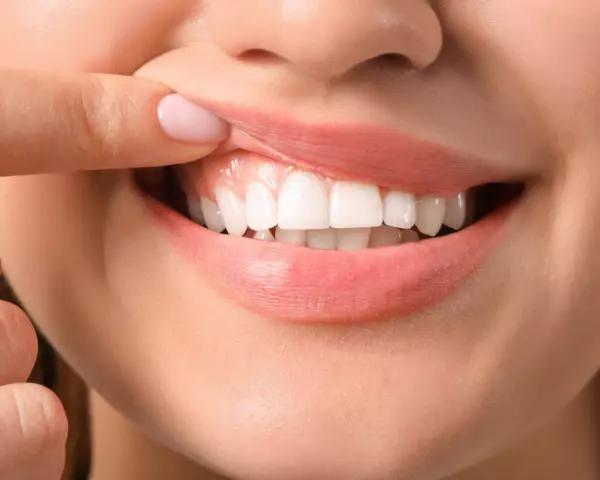
Dental prostheses
For a beautiful smile in later life
editorial.overview
What is a dental prosthesis?
The term „dental prosthesis" colloquially refers to a removable dental appliance that the wearer can insert and remove themselves. As a fixed alternative to removable dentures, dental implants are also available today.
A dental prosthesis is an artificial solution to replace one, several or all missing teeth. Tooth loss creates unwanted gaps in the dentition, which can cause considerable discomfort for those affected. In addition to the loss of jawbone, changes in the oral musculature can occur, leading to headaches and neck pain. The risk of caries and periodontal disease also increases, as gaps provide more hiding places for bacteria.
There are two types of dental prostheses: complete dentures, which replace all teeth in the upper or lower jaw or both jaws, and partial dentures, which replace only part of the dentition or individual teeth.
How do complete dentures and partial dentures differ?
Complete dentures, also called full dentures, are often the classic “third teeth" in older age. With this removable dental appliance, all the teeth in the dentition are replaced by a plastic denture with artificial teeth. The material is plastic and adheres in the upper jaw to the palate and gums through saliva and suction. There is less "suction area" in the lower jaw; here the denture only adheres to the gums. Therefore, in special cases where retention is insufficient, a fixation to the jawbone may be performed.
The main goal is to restore the patient's chewing and speaking ability and to create an aesthetically pleasing overall appearance of the dentition through the use of a dental prosthesis. The complete denture is the standard treatment for edentulous jaws and offers cost‑effective and easily manufactured solutions. However, it can impair taste, cause nausea and restrict speech. Problems with denture stability can occur while eating.
Partial dentures are used when there are no longer enough natural teeth in the mouth to anchor a fixed restoration. They are typically attached to the remaining teeth by clasps. Like complete dentures, partial dentures are made of plastic. There are various subcategories of partial dentures.
What are the pros and cons of clasp dentures, telescopic dentures and stud‑attachment dentures?
Clasp dentures, also known as cast metal frame dentures, are a special type of partial denture often used to close several adjacent tooth gaps. They consist of a cast metal framework into which artificial teeth are placed. This type of restoration offers several advantages, such as low cost, minimal treatment effort, simple handling and adaptability. The partial denture leaves the palate free, gives the tongue space and preserves the sense of taste. Disadvantages include visible clasps, the risk of bacterial accumulation at the clasps and load on neighbouring teeth.
Telescopic dentures, also called double‑crown dentures, belong to the combined systems because they consist of a removable and a fixed part. The remaining teeth are fitted with crowns that serve as inner telescopes. When the denture is inserted, the outer telescopes slide over the inner telescopes, providing optimal retention in the mouth. Telescopic dentures impress with their excellent aesthetics but heavily stress the prepared natural teeth and carry the risk of overloading these teeth and progressive jawbone resorption.
The stud‑attachment denture is an implant‑supported prosthesis that requires several implants for fixation. These implants serve as retention elements into which the denture is pressed or "clicked" using locators. Locators are metallic anchoring elements that connect the denture to the implants. The principle can be simply compared to fastening and unfastening jacket buttons with a slight pressure. The stud‑attachment denture offers good value for money and easy hygiene, but it may require prior root canal treatment and can lead to wear of the retention elements during use, so the studs must be replaced from time to time. Replacement is, however, straightforward. A stud‑attachment denture is only applicable with good bone structure.
When are implant‑supported prostheses such as bar overdentures used?
The implant‑supported bar overdenture is similar in many respects to the stud‑attachment denture. The main difference is that a complete bar is used for fixation, and the counterpart of the bar is integrated into the denture. The denture is then pressed onto the bar anchor in the implants. This gives the bar overdenture an even better hold but involves higher costs. The bar overdenture ensures a firm hold without wobbling or slipping and offers a high level of comfort, but it requires a surgical procedure and incurs high costs due to the necessary implants. Another disadvantage is food debris under the denture.
How does a combined attachment denture work and who is it suitable for?
The combined attachment denture is mainly used in the molar region, especially when several or all teeth are missing there. A prerequisite for an attachment denture is the presence of stable abutment teeth next to the edentulous space. The denture is attached to these so‑called abutment teeth with a plug‑in system consisting of an anchorage on the denture (matrix) and a counterpart on the denture (patrix). To ensure sufficient retention on the abutment teeth, they are crowned and the matrix is incorporated into the crown. The denture can then be slid onto the matrix by the wearer.
Attachment dentures offer secure retention, aesthetic adaptation and easy handling. The front teeth appear natural and the treatment requires no healing time (provided no preliminary treatments are necessary).
Disadvantages include the grinding down of healthy abutment teeth, the need for renewed restoration if an abutment is lost, more elaborate cleaning and possible bone loss under the denture.
Proper care of your denture: proven tips for cleaning and maintenance
- Clean your denture at least twice a day, preferably after every meal, to remove bacteria and deposits. Rinse your denture thoroughly under running water after each meal to remove food residues.
- Use a soft toothbrush or a special denture brush to clean your appliance.
- Avoid regular toothpaste, as it can be too abrasive. Instead use denture cleaning products.
- Maintain good oral hygiene, including cleaning gums, tongue and palate.
- Be patient when wearing your denture for the first time. The adaptation period varies individually.
- Start slowly with daily activities such as eating and speaking to get used to your new denture.
- If your denture is loose, an adhesive cream may help. Apply sparingly to ensure good retention.
- If your denture fits poorly and causes pressure or rubbing, see your dentist. An adjustment can often be made quickly and easily.
- Ensure your denture does not impair your sense of taste. Avoid very hot foods and let meals cool down slightly before consuming.
- Begin the first meals slowly, take small bites and chew carefully.
- Avoid using bleaching agents such as hydrogen peroxide and aggressive home remedies like baking soda or vinegar to clean your denture.
- Limit consumption of foods that contain dyes. Reduce intake of coffee, tea, red wine, fruit juices and nicotine, as these can stain your dentures.
- Have your denture professionally cleaned by a dentist or dental laboratory at least once a year.
- After evening cleaning, place the denture in a cleaning and moisturizing solution or in clear water to prevent drying out.
- Never expose your denture to hot water or a dishwasher, as this can cause deformation.
- For stubborn deposits, consider using an ultrasonic device. Follow the manufacturer's instructions.
- When cleaning the denture, place a towel or soft cloth in the sink to protect it from falling into the drain. Add a drop of dish soap to the water and brush the denture on all sides using circular motions, taking into account the outer and inner surfaces as well as the niches and saddle.
- Do not worry about increased salivation or temporary pressure points. These symptoms are normal and often disappear within two weeks.
Dental prostheses change the quality of life for many people by enabling ordinary eating, speaking and smiling. Choosing the right prosthesis and caring for it properly are key to lasting comfort and oral health.