Evening primrose
It reduces inflammation and helps with skin problems
editorial.overview
Which active compounds make evening primrose so healthy?
Evening primrose (Oenothera biennis) originates from North America. What is special about this plant is that it blooms at night rather than during the day. For this reason it is also called night star or evening flower. Its fleshy root can grow up to 20 cm long and turns ham-pink when cooked, hence the name ham root.
In principle all parts of the evening primrose are edible. Its seeds, root, seed oil and herb contain numerous beneficial compounds, including gamma-linolenic acid, alpha-linolenic acid, oleic acid, palmitic acid, stearic acid, vitamin E, flavonoids, delphinidin, cyanidin, caffeic acid, tannins, phytosterols, resins , etc.
How does gamma-linolenic acid affect the hormonal system and immune defence?
Gamma-linolenic acid is considered the most valuable active compound in evening primrose. This essential fatty acid is involved in several functions of the immune and hormonal systems and has an anti-inflammatory effect. Our body needs this fatty acid to build cell membranes and thus to protect nerve cells and to ensure intact nerve conduction in the brain.
It is also involved in lowering blood pressure. Gamma-linolenic acid may help with premenstrual syndrome, women’s issues during menopause or menopausal complaints by supporting the hormonal system. And that is not all. This fatty acid helps the body produce prostaglandins, which are essential for maintaining health: they activate the immune system’s killer cells against pathogens, lower cholesterol levels, help prevent thrombosis and support healthy coronary arteries.
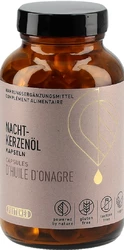
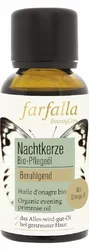
Why does evening primrose oil help with skin problems like atopic dermatitis?
Gamma-linolenic acid is also an important part of the skin’s lipid mantle. As a component of ceramides in the outermost skin layer, it helps regulate the skin’s barrier function and thus protects the skin from moisture loss. To regulate the skin’s water balance, gamma-linolenic acid should make up around 20% of the fatty acids present.
A deficiency of gamma-linolenic acid is suspected to be a possible cause of atopic dermatitis. This deficiency can occur with increasing age and in people with reduced or impaired activity of the enzyme delta-6-desaturase, which the body uses to synthesise gamma-linolenic acid. Therefore, oral and topical treatment with evening primrose preparations is a good option for mature skin, atopic dermatitis, psoriasis, acne and itchy skin conditions.
What cosmetic benefits does evening primrose oil offer for the skin?
Evening primrose oil can also improve the general condition of the skin, particularly for dry and irritated skin. It soothes the skin, reduces inflammation, positively influences skin elasticity and hydration and is an effective anti-age remedy, promoting an improved complexion at any age.
For which other complaints is the plant used in traditional medicine?
Other uses, although not always supported by studies, are common in folk medicine: gastrointestinal complaints, allergies, hyperactivity in children, multiple sclerosis, diabetic neuropathy and rheumatoid arthritis.
Top tips for using evening primrose for skin and health
- You can buy this medicinal plant as evening primrose seed oil and seed powder in capsules and tablets, as evening primrose tea from leaves and herb, or as cosmetics (ointments, creams, balms). Follow the package instructions for correct use.
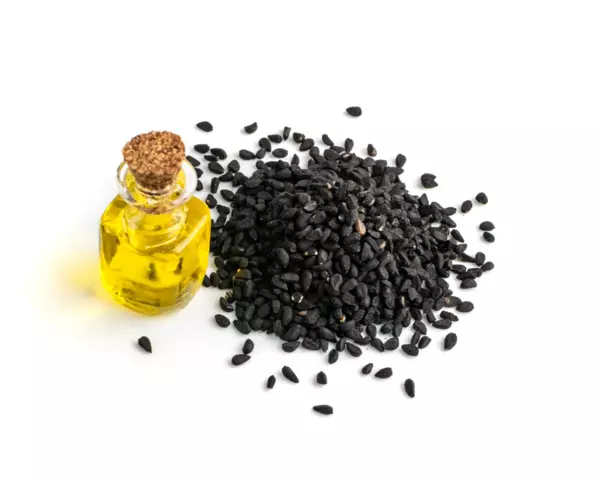
- For medicinal use, pure evening primrose seed oil or softgel capsules containing it are most suitable; they typically contain 500 mg oil per capsule. Pure oil can be added to food or swallowed directly.
- As evening primrose oil capsules are often quite large, swallowing may be difficult. In that case you can open the capsule and squeeze the oil into a drink or a dish.
- For digestive complaints and diarrhoea, drink a tea made from the evening primrose leaves.
- For atopic dermatitis, take the oil directly or in capsules with a meal and use evening primrose topically as an ointment or cream.
- The single dose for adolescents over 12 years and adults is usually 2 to 3 g of evening primrose oil, with a daily dose up to 6 g.
- Evening primrose preparations should be taken over a longer period. It takes from 8 weeks up to 3 months for effects to develop.
- The young leaves of evening primrose can be prepared as a salad or as wild spinach. Leaves should be harvested before flowering. The mildly sweet flowers can be used to garnish salads, soups and desserts.
- The evening primrose root can be eaten raw (grated in salads) or cooked (like salsify). It tastes similar to salsify. Note that the root should be harvested before flowering, otherwise it becomes woody.
- You can add evening primrose seeds to baked goods or crush them in a mortar and sprinkle them over your muesli.
- Store evening primrose oil tightly closed in a dark, cool place, as it is sensitive to light, air and heat.
- When buying, look for organic quality of the oil. The oil should be free of chemical additives and the seeds gently and thoroughly dried to reduce moisture content.
- Evening primrose oil can be used for coat care in dogs and cats. It can be added to food or applied directly to problem areas and brushed into the coat.
- Taking evening primrose oil may cause nausea, digestive disorders, diarrhoea or soft stools, headaches, allergic reactions and an increase in temperature.
- Use is not recommended in case of hypersensitivity or epilepsy. Pregnant and breastfeeding women as well as children under 12 should consult a doctor, as safety data are lacking.
Try evening primrose for yourself to get the best benefit from its unique composition!