
Jojoba oil
The wonderful elixir for healthy skin and beautiful hair
editorial.overview
Where does the ingredient jojoba oil come from?
Jojoba oil is obtained from the seeds of the evergreen jojoba shrub, native to the Sonoran Desert. This extensive desert area stretches across the southwestern USA, particularly California and Arizona, and the northern part of Mexico. Today the jojoba shrub is also cultivated on plantations worldwide, including in Africa, Australia, Argentina, Israel and Peru.
Key to producing jojoba oil are the brown seeds of the shrub. These ripen in about three to six weeks into olive‑sized kernels. After ripening they are pressed to yield the golden, liquid wax we know as jojoba oil. Although technically a wax, the term “jojoba oil” has become common usage.
The texture of jojoba oil is similar to coconut oil, which is solid when cold and liquid when warmed. Jojoba oil is well known for its excellent properties: it has a natural, subtle scent, a long shelf life and, thanks to its skin‑care benefits, is a popular ingredient in many skin, hair and nail care products.
Nourishing components: what is in jojoba oil?
Jojoba oil contains a variety of valuable components responsible for its nourishing properties. It is rich in vitamin A, vitamin B, vitamin E and various minerals. These vitamins and minerals contribute significantly to caring for skin, hair and nails.
Provitamin A, also called beta‑carotene, supports the immune system, cell development and metabolism, and helps the skin remain healthy and resilient. Vitamin E, the so‑called “cell protective vitamin”, shields cells from free radicals, helps prevent premature skin ageing, provides moisture and promotes wound healing. Vitamin B6 helps regulate sebum flow in the skin, which reduces the formation of fine lines and keeps the skin clear and youthful.
An important component of jojoba oil is gadoleic acid, an omega‑6 fatty acid that makes up about 70% of the oil and is present at this high concentration uniquely in jojoba oil. The oil also contains 15% erucic acid and 10% oleic acid, both omega‑9 fatty acids that soften the skin and improve absorption of other active ingredients. Palmitic acid, an unsaturated acid with anti‑aging properties, is also present, as is nervonic acid, another omega‑9 fatty acid.
Thanks to this composition, jojoba oil is easily absorbed into the skin without leaving an oily feel and helps retain skin moisture. It can be applied pure to skin and hair or combined with other high‑quality ingredients such as plant oils, hyaluronic acid, antioxidants and ceramides. The lipid barrier increases the skin's capacity to absorb fat‑soluble actives and encourages cell renewal.

How does jojoba oil affect skin and hair?
Jojoba oil has remarkable effects on skin and hair. In skin care it is often used as a moisturizer because it mixes with the skin's natural sebum, binds water and improves skin elasticity. As a result it acts as an emollient and is particularly helpful for dry, itchy or inflamed skin. Its antibacterial properties naturally relieve itching and the vitamin E it contains makes the skin appear firmer and better cared for.
Jojoba oil is also known as a remedy for cellulite, as it increases the elasticity of connective tissue and improves the suppleness of the skin. Stretch marks and scars can become less noticeable. The oil also supports the build‑up of the skin's natural protective barrier, which defends against extreme temperatures, dirt and dry air, making it useful both in summer and winter. It also has a natural sun protection factor of three to four, but does not replace proper UV protection.
In hair care, jojoba oil has a long tradition and has long been used to improve shine and fullness. It strengthens hair from within, makes it more resilient and manageable, and helps reduce common hair problems such as split ends and frizz. The scalp also benefits: it protects against dehydration, regulates sebum production and can relieve itching.
How does jojoba oil work against pimples?
Due to its specific properties, jojoba oil is excellent against pimples and acne. It has anti‑inflammatory and soothing effects. Microorganisms, germs and fungi cannot break down jojoba oil, so these organisms are displaced.
A particular advantage of jojoba oil is its ability to retain moisture. This effect helps reduce blemishes and pimples. Pimples often occur when pores are clogged with sebum. Jojoba oil binds this sebum, opens the pores and thus removes the food source for pimples. Dead skin cells can be transported away more easily and inflammation is prevented.
How to use jojoba oil on the skin?
Because of its special properties, jojoba oil offers a variety of applications in skin care. As a massage oil it is ideal for relaxing massages due to its good glide and quick absorption, and is especially beneficial for people with dry or sensitive skin. Its mild and skin‑nourishing qualities also make it an excellent alternative for people who react to conventional cosmetics with skin irritation.
In facial care, jojoba oil can be used daily to provide the skin with essential nutrients and maintain its natural moisture level. It gives a fresh, youthful complexion and mixes well with other skin care products, whether as an ingredient in creams or in combination with rose water. This versatility is supported by the oil's neutral properties and mild scent, which allow blending with almost any cosmetic product.
As a make‑up remover, jojoba oil offers a gentle alternative to conventional, often harsh cleansers. It removes make‑up gently without stressing the skin and can be wiped off easily with a dry cosmetic cloth. Jojoba oil is also suitable as a cleansing oil for sensitive skin. It gently removes impurities without affecting the skin's natural protection.
For lip care, jojoba oil can be combined with beeswax to make a moisturizing balm that soothes dry lips. A vegan alternative to beeswax is carnauba wax, which offers similar benefits.
What to consider when buying jojoba oil?
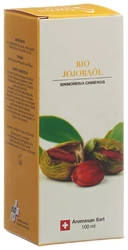
When buying jojoba oil there are a few important factors to consider to obtain a high‑quality product. First, it is important to choose jojoba oil from controlled organic cultivation, as this oil is produced without synthetic fertilisers, chemical pesticides or GMOs and therefore offers high quality.
You should also ensure the oil contains no artificial colourings or fragrances. Finally, unrefined jojoba oil is preferable because cold pressing preserves nutrients, while refined jojoba oil treated with heat and chemicals contains fewer beneficial substances.
How you can use jojoba oil in your daily body care: useful tips
- You can make a scalp mask for dandruff and an itchy scalp. Simply warm one tablespoon of jojoba oil, massage it into the scalp and leave on for 20 minutes. Rinse out the residue afterwards. The effect of jojoba oil can be enhanced with shea butter or almond oil.
- For scar care or stretch marks, massage a few drops of the oil into the affected areas for several weeks. This softens and lightens scars and promotes faster tissue recovery.
- Use organic jojoba oil to achieve deep skin action and reduce wrinkle formation. With its high content of bioactive substances it promotes skin regeneration and provides intensive care without leaving greasy residues.
- For a jojoba hair treatment, mix the flesh of one avocado with two tablespoons of aloe vera gel, one tablespoon of jojoba oil and the juice of half a lemon. Massage the mixture into damp hair and leave it under a towel for 20 minutes. Then rinse the hair as usual.
- Make a nourishing lip balm from 10 g jojoba oil, 10 g almond oil and 10 g beeswax. Simply heat the mixture in a bain‑marie, add a teaspoon of honey, pour into small tins and your lips will thank you.
- Against athlete's foot, dab a few drops of jojoba oil on the affected area twice daily. It has anti‑inflammatory and antifungal properties.
- For rough, brittle nails, apply a few drops of jojoba oil to the nails and massage thoroughly.
- For small wounds you can apply a few drops of jojoba oil to the affected area and rub it in. By promoting collagen formation the wound heals faster.
- For acne, mix a few drops of jojoba oil with some healing clay and make a mask on the affected area once a week for at least six weeks.
- You can remove your make‑up naturally with jojoba oil by simply putting some on a cotton pad.
- People with sensitive skin can use jojoba oil as a cleansing oil. Spread a few drops of the oil over the face, leave it for a few minutes and remove impurities with a washcloth and some warm water.
- Jojoba oil can be used as a natural perfume. It provides a pleasant scent while also improving the skin's moisture balance.
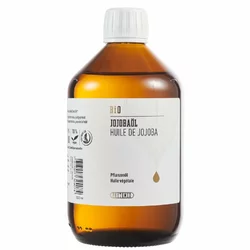
- Ensure jojoba oil is packed in a brown glass bottle, otherwise it will be degraded by UV radiation. Ideally the cap should include a dropper.
- Use jojoba oil externally only. Internal use can cause severe nausea and vomiting because of the toxin simmondsin contained in it.
Jojoba oil is a cold‑pressed carrier oil suitable for all skin types. It regulates the skin's moisture balance without feeling greasy and prevents an overly oily appearance. It is also long‑lasting and does not go rancid.