Rheumatism
It often appears late, but then lasts a lifetime
editorial.overview
What is meant by rheumatic diseases?
Under the collective term “diseases of the rheumatic spectrum”, physicians today group around 400 different conditions. Rheumatism mainly affects the musculoskeletal system, but not only the “hard” parts of the body such as bones and joints — the “soft” parts like muscles, ligaments and tendons can also be affected. Organs, the pleura or nerves may also be involved.
What are the typical symptoms of rheumatoid arthritis?
When people talk about rheumatism, they usually mean rheumatoid arthritis. This form of rheumatism is a chronic, systemic inflammation affecting the whole body and usually follows a relapsing course.
The small joints of the hands and feet are particularly affected, where the synovial membrane, tendon sheaths or bursae can be attacked. In advanced stages of rheumatoid arthritis, this can lead to difficulties with personal care, eating with cutlery or fastening clothing.
The effects of rheumatism can vary from person to person. Which joints are affected and how the disease manifests depends on whether the inflammatory reactions are mild or severe and how far the arthritis has progressed. Before the typical symptoms of rheumatoid arthritis appear, some people experience general complaints such as fatigue, loss of appetite or low-grade fever. At first this may be mistaken for a flu-like infection or be attributed to a sports injury.
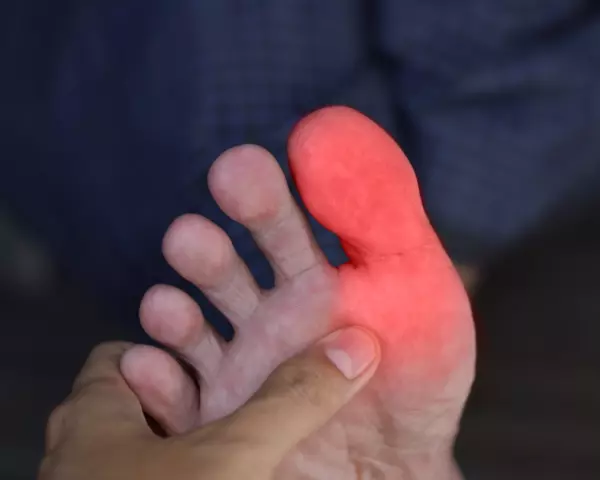
Later on the characteristic signs appear, such as warm, swollen or reddened joints. Joints are often affected symmetrically, for example both thumbs. A firm handshake can cause intense pain (this is known as Gaenslen’s sign). Night-time pain and morning stiffness for more than an hour in the base joints of the fingers and toes are typical.
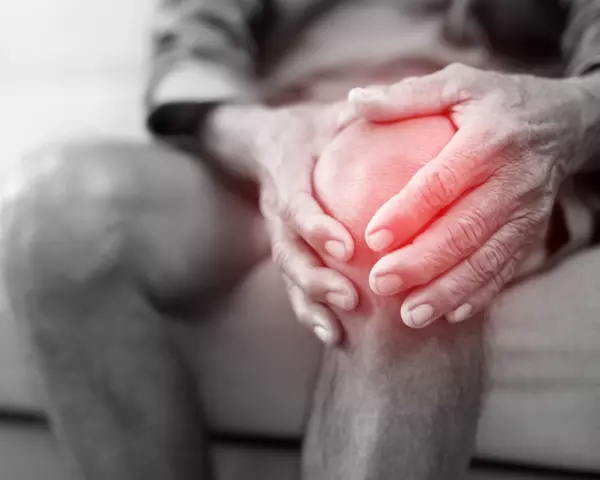
Elbows, ankles or knees can also sometimes be affected by rheumatism. In addition, joints near the torso, such as the shoulders or collarbone, can become inflamed. Restricted mobility and loss of strength may follow. This can make it difficult to hold simple items such as a coffee cup. In an advanced stage of the disease, small, firm nodules may sometimes form under the skin. These are usually insensitive to pressure and touch.
Symptoms may gradually worsen over time, remain stable, or occur in flares. During flares the inflammation and pain suddenly increase and then subside again. Severe exhaustion (fatigue) can occur with intense symptoms or in advanced disease stages. At that point the joints may be severely damaged — especially the wrists, which can become deformed, weakened and immobile.
What complications and secondary diseases can occur with rheumatism?
Inflammatory processes can also affect blood vessels, so people with rheumatism have a slightly increased risk of cardiovascular disease.
An inflammation of the tear or salivary glands can also occur, leading to reduced production of tears or saliva.
Valve changes, pleurisy, fibrotic remodelling of the liver and kidney inflammation are other possible late consequences of rheumatoid arthritis. With timely treatment, however, many of these complications can be avoided today.

What are the causes and risk factors of rheumatoid arthritis?
The exact causes of rheumatoid arthritis are not yet fully understood. It is, however, clear that autoimmune processes play a role, in which the body’s own tissues are attacked by the immune system. Misguided immune cells invade the joints and cause inflammation stimulated by certain signalling molecules such as interleukins. This leads to progressive scarring and overgrowth of the synovial membrane, damaging cartilage and ligaments.
The onset of rheumatoid arthritis may also be linked to genetic factors, including a family predisposition. Some theories suggest infections with certain viruses or bacteria may trigger autoimmune reactions. Smoking is a risk factor for development and can also adversely affect the course of rheumatoid arthritis.
How is rheumatoid arthritis treated?
The choice of treatment method depends on various factors, including the severity of the inflammation and symptoms, disease progression, assessment of the likely course and the effectiveness of treatments previously tried.
Rheumatism is not curable to date. However, medications can suppress inflammation, relieve symptoms such as pain and swelling, and preserve joint function as long as possible.
Slow down or even halt disease progression: tips and tricks
- It is important to see a doctor early if joints swell and hurt. If rheumatoid arthritis is recognised and treated within the first six months, the chances of preventing joint destruction are greatest.
- Regular movement helps to relieve pain and maintain joint mobility. Physiotherapy exercises improve joint mobility and strengthen the surrounding muscles. Mobility, strength and function of the joints can also be improved or maintained through physiotherapy and sport. Possible sports for people with rheumatism include cycling, walking, dancing, gymnastics, light strength training, swimming and water aerobics.
- Occupational therapy is useful in many cases. Its main aim is to preserve hand mobility and muscle strength and to learn how to cope with the disease in daily life.
- Complementary therapies such as heat, cold or electrotherapy may also be used. To relieve an acute flare, one can hold and move the hands for about ten minutes in a bowl of rapeseed seeds. Many people prefer chilled seeds from the fridge for this application, but those who benefit from heat can briefly warm the seeds in the microwave. Rapeseed seeds are sold in health food stores, natural food shops or directly at mills.
- Inflammation produces many free radicals that can damage the tissues in the joints and surrounding structures. For this reason, taking additional antioxidants may be beneficial. Antioxidants such as vitamin C, vitamin E, zinc and selenium can neutralise free radicals.
- Adequate magnesium intake can lower the risk of arthritis and relieve existing arthritis symptoms. Magnesium promotes cartilage formation, supports the conversion of certain proteins into cartilage tissue and has anti-inflammatory effects.
- Inflammatory processes can be exacerbated by a diet that consists mainly of meat and processed meat products, dairy products and eggs. These foods contain the omega-6 fatty acid arachidonic acid, which in the body forms pro-inflammatory mediators — so-called eicosanoids. For this reason, it is advisable to consume foods of animal origin only in moderation.
- The focus of the diet should be on fresh fruit and vegetables, including potatoes, legumes, grains and nuts. In addition to vitamins, plant foods provide valuable phytochemicals that, among other effects, act anti-inflammatory.
- Vegetable oils such as linseed oil, rapeseed oil, soybean oil, walnut oil and wheatgerm oil are rich in alpha-linolenic acid, which is converted in the body to eicosapentaenoic acid, another omega-3 fatty acid. This fatty acid has anti-inflammatory properties and can therefore counteract inflammatory processes.
- Cold-water fish such as herring, salmon, mackerel, halibut and sardine contain large amounts of long-chain omega-3 fatty acids such as eicosapentaenoic acid and docosahexaenoic acid, which have anti-inflammatory effects. Studies have shown that in inflammatory rheumatic diseases the number of inflamed swollen joints and the intensity of pain can be reduced by regularly consuming about 800 g of fish per week.
- Spices such as curry, garlic, cumin, ginger and turmeric have anti-inflammatory effects. They not only enrich flavour but can also help relieve symptoms. In an analysis of eight studies, curcumin at a daily dose of at least 1000 mg was shown to significantly reduce arthritis symptoms compared with placebo preparations.
- It is advisable to prepare meals fresh and avoid ready-made foods. Convenience foods often contain saturated fats, hidden sugars, large amounts of salt as well as preservatives and flavourings that are not particularly beneficial for health.
- To support metabolism, a fluid intake of 30 ml of water per kilogram of body weight per day is recommended. This means, for example, that a person weighing 60 kg should drink at least 1.8 litres of water per day. This general hydration recommendation also applies when following a diet for rheumatism.
- People with rheumatism should avoid alcohol where possible. Alcohol in larger amounts can accelerate disease-related joint destruction.
- Because bacteria from inflamed dental foci can enter the bloodstream and reach the joints, causing new inflammations, careful care of gums and teeth is important. One study showed that the risk of arthritis in patients with periodontitis is three to nine times higher than in patients without periodontitis.
- Try black seed oil. In one study, patients with arthritis received 500 mg of black seed oil twice daily for one month. Compared with the placebo group, their symptoms improved significantly. Joint pain and swelling decreased and morning stiffness was reduced.
- For very advanced arthritis, aids can be used to compensate for many physical limitations and to assist with daily tasks. These include, for example, gripping aids and cutlery with special shapes. To relieve the joints, it is important to wear comfortable and stable shoes. Orthotic insoles or special rolling aids can be prescribed and made.
- Psychological methods are sometimes used to better cope with pain and limitations in daily life. These measures also aim to relieve disease-related anxiety and depression that some people experience.
With these tried-and-tested tips and tricks you can regain control despite rheumatic complaints and lead a fulfilling life that is not defined by limitations!