Scars
How to get beautiful skin after injuries
What are scars and how do they form?
Scars are often described as marks of a life lived. Nevertheless, nobody wants injuries to leave unsightly marks on their skin that last a lifetime. Dr Gregor M. Bran, head of the Centre for Plastic and Reconstructive Head and Neck Surgery at the Dr. Horst Schmidt Klinik Wiesbaden, says: "Wound healing depends on a finely balanced interplay between the formation and breakdown of connective tissue". Sometimes this carefully regulated process becomes unbalanced. Excess tissue production causes keloids, while too little scar tissue promotes chronically open wounds.
Scars are actually an important part of wound healing. They form at sites where the deeper layers of the skin were damaged.
What types of scars are there and how do they differ?
Four types of scars are distinguished. Atrophic scars, common after acne, are sunken and appear as pitted depressions because little connective tissue is produced during healing.
Hypertrophic scars, by contrast, protrude above the surrounding skin because they result from the production of too much new connective tissue. These scars can itch, hurt and remain red for a long time. They develop on active skin areas such as joints, which are often subjected to tension and therefore take longer to heal.
Keloids occur when scar tissue also forms around the original injury. Such overgrowths itch and become firm. They often occur after burns, can be heavily pigmented and are associated with a disturbance of collagen metabolism.
After large-area injuries, heavily fibrotic, sclerotic scars may form – contractures. They are very hardened and can restrict movement of the affected areas.
Why can scars cause pain?
If nerves were cut or irritated during an injury or operation, they may regenerate incompletely or incorrectly. This can lead to neuropathic pain – that is, pain originating from the nervous system itself.
If a scar becomes inflamed or is constantly irritated – for example by clothing, movement or pressure – it can lead to chronic pain.
Keloids and hypertrophic scars can be painful, itchy or tender to pressure. They are often especially problematic when they are located near a joint or press on a nerve.
How do scars affect skin function?
The damaged area is slowly filled with connective tissue – scar tissue. This tissue is considered a second-choice skin substitute, because it is less functional compared with undamaged skin.
In this replacement tissue, collagen fibres are no longer elastically interwoven but are arranged in parallel. As a result, the affected area becomes less elastic, lacking its sweat and sebaceous glands and hair. Such scar tissue cannot sufficiently supply itself with moisture and also lacks pigment-producing cells – melanocytes.
Some scars cause pain and sometimes unsightly bulges can grow if the tissue continues to proliferate.
Less visible, less noticeable: tips for treating scars
- As soon as the wound is closed, start gentle care with anti-inflammatory, moisturizing and smoothing products to ensure as smooth a skin texture as possible. Gently massage the appropriate ointments, creams or gels in without too much pressure.
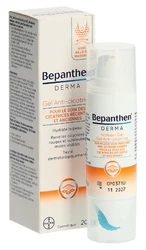
- You can regularly apply scar creams containing dexpanthenol, silicone or plant-based ingredients three times a day to reduce redness and itching and to make the scar flat and supple. Dexpanthenol has a moisturizing effect and binds water in the skin. Silicone leaves a dry film and promotes healthy scar formation, but it should only be used after stitches have been removed. Ointments with anti-itching and anti-inflammatory plant ingredients can be applied thickly and covered with a dressing.
- It is important to massage the scar in circular motions or using a pinching technique once it is closed. Otherwise skin layers can adhere and the skin becomes even less elastic. Such massages not only promote blood circulation but also improve scar structure by breaking up collagen fibres and making scars softer and more mobile.
- To make the massage more comfortable, you can use a scar ointment. For hard scars you can roll the skin fold between your fingers. Make sure the massage does not cause pain and reduce the pressure as soon as it becomes uncomfortable.
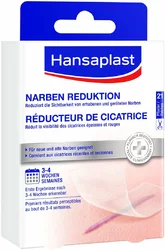
- There are special breathable, water vapour-permeable scar dressings that help reduce scar tissue. They create a good skin climate for better tissue regeneration and should be used for about two to three months, changing them every 24 hours. However, such dressings do not work for keloids and large-area scars.
- In some cases compression bandages are recommended to prevent overstretching of the wound edges. This is particularly relevant for large scars and burn injuries, where the aim is to reduce tensile stress. Compression is intended to inhibit the development of excessive scar tissue.
- Wear loose clothing. To prevent itching, clothing should not rub or irritate the skin. If itching occurs, do not scratch the scar and use appropriate care products.
- UV protection is also important because scar tissue is particularly sensitive to the sun. Apply a non-irritating sunscreen with SPF 30 or 50 before going outside if your scar is on an exposed area.
- If you notice that the scar is growing disproportionately quickly, consult a doctor immediately.
With these tips, the marks of a life lived can be visibly reduced!