
Self-tanner
How to achieve a sun-kissed look
editorial.overview
What are self-tanners?
Self-tanners are cosmetic products designed to give the skin a natural-looking tan — without sun exposure. They contain specific ingredients that react with the upper layers of the skin to create a sun-tanned appearance. This makes them a safe and straightforward alternative to traditional tanning with UV rays.
Self-tanner – spray, lotion or oil?
Each form has its own advantages and use cases. Lotions and tanning creams are classics and are especially suitable for dry skin since they provide extra moisture. Modern formulations deliver an even result but require careful application to avoid streaks. Tinted versions help control product distribution more easily.
Sprays stand out for their fine mist, which allows even tanning on hard-to-reach areas like the back or thighs. They are ideal for anyone who values precision but require some practice, particularly to maintain the correct spray distance. For a professional finish, special at-home spray systems can also be used.
Tanning oil is suited to experienced users, as its liquid texture spreads more quickly and can leave streaks if applied unevenly. In return, it offers intensive care and is particularly good for dry or demanding skin since it nourishes while absorbing quickly.
The choice of the right self-tanner depends on personal preferences and the desired ease of application.
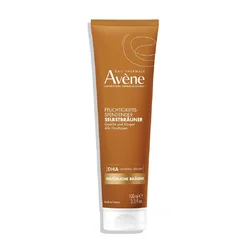
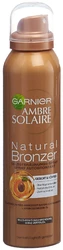
Is self-tanner suitable for all skin types?
Self-tanners are generally suitable for most skin types and provide a practical way to gently tan the skin. For sensitive skin, there are even special formulas with particularly mild ingredients. Still, people with sensitive or allergy-prone skin should exercise caution.
A preliminary allergy test on a small patch of skin is recommended to rule out possible reactions to the ingredients. That way you can be confident your skin will get the desired glow without unpleasant surprises.
Do self-tanners protect the skin from UV rays?
Unfortunately no, because the tan from self-tanners results solely from a chemical reaction with the outer skin layer and provides no natural sun protection. The skin does not produce melanin pigments that would otherwise protect it from ultraviolet radiation. Therefore, it is important to use a sunscreen with an adequate SPF to protect the skin from harmful UV exposure even when using self-tanners.
How long does self-tanner last on the skin?
The tan achieved by self-tanners typically lasts between 5 and 7 days. This is because the outer skin layer, where the tan develops through a chemical reaction, is constantly renewed. If you want the summery complexion to last longer, you can retouch as needed. Regular skincare, for example with gentle scrubs and moisturisers, can also help the tan remain even and visible for longer.
Why does skin turn orange from self-tanner?
Self-tanners can turn the skin orange if certain factors are not taken into account. The tanning effect is caused by the active ingredient dihydroxyacetone (DHA), which reacts with the keratin in the top skin layer. An orange cast often appears when skin condition, the acid mantle or preparation before application are not optimal.
Common causes include choosing the wrong shade, applying too much product or exceeding the development time. Product quality also plays a role. Cheap or expired self-tanners are more likely to produce unnatural results. Before applying, the skin should be prepared evenly with a body scrub and a colour chosen that suits your skin type.
How do you remove self-tanner from the skin?
Removing self-tanner can be a challenge, but with the right methods it is gentle and effective. A gentle body scrub is often the first choice, as it removes dead skin cells and thus eliminates uneven tanning. Mechanical scrubs are particularly helpful for the body and enzymatic scrubs for the face.
For quick results specialself-tanner removers offer a targeted solution. These products are designed to break down discolouration and thoroughly cleanse the skin. Alternatively, nourishing oils like coconut oil can be used to gently dissolve the self-tanner and keep the skin supple.
A soothing bath also supports removal by opening the pores and softening the tan. Additional care with a washcloth or exfoliating glove under water provides an even more thorough result. For small corrections, especially on the face, micellar water or cleansing wipes are ideal as they remove pigments gently without irritating the skin.
How often can I use self-tanner?
The frequency of use depends on the desired tanning result. For a subtle complexion, one application per week is usually enough since the tan lasts about 5 to 7 days. For a more intense or even tan you can refresh the self-tanner every few days. It's important to pay attention to your skin's needs. Regular exfoliation and moisturising help keep the result consistent and prepare the skin optimally. This keeps the look not only beautiful but also well cared for.
Self-tanner: how to apply it correctly for a flawless tan
- Choose a self-tanner that suits your skin type and needs. For sensitive skin, opt for fragrance-free products to avoid irritation. Dry skin benefits particularly from self-tanners with moisturising ingredients.
- A thorough scrub before applying the self-tanner removes dead skin cells and ensures an even surface. This minimises the risk of streaks. Focus especially on rough areas like elbows, knees and ankles.
- Dry areas tend to absorb more colour and can appear darker. Apply a moisturiser to these areas before application to achieve a uniform result. This also prevents the self-tanner from collecting in creases.
- Test the self-tanner on a small, inconspicuous area before applying it widely. This lets you ensure the shade suits your complexion. You also avoid possible allergic reactions.
- Apply the self-tanner in sections to ensure even distribution. For example, start with the arms before moving to the legs or torso. This makes control easier and prevents skipping areas.
- Allow the self-tanner to dry completely after application before dressing. This can take between 5 and 15 minutes depending on the product. This prevents smudging or staining your clothes.
- For the face, choose a self-tanner specifically developed for delicate facial skin. These formulas are often lighter and contain fewer pore-clogging ingredients. Apply sparingly and be sure to blend the hairline and jawline well.
- To avoid stained palms, apply the self-tanner with special gloves. These also allow even distribution and minimise the risk of streaks. Alternatively wash your hands thoroughly immediately after application.
- Small mistakes like spots or streaks can be corrected with a gentle scrub or lemon juice. Massage the affected areas lightly to reduce the colour. Repeat the process until transitions look harmonious.
- If you are a beginner, choose a gradual self-tanner that builds colour step by step. You can use it over several days until the desired shade is achieved. This gives you more control and minimises the risk of mistakes.
- Hot showers or baths can make the tan fade faster. Instead shower lukewarm and use mild cleansing products. Pat your skin dry after showering rather than rubbing it vigorously.
- The intensity of the tan depends on the concentration of the active ingredient DHA. Fair skin types should choose products with a low DHA content, while darker types can use higher concentrations. Read the product description carefully to choose the right one.
Self-tanners allow tanning of the skin without sun exposure and offer an alternative to a natural tan. Their use requires care to achieve an even result and avoid stains. The variety of products and formats makes it possible to consider individual preferences and skin types.