Thrombosis
What a feeling of heat in one leg can mean
What is a thrombosis?
Blood coagulation is essential because it prevents a person from bleeding to death in the event of a small injury. Various biochemical processes maintain the balance between blood clotting and blood flow. In thrombosis, however, blood clots for other reasons.
A thrombosis occurs when a blood clot (thrombus) blocks a blood vessel and thereby impedes blood supply at that site or completely obstructs the vessel. If the thrombus or part of it detaches and is carried away by the bloodstream, the situation becomes particularly dangerous. If the thrombus reaches the lungs, it can lead to a life-threatening pulmonary embolism. In rare cases it can also cause a stroke, for example if the thrombus reaches the brain through a congenital hole in the heart.
Which symptoms suggest a thrombosis?
Thromboses most commonly form in the large leg veins, where blood must flow back to the heart against gravity. The first sign of a thrombosis is pain confined to one leg. Typical symptoms of a thrombosis are swelling of the calf (often also of the ankle and foot), a feeling of heaviness and tightness in the lower leg, recurrent unexplained severe pain in the leg, tight and bluish-coloured skin, a sensation of heat in one leg, severe pain when standing or walking, visible surface veins, and sometimes mild fever and an accelerated pulse.
Much less frequently, arm veins are occluded by blood clots. Thromboses in the arms are usually associated with more pronounced symptoms than vessel occlusions in the legs. They also manifest as more conspicuous vein patterns because the blood takes a detour to reach the heart. Typical signs are swelling and warmth of the affected arm, sometimes a reddish-violet discoloration of the arm, and pressure- or movement-related pain.
In a cerebral venous sinus thrombosis, a clot causes impaired blood flow in the brain veins and thus congestion. Typical symptoms are headache, nausea and vomiting, neck stiffness, facial tenderness on pressure, epileptic seizures, paralysis and sensory disturbances.
How is a thrombosis diagnosed?
Thromboses can in principle occur in all blood vessels of the body, and the symptoms are often not specific. To clarify such nonspecific symptoms, medical examinations are always required.
As a rule, a blood test (D-dimer test) is performed. This test reacts to fragments (D-dimers) of the protein fibrin, which is important for blood coagulation. D-dimers are produced when blood clots are broken down in the body and are therefore an indirect indication that a thrombosis is present or has occurred. If D-dimers are elevated, a duplex ultrasound is carried out to visualise blood flow in the veins.
Which causes and risk factors promote the development of a thrombosis?
The three main causes that can lead to thrombosis are disturbance of blood flow, damage to the vessel wall and changes in the composition of the blood. In particular, a disturbance of blood flow, caused by problems with the venous valves (varicose veins) or by insufficient muscle activity, can increase the risk of thrombosis because the return of blood to the heart is impeded.
There is therefore an increased risk of so-called "traveller's thrombosis" with prolonged sitting, especially during journeys by car, plane or train. People who are bedridden for a long time or who have recently undergone surgery also have a higher risk of thrombosis. For this reason, anticoagulants are recommended for these individuals.
Heavy sweating or inadequate fluid intake can make the blood thicker and thus increase the risk of thrombus formation. Hormonal changes can favour the thrombosis risk, for example during pregnancy or with the use of the contraceptive pill. Because certain substances in cigarettes affect blood coagulation and damage vessel walls, smoking also promotes the development of thrombosis.
Atherosclerosis also carries risks: plaques form on the inner walls of the arteries. If these plaques rupture, the body attempts to repair the tear by clotting. This can lead to the formation of clots. The main goal of thrombosis treatment is to prevent the clot from detaching from the vein wall and travelling to vital organs.
How to avoid complications: effective tips
- Some thromboses cause no noticeable symptoms, while others cause pain, especially when pressed. If the affected area is swollen, red and warm, immediate medical help is important to minimise the risk of dangerous clot migration.
- There are basically three methods available to treat a thrombus: compression therapy, medication and surgery. The choice of method depends, among other things, on where the clot formed. In many cases a combination of different treatment approaches is necessary.
- For a fresh thrombosis of the limbs, elevating the affected leg or arm and applying a compression bandage are important first aid measures. This helps prevent further blood congestion and additional swelling of the limb.
- The compression bandage must extend well beyond the area of thrombosis; for a lower-leg thrombosis it should reach below the knee. It is important that the bandage is tight enough to compress the veins and improve blood flow. At the same time, the bandage must not create any constriction at any point of the limb.
- Movement is an effective means of preventing thrombosis because it supports the venous pump. Regular and sufficient exercise is especially important during long flights or prolonged desk work. For example, while sitting you can lift and lower your feet to activate the calf pump. When standing for long periods, walking a few steps and elevating the legs during breaks is useful. This stimulates blood flow in the leg veins, which can prevent stasis and clot formation.
- Toe exercises are a beneficial measure. The exercises are simple and easy to incorporate into daily life. Simple up-and-down movements and rotating the tip of the foot are already helpful.
- Endurance sports such as swimming, brisk walking, cycling or hiking can activate the so-called muscle pump and thus support blood flow in the leg veins. There are also specific exercises, called venous gymnastics, which aim to strengthen venous function. Dancing is also a good option as it activates the calf muscles.
- A useful preventive method against venous disorders is contrast showers. The legs are alternately rinsed with cold and warm water.
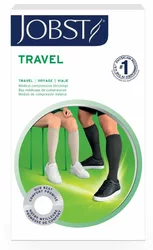
- Special elastic anti-thrombosis stockings made of skin-friendly, thin fabric reach up to the knee or even above and can help prevent thrombosis. Anti-thrombosis stockings should not be confused with regular compression stockings. The latter are useful only for mild venous problems and are sold off the shelf. Anti-thrombosis stockings are customised. They come in four compression classes (I to IV) – from light to strong. Anti-thrombosis stockings can be prescribed by a doctor on prescription if there is an appropriate indication.
- To keep the blood fluid and avoid the formation of clots, adequate fluid intake is important. A minimum of 1.5 litres of fluid per day is recommended, preferably in the form of mineral water, tea or heavily diluted fruit spritzers. Air travellers are advised to consume about 250 millilitres of non-alcoholic drink per flight hour.
- A vein-healthy lifestyle also includes a balanced diet that supports a healthy body weight and helps prevent overweight. Quitting smoking is particularly important because tobacco damages blood vessels and increases the risk of venous disease.
- An unfavourable sitting posture, such as long periods with crossed legs or knees strongly bent, can constrict the veins. Socks with an elastic band that is too tight should also be avoided, as they can impair the veins. To minimise the risk of venous problems, it is important not to unnecessarily impede blood circulation.
- Women should ensure, if they do not want to give up hormonal contraception, that they are prescribed contraceptives with a more favourable risk profile. Combined preparations containing levonorgestrel currently have the lowest thrombosis risk according to current knowledge.
The risk of thrombosis can be influenced by various factors – some are within your control, others are not. However, a healthy lifestyle with sufficient physical activity can reduce many risks!

.png.webp)